
 " . . Of course, not everyone buys it. To economist Arthur Diamond of the University of Nebraska, Omaha, Mazzucato’s thesis sounds too much like centrally planned industrial policy, which he argues won’t work because government is inherently unable to foster innovation. In his 2019 book, Openness to Creative Destruction: Sustaining Innovative Dynamism, he argues that what drives innovation is entrepreneurs who are deeply immersed in their subject and able to benefit from serendipity, pursuing hunches, and plain old trial and error.
 “Government decision-makers won’t be as immersed in the problems, won’t have the detailed information, and won’t be in a position to follow hunches toward breakthrough solutions,” Diamond says.
Mazzucato’s sharpest critic may be Alberto Mingardi, a historian of political thought who teaches at IULM University in Milan and is director-general of Italy’s free-market think tank Istituto Bruno Leoni in Milan. In 2015 he published a 23-page critique of The Entrepreneurial State with a 32-entry reference list
PHOTO: S. ROBINSON
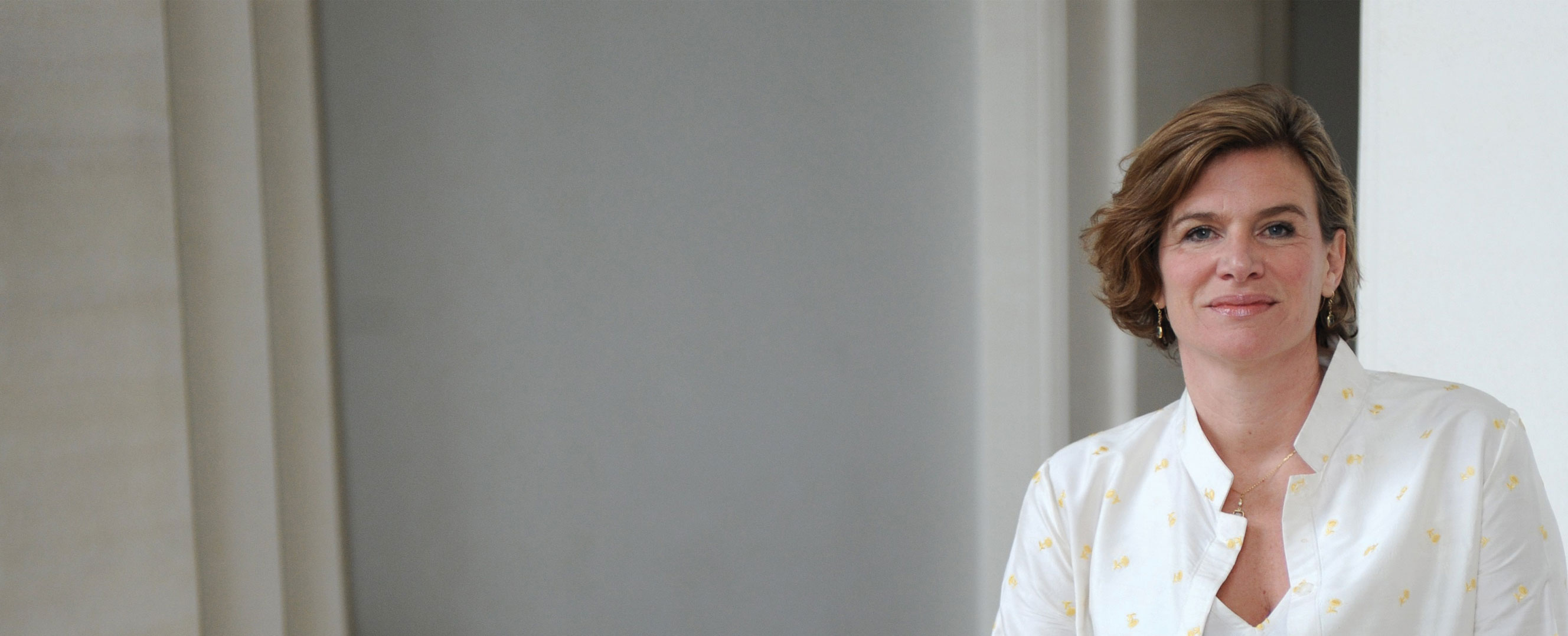
ECONOMICS AGITATOR
Mariana Mazzucato, tireless proponent of government-led innovation. The 52-year-old Italian-American is a professor of economics focusing on innovation and public value at University College London (UCL), where she is also the founding director of UCL’s Institute for Innovation and Public Purpose.
The pandemic puts a harsh spotlight on the issue as many of the workers deemed the most essential—from grocery store clerks to delivery drivers to nurses and hospital orderlies—are also some of the lowest-paid. This partly reflects accounting-related distortions in the economy: GDP calculations count financial services because they generate fees even though they don’t create anything new, but it’s hard to put a value on a sound public health or public education system, Mazzucato says.
“We need to value and resource the essential parts of the economy,” Mazzucato says. “Value has not been shared with the workers, meaning that real wages have stalled behind productivity growth.” In her second book, Mazzucato observes that while the American economy has tripled in size, wages adjusted for inflation haven’t budged in four decades.
As they shore up economies and bail out businesses amid the pandemic, governments should use their leverage to tilt the playing field in significant ways, Mazzucato says. There should be strong conditions for grants and loans, she argues. In return for bailouts, for example, airlines should be required to lower carbon emissions.
In a July 1 New York Times opinion piece, Mazzucato urged “citizens’ dividends” and government equity stakes in businesses linked to government funding. “It is simply admitting that the government, an investor of first resort, can benefit from thinking more like a venture capitalist around societal goals like a green transition,” she wrote. . .


No comments:
Post a Comment