The U.S. Federal Communications Commission issued a notice on Thursday stating that it granted SpaceX approval to perform tests on, "signals between orbiting Starlink satellites and normal mobile phones on the ground using airwaves."
The FCC will let SpaceX test its cellular Starlink system to beam data to smartphones in over two dozen locations across the US.
On Thursday, the FCC issued the company an "experimental special temporary authorization" to conduct the test, which will involve beaming the satellite connectivity to unmodified T-Mobile phones on the ground. SpaceX has 180 days, or until June 14, to conduct the pilot.
The clearance arrives a week after the FCC initially only gave partial approval for SpaceX to start deploying the cellular Starlink system. That initial approval allowed the company to start launching satellites outfitted with the technology to power the cellular connectivity. But at the time, a key restriction was that SpaceX could only conduct short tests to verify that the antennas on the satellites worked. Any other testing was barred.
In contrast, Thursday’s temporary authorization permits SpaceX to test the main purpose of the cellular Starlink system: Transmitting data to unmodified smartphones on Earth using T-Mobile’s spectrum over the 1910-1915 and 1990-1995MHz radio bands.

(Credit: Starlink.com)
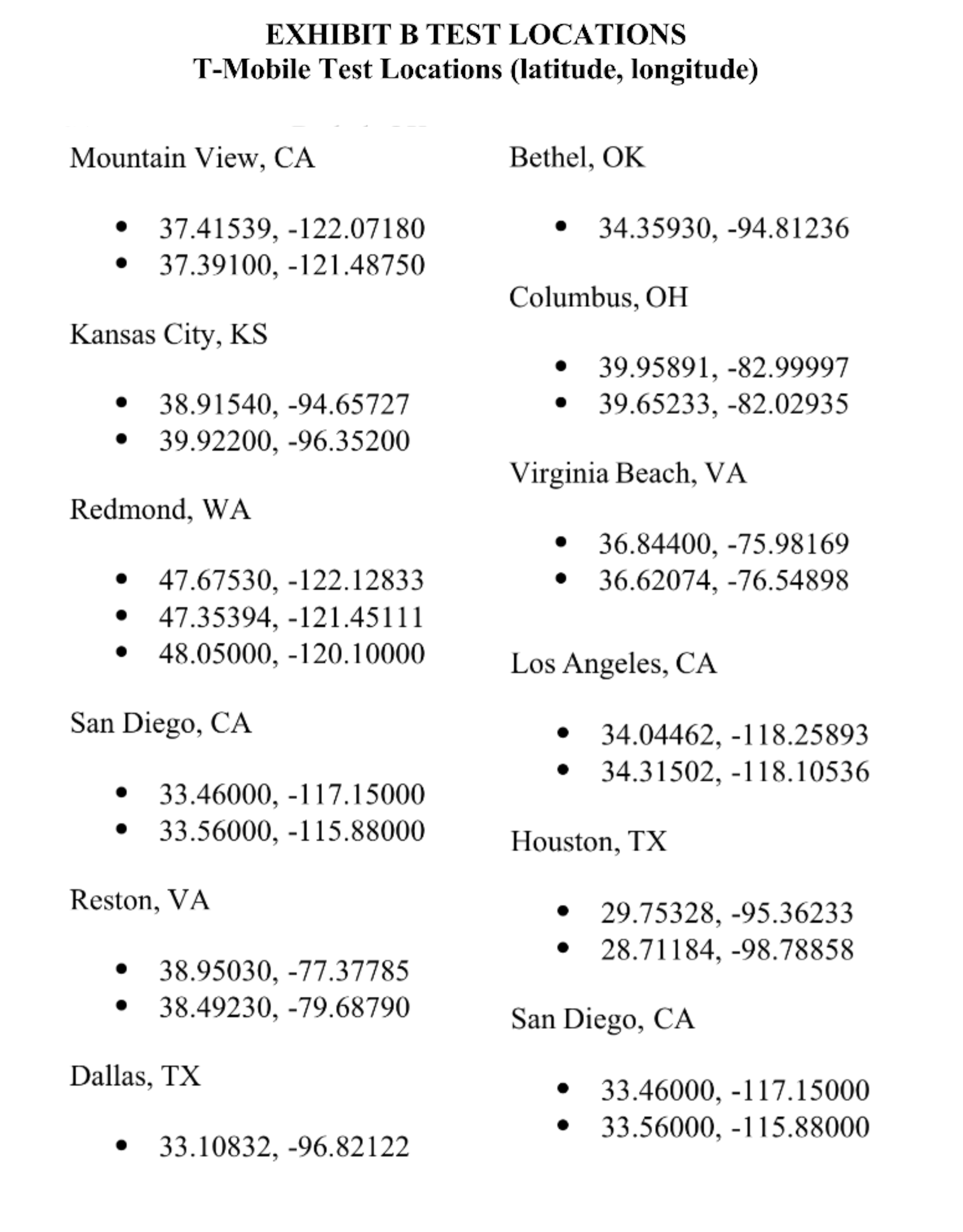
According to SpaceX, the test will eventually involve using 840 satellites — each one acting as orbiting cell tower— to beam the connectivity to 2,000 test devices on the ground. The company initially sought to trial the system in 13 locations, but later specified to the FCC that 12 other “radioastronomy sites” were also on the list.
"At any given time, approximately 60 of these 840 (satellite) payloads will be serving handsets in the United States under this experimental authorization," the company said in its application. The test sites include: Mountain View, California; Kansas City, Kansas; Redmond, Washington; and Dallas, Texas; among others.
The resulting tests are poised to help both SpaceX and the FCC address whether the cellular Starlink system risks causing radio interference across the US, including with other carriers and satellite providers. Companies including AT&T, Dish Network, and Globalstar have all logged concerns about the cellular Starlink system potentially disrupting their own services.
Recommended by Our Editors
SpaceX issued its own lengthy rebuttal, which argues the cellular Starlink system will only benefit US consumers, rather than pose a radio signal hazard. Still, the FCC’s temporary authorization allows the US regulator to pull the plug on the testing, if necessary. “In the event of any harmful interference caused under this grant of STA [special temporary authorization], SpaceX must immediately cease operations upon notification of such interference,” the filing notes. “SpaceX must immediately inform the Commission, in writing, of such an event.”
SpaceX is aiming to launch the cellular Starlink system for T-Mobile and other partners sometime next year, starting first with test messages. Voice and data are slated to arrive in 2025
SpaceX Gets US Approval to Test Direct-to-Cell Phone Service via Starlink
Elon Musk’s SpaceX obtained US approval to run tests on signals between orbiting Starlink satellites and normal mobile phones on the ground using airwaves in partnership with T-Mobile US Inc.
The Federal Communications Commission in a notice Thursday said it had granted a SpaceX request for a six-month authorization for trials that would involve about 2,000 test devices and 840 satellites.
Companies are in a race to tap the market for satellite-enabled calls offering connections in remote areas beyond the reach of cell towers. The services aim to use normal consumer mobile phones, rather than specialized equipment. SpaceX’s satellites circle the globe in what’s known as low-Earth orbit, while existing satellite phones usually connect to geosynchronous satellites in fixed positions at higher altitudes.
Read More: SpaceX, T-Mobile Plan for Satellite Phone Calls Draws AT&T Flak
AT&T Inc. plans calls via satellite with satellite operator AST SpaceMobile Inc. Meanwhile, Apple Inc. iPhones let users send texts via satellite to first responders and report emergencies in areas without cellular coverage.
SpaceX earlier told the FCC the experimental license granted Thursday will let the company “begin testing its transformative direct-to-cell technology, which will bring connectivity in areas where terrestrial mobile networks are absent or have been impacted by natural disasters.”
SpaceX didn’t immediately respond to an emailed request for comment.
SpaceX is seeking authorization from the FCC to tests there Starlink Direct To Cell service.
In an FCC filing made this week SpaceX is seeking "special temporary authority" to commence the test on December 10, with a testing period lasting 180 days.
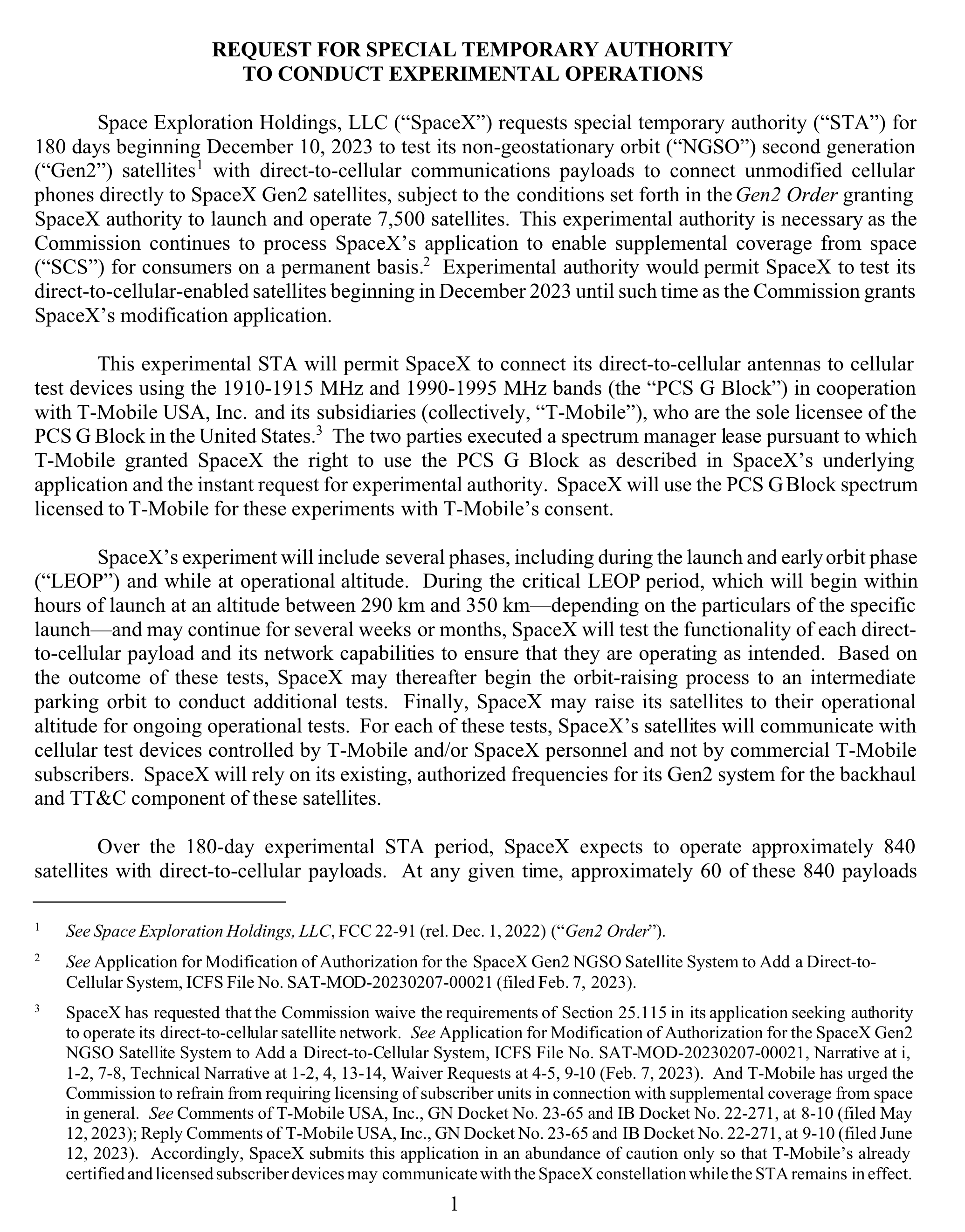
The primary objective is to assess the system in collaboration with T-Mobile, utilizing the carrier’s licensed radio spectrum to transmit satellite connectivity to 2,000 test devices. The application for an experimental license comes amidst ongoing considerations by the FCC regarding granting full authorization for SpaceX to operate the innovative communication service.
According to the filing, "Over the 180-day experimental STA period, SpaceX expects to operate approximately 840 satellites with direct-to-cellular payloads". The application further details that during the experimental period, around 60 of the 840 satellite payloads will serve handsets in the United States. SpaceX plans to beam satellite connectivity to 13 locations across the country, including Mountain View, California; Kansas City, Kansas; and Houston, Texas.
This experimental STA will permit SpaceX to connect its direct-to-cellular antennas to cellulartest devices using the 1910-1915 MHz and 1990-1995 MHz bands (the “PCS G Block”) in cooperationwith T-Mobile USA, Inc
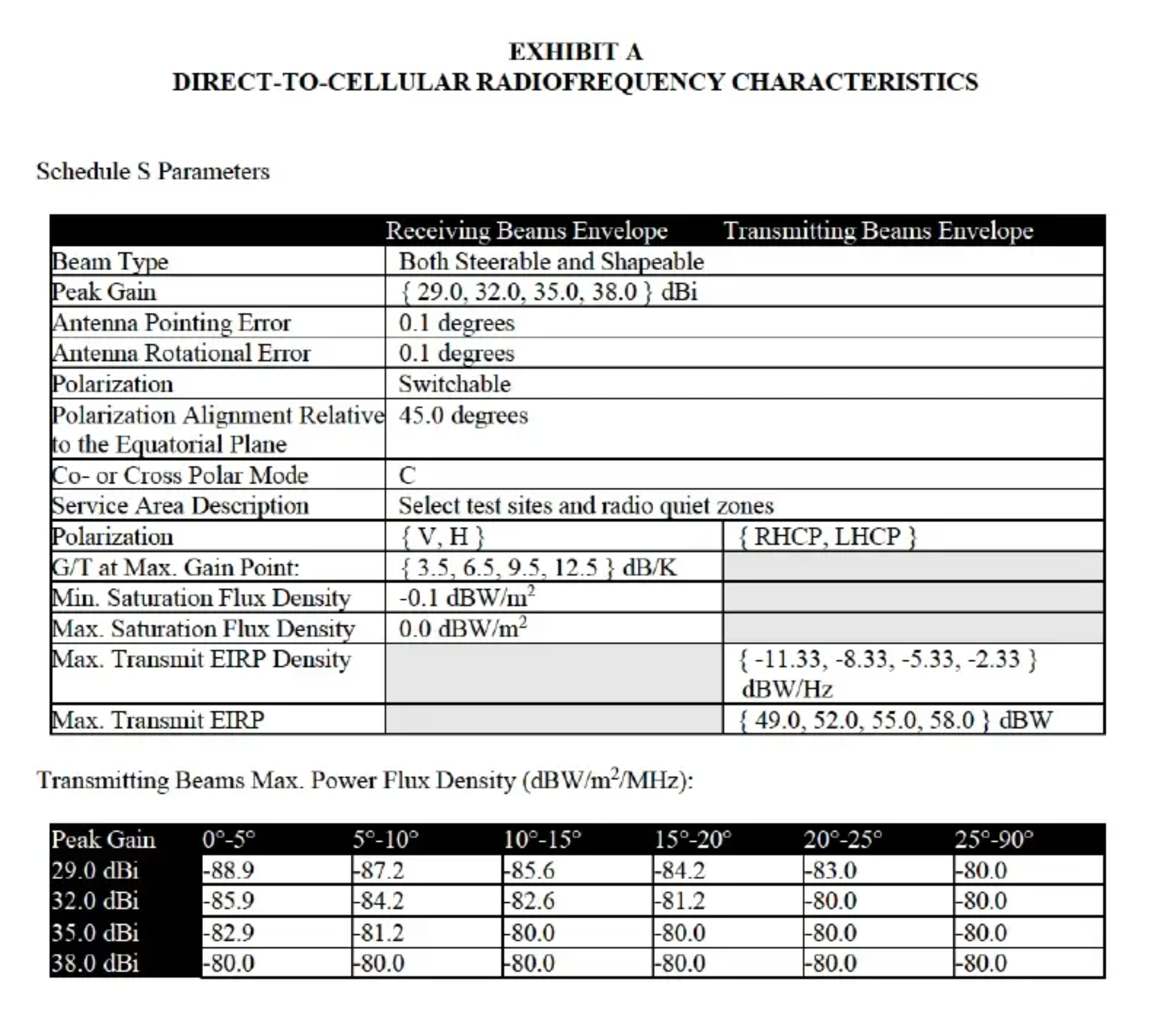
SpaceX is hoping to launch the cellular Starlink service next year, with plans to operate the technology with a total of 7,500 satellites. This isn't the first time SpaceX has applied to test the proposed cellular Starlink system.
In October, SpaceX filed a separate application for a similar test over a 60-day period starting in December. However, this faced resistance from AT&T and the Rural Wireless Association, arguing that SpaceX should have sought approval through an experimental license from the FCC’s Office of Engineering and Technology. Responding to the concerns, the new application from SpaceX adheres to the recommended process.
SpaceX has previously assured the FCC that the cellular Starlink system poses no radio signal threat. Nonetheless, the new application emphasizes the company's commitment to conducting real-world tests to assess potential interference risks. This includes measuring signal strength from Starlink satellites and T-Mobile handsets on the ground.
“SpaceX certifies that its direct-to-cellular system will operate without causing harmful interference to or requiring protection from any other service duly licensed in these bands or adjacent bands,” the application states. In case interference occurs, both SpaceX and T-Mobile pledge to take “all reasonable steps” to rectify the issue.
SpaceX urges the FCC to approve the application, stating, “These tests will enable SpaceX to more quickly realize the consumer benefits of its direct-to-cell technology without causing harmful interference to other licensed operators."
The outcome of this filing will be closely monitored as SpaceX continues to push the boundaries of satellite communication technology with Starlink.



No comments:
Post a Comment