Wednesday, June 08, 2016

Niall Ferguson: Civilization: The West and the Rest (Start the Week, 28/...


A Turning-Point in World History is right now > 6 "Killer Apps" including excessive debt @ 350% of GDP . . . China, The Middle East, Europe . . . Schools & Universities
Length: 21:28
 Published on Jun 7, 2016
Andrew Marr talks to Niall Ferguson about the history of civilisation, and how the West came to triumph over what appeared to be superior empires in the East ...
 
speech in London Thu 02 June 2016
Niall Ferguson  is Laurence A. Tisch Professor of History at Harvard University. He is also a Senior Fellow at the Hoover Institution, Stanford University, and a Senior Research Fellow at Jesus College, Oxford.
 
He has published fourteen books., including award winning The World’s Banker: The History of the House of Rothschild as well as Paper and Iron: Hamburg Business and German Politics in the Era of Inflation 1897-1927, The Pity of War: Explaining World War One and. In 2001, after a year as Houblon-Norman Fellow at the Bank of England, he published The Cash Nexus: Money and Power in the Modern World, 1700-2000.
 
Niall Ferguson is also a regular contributor to television and radio on both sides of the Atlantic. In 2003 he wrote and presented a six-part history of the British Empire for Channel 4. The accompanying book, Empire: The Rise and Demise of the British World Order and the Lessons for Global Power, was a bestseller in both Britain and the United States. The sequel, Colossus: The Rise and Fall of the American Empire, was published in 2004 by Penguin, and prompted Time magazine to name him one of the 100 most influential people in the world. Two years later he published The War of the World: Twentieth-Century Conflict and the Descent of the West, a television adaptation of which was screened by PBS in 2007. The international bestseller, The Ascent of Money: A Financial History of the World, followed in 2008; it too was a PBS series, winning the International Emmy award for Best Documentary. In 2011 he published Civilization: The West and the Rest, also a Channel 4/PBS documentary series. This was followed in 2012 by a three-part television series “China: Triumph and Turmoil”.
 
A prolific commentator on contemporary politics and economics, Niall Ferguson writes regularly for newspapers and magazines on both sides of the Atlantic. He was the Philippe Roman Visiting Professor at the London School of Economics in 2010-11 and the BBC Reith Lecturer for 2012. He is a member of the board of trustees of the American Academy in Berlin, the Museum of American Finance and the New York Historical Society. His many prizes and awards include the Benjamin Franklin Prize for Public Service (2010) and the Hayek Prize for Lifetime Achievement (2012).
 

HellCare > Has Anything Changed From 2001?


Wanted in Downtown Mesa: Millenials

Here's a report  today from ASU News Now
Reinventing downtown Mesa:
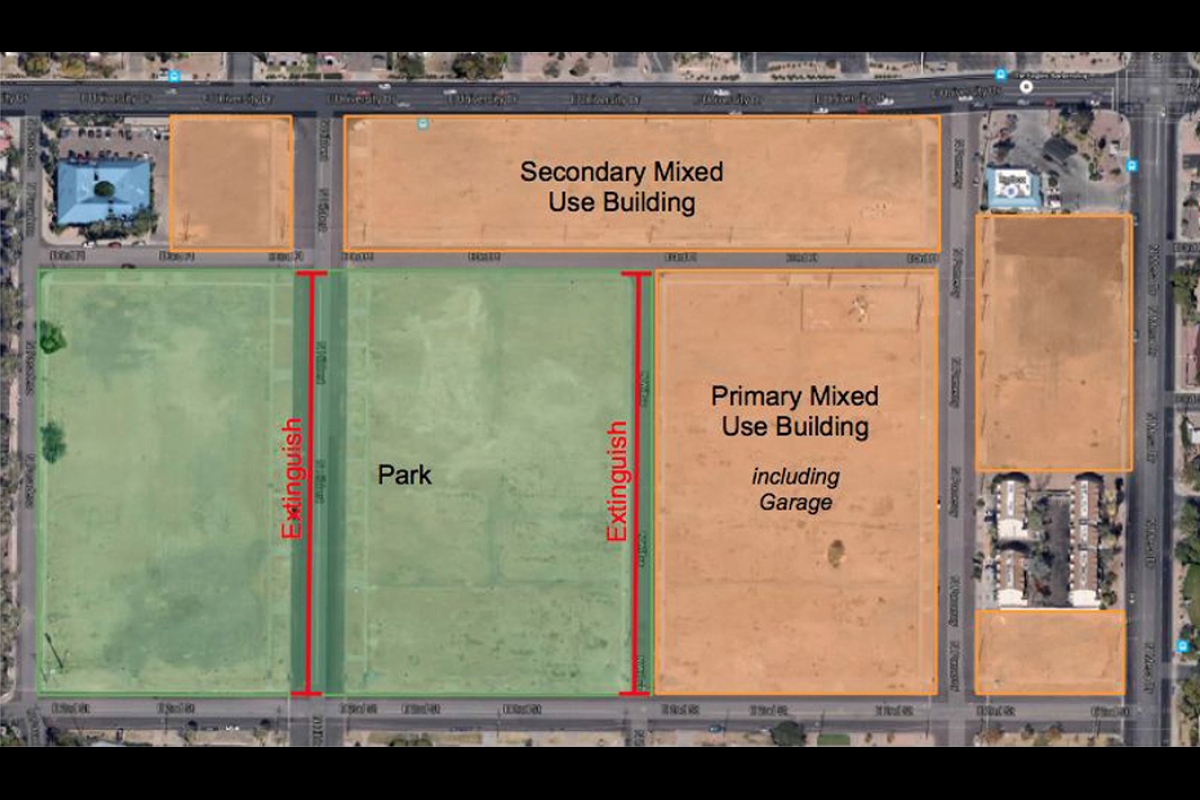
ASU students develop visions for the city core
[Blogger Notes: Back in February yours truly had the unexpected opportunity to meet and talk off-the-record with some of these ASU students and their urban planning course instructor Lauren Allsopp apart from their "official" guide around the New Urban DTMesa by city employees.
There's a link at the end of this post to read the 69-page original entire report from April

Jeff  McVay [KJZZ interview]
Curiously, this study is now getting used in a public relations push to promote spending millions in taxpayer-money for a proposed ASU Downtown 'campus' catering to eventually 2500 transient students maybe. . . furthermore any construction at the targeted site next to City Hall would once again disrupt downtown access and business activities again just after downtown is starting to recover after three years of construction disruption for the Valley Metro Central Mesa Light Rail Construction. Alternative sites, north or south of Main Street that the students looked at were not considered for site selection.

A lively and enthusiastic group for sure who walked all around getting their eyes opened for opportunities latent in vacant open under-utilized city-owned parcels of land here as well as seeing how certain properties had developed in the past three years.
Unlike the plans for City Center last year where three consultants were paid a total of $75,000 to "come up with ideas", this study report cost the city nothing.]
" . . . the students met with Mesa planning director John Wesley and Jeff McVay, manager of Downtown Transformation. McVay posed the question, “How can we bring people to downtown Mesa — especially Millennials like you?” 


" . . . On Feb. 17, [correction - it was announced in SOTC Jan 2016] Mayor John Giles announced a plan to bring a satellite ASU campus to downtown Mesa.   At that point, nine ASU students had already become very familiar with this quiet center of Arizona’s second-largest city. They were graduate and undergraduate students enrolled in an urban planning workshop course offered by the School of Geographical Sciences and Urban Planning. At the start of the semester, the students met with Mesa planning director John Wesley and Jeff McVay, manager of Downtown Transformation. McVay posed the question, “How can we bring people to downtown Mesa — especially Millennials like you?”  
Guided by course instructor Lauren Allsopp, the students got to work. They walked the streets of downtown Mesa and Site 17, 30 acres of undeveloped land to the northeast of downtown Mesa. They researched the zoning of the area and learned about its history from Vic Linoff, president of the Mesa Preservation Foundation. Three students — Bailey duBois, Melissa Spriegel and Adenike Opejin — focused on talking with downtown business owners, collecting data about business hours, and learning about the owners’ hopes for the area. Siyuan Han inventoried parking and found that most parking lots are more than 50 percent vacant on weekdays, with an even higher vacancy rate on the weekend, when permit parking and garage parking is open to the public. One Saturday, students surveyed visitors to downtown and found that the majority didn’t live in Mesa and were drawn there by specific events, but often didn’t stay because of the lack of restaurants, safe-feeling public bathrooms and other amenities. With the announcement of a future ASU campus in Mesa, the students decided to undertake a survey of current ASU students.
The more than 70 responses [Question: ONLY 70 out of tens of thousands of ASU students] to the survey helped solidify the group’s own impressions [case of slanting the research to support a conclusion they wanted?] 
Students like
  • the art components of downtown — installations, sculptures and the Mesa Arts Center 
  • and also enjoy the pocket parks and light rail.
Some survey respondents appreciated
  • the old-town feel
  • but many mentioned that businesses closed far too early.
Student respondents who had never been to downtown Mesa said that more dining options, entertainment and nightlife would be a draw.

With this background, the students brainstormed ideas, and small groups worked on researching and developing each idea. “It was great working in a small group in this class,” said Samantha Rhea, a student in ASU’s master’s degree program in urban and environmental planning. “Everyone could give input, and we could work together to develop our ideas.”
On April 27, the students presented their ideas to City of Mesa officials and personnel — a group that included the mayor, vice mayor, several council members, and key players in economic development as well as the city’s planning offices.  “We were told to allow 20 minutes for questions and comments,” said Rhea — but a lively discussion followed, lasting more than twice that long.

Innovative recommendations

The students’ recommendations ranged from
  • encouraging temporary land uses in vacant lots  [already done]
  • revitalizing the city’s broad boulevards by adding walking paths and exercise equipment to the streets’ wide medians. [public safety? Insurance?] 
  • Temporary land uses can include food trucks, raised garden beds or mobile art. [already done]
  • Events such as concerts or outdoor fairs require minimal infrastructure, and can also bring people to areas that are currently unwelcoming.[again, already done, MACFest for a good example, Friday Night's Out] 
Ultimately, the goal is to increase activity to make the area attractive for more permanent uses.
The students looked at event schedules and saw that Mesa Amphitheatre is only lightly used ?????. [Correction: The Mesa AmpiTheater attracts crowds - it's one of two, the other is the Mesa Convention Center - city-owned venues that turns a profit creating more income than expenses. Museums and MAC have a revenue short-fall of more than 50%, hundreds of thousands of dollars]

Drawing on successful ideas from their home communities, Samantha Rhea, Lauren Black and Andrew Rogge proposed using the amphitheater for low-cost events like movie nights and outdoor exercise classes. ???  [again already done for years! ]
“These are great ideas that make sense from an economic perspective — the revenues from these small events could help fund improvements to the amphitheater,” said McVay. ??

The puzzle of bicycle lanes [hey! It's hot with over 100 days of temps over 100 degrees]
Did these students re-think vehicular traffic patterns, or pedestrian-only zones - really no need to park on main Street-all businesses have entrances and parking lots in the back of buildings]
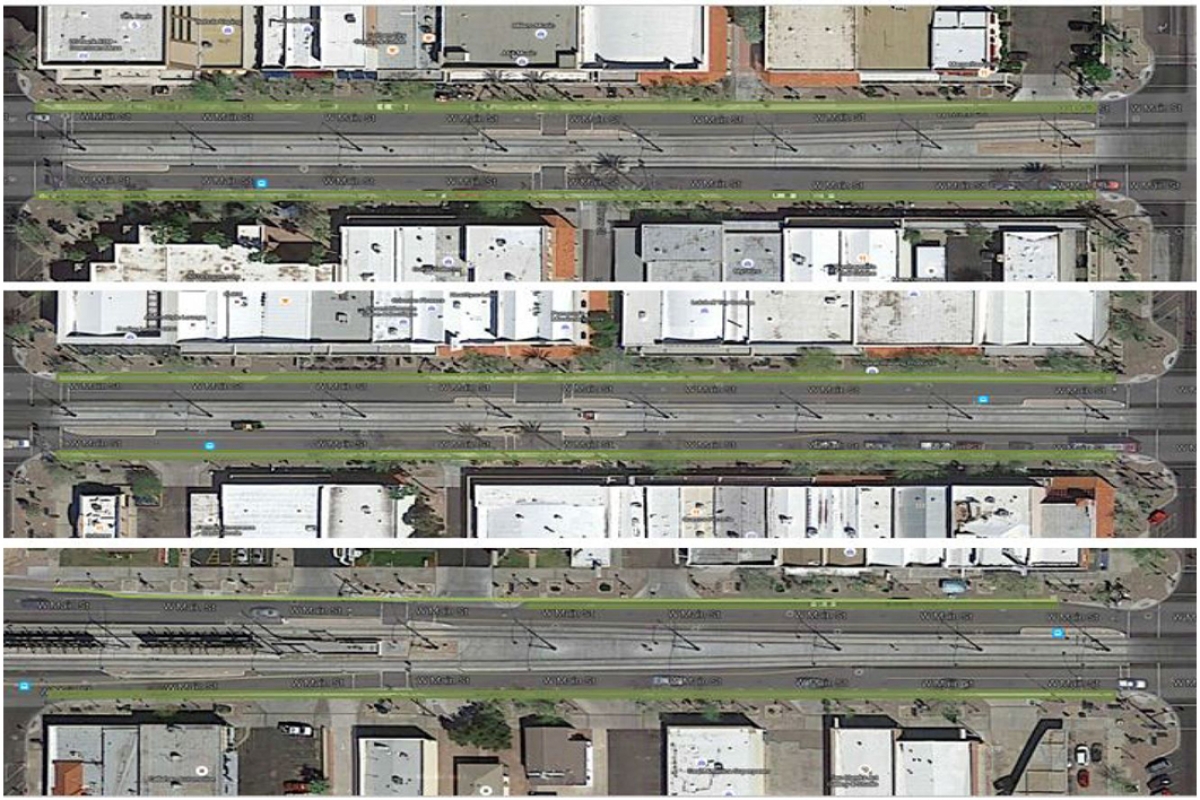
A more controversial recommendation centered on making downtown more bicycle-friendly. Seeing the expanses of parking lots behind business buildings, Opejin proposed replacing Main Street’s on-street parking with protected bike lanes — a safer option than the shared bike/auto lanes that now occupy the street. This proposal generated a good amount of discussion at the April 27 meeting. McVay explained that the city is working on a less disruptive approach: creating bike lanes on streets just north and south of Main Street.  The students argued for taking a long-range view — that bike lanes on Main Street may make sense in a future world of driverless cars and more non-auto transportation. “This is a great example of the value of student projects like this,” said McVay. “The students have fresh perspectives that challenge the status quo and can enlighten us.”
Mayor Giles responded with enthusiasm, too. “The presentations touched on several ideas that staff is currently exploring, and to me that was validation that we are on the right track to recapturing the true potential of downtown,” he said. “The students’ emphasis on bringing more people downtown and keeping them here longer was key. “It was great to get the students’ perspectives on how we can move downtown Mesa to the next level.” When ASU students begin to find their way to downtown Mesa in larger numbers  if - that's a very big if -  a satellite campus establishes itself there, downtown will change — no doubt in some of the ways envisioned by the urban planning students. “I really think people should go to Mesa. It’s worth taking a look!” said Rhea.

“Reinvent Downtown Mesa” was a project of PUP 494/561, Urban Design Workshop, a course taught by affiliate faculty member Lauren Allsopp. Students enrolled in the course were Lauren Black and Andrew Rogge (BS in Urban Planning) and Dian Chen, Bailey DuBois, Siyuan Han, Adenike Opejin, Samantha Rhea, Melissa Spriegel and Kezhen Wang (Master of Urban and Environmental Planning).
The complete report is available here.
The course is an offering of ASU’s School of Geographical Sciences and Urban Planning, an academic unit of the College of Liberal Arts and Sciences.

research professional senior
School of Geographical Sciences and Urban Planning
480-965-7449                                                 

New$ About Me$a: $667 Million$ Contract from Qatar for Boeing Apache Attack Helo$

Don't even think there will peace in The Middle East or Arab Gulf States anytime soon . . . it is, however 'Good News' for economic development here in Mesa.

[watch a short video of helicopters in action in link provided after the new sources]


Three sources:

1. Air Platforms   US Army developing MUM-TX for Apache control of all UAVs
07 June 2016
The US Army is to increase the scope of the manned-unmanned teaming (MUM-T) capabilities of its Boeing AH-64E Apache attack helicopter to include all unmanned aerial vehicles (UAVs) fielded by the US military, a senior service official said on 7 June.
Speaking at the Apache production facility in Mesa, Arizona, US Army programme manager Colonel Jeffrey Hager said that a new MUM-TX capability is being developed to expand the set of UAVs that the crew of the attack helicopter is able to control from the current General Atomics MQ-1C Gray Eagle and Textron Shadow Version 2 (V2) platforms to every UAV in service with the army, US Air Force (USAF), US Navy (USN), and US Marine Corps (USMC). . .
" We are now working on MUM-TX to allow the E [model Apache] to talk to any [unmanned] system on the battlefield. . .
Read more >> here

2. Boeing lands $668 million defense contract
                                                                                                   
Boeing Co. has been award a $667.5 million foreign military sales contract with Qatar.
The contract is for 24 AH-64E Apache helicopters, one Longbow crew trainer, ground support equipment and Thales radios, according to an announcement from the U.S. Department of Defense
The work on the contract will be done in Mesa, Arizona, with an estimated completion date of May 31, 2020.
In April, Boeing (NYSE: BA) won a $1.5 billion contract from the U.S.Army to remanufacture 117 AH-64D Apache helicopters to the new, more capable AH-64E model. The agreement also included the acquisition of Longbow Crew Trainers, logistical support and spares.
Angela Mueller


Published on May 31, 2016
US Military conducts laser guided missile live fire using the AH-64 Apache Helicopter. The Boeing AH-64 Apache is an American four-blade, twin-turboshaft attack helicopter with a tailwheel-type landing gear arrangement, and a tandem cockpit for a two-man crew. It features a nose-mounted sensor suite for target acquisition and night vision systems. It is armed with a 30 mm (1.18 in) M230 chain gun carried between the main landing gear, under the aircraft's forward fuselage. It has four hardpoints mounted on stub-wing pylons, typically carrying a mixture of AGM-114 Hellfire missiles and Hydra 70 rocket pods. The AH-64 has a large amount of systems redundancy to improve combat survivability.

The Apache originally started as the Model 77 developed by Hughes Helicopters for the United States Army's Advanced Attack Helicopter program to replace the AH-1 Cobra. The prototype YAH-64 was first flown on 30 September 1975. The U.S. Army selected the YAH-64 over the Bell YAH-63 in 1976, and later approved full production in 1982. After purchasing Hughes Helicopters in 1984, McDonnell Douglas continued AH-64 production and development. The helicopter was introduced to U.S. Army service in April 1986. The first production AH-64D Apache Longbow, an upgraded Apache variant, was delivered to the Army in March 1997. Production has been continued by Boeing Defense, Space & Security; over 2,000 AH-64s have been produced to date.[3]

The U.S. Army is the primary operator of the AH-64; it has also become the primary attack helicopter of multiple nations, including Greece, Japan, Israel, the Netherlands, Singapore, and the United Arab Emirates; as well as being produced under license in the United Kingdom as the AgustaWestland Apache. American AH-64s have served in conflicts in Panama, the Persian Gulf, Kosovo, Afghanistan, and Iraq. Israel used the Apache in its military conflicts in Lebanon and the Gaza Strip; British and Dutch Apaches have seen deployments in Afghanistan and Iraq.

Development[edit]
Advanced Attack Helicopter[edit]
Main article: Advanced Attack Helicopter
Following the cancellation of the AH-56 Cheyenne in 1972, in favor of projects like the U.S. Air Force A-10 Thunderbolt II and the Marine Corps Harrier, the United States Army sought an aircraft to fill an anti-armor attack role that would still be under Army command;[6][7] the 1948 Key West Agreement forbade the Army from owning combat fixed-wing aircraft. The Army wanted an aircraft better than the AH-1 Cobra in firepower, performance and range. It would have the maneuverability for terrain following nap-of-the-earth (NoE) flying.[8] To this end, the U.S. Army issued a Request For Proposals (RFP) for an Advanced Attack Helicopter (AAH) on 15 November 1972.[9][10] As a sign of the importance of this project, in September 1973 the Army designated its five most important projects as the "Big Five", with the AAH included.[11]


An early Hughes YAH-64A prototype with T-tail

A YAH-64A prototype in 1982
Proposals were submitted by Bell, Boeing Vertol/Grumman team, Hughes, Lockheed, and Sikorsky. In July 1973, the U.S. Department of Defense selected finalists Bell and Hughes Aircraft's Toolco Aircraft Division (later Hughes Helicopters). This began the phase 1 of the competition.[12] Each company built prototype helicopters and went through a flight test program. Hughes' Model 77/YAH-64A prototype first flew on 30 September 1975, while Bell's Model 409/YAH-63A prototype first flew on 1 October 1975. After evaluating the test results, the Army selected Hughes' YAH-64A over Bell's YAH-63A in 1976. Reasons for selecting the YAH-64A included its more damage tolerant four-blade main rotor and the instability of the YAH-63's tricycle landing gear arrangement.[13][14]

The AH-64A then entered phase 2 of the AAH program under which three pre-production AH-64s would be built, additionally, the two YAH-64A flight prototypes and the ground test unit were upgraded to the same standard.[13] Weapons and sensor systems were integrated and tested during this time, including the laser-guided AGM-114 Hellfire missile.[15] Development of the Hellfire missile had begun in 1974, originally known by the name of Helicopter Launched, Fire and Forget Missile ('Hellfire' being a shortened acronym),[16] for the purpose of arming helicopter platforms with an effective anti-tank missile.[17][18]

Into production[edit]
In 1981, three pre-production AH-64As were handed over to the U.S. Army for Operational Test II. The Army testing was successful, but afterward it was decided to upgrade to the more powerful T700-GE-701 version of engine, rated at 1,690 shp (1,260 kW). The AH-64 was named the Apache in late 1981, keeping with the Army's traditional use of American Indian tribal names for its helicopters and it was approved for full-scale production in 1982.[19] In 1983, the first production helicopter was rolled out at Hughes Helicopter's facility at Mesa, Arizona. Hughes Helicopters was purch  


BPEarthWatch - Arizona Fireball Shot Down! New Asteroid Tonight.


Well, dear readers, what do you want to call it? [earlier post on this site] ... this YouTube video presents some scientific astronomical knowledge but take a look at the image on the left with the curving tailings/tracking left in the sky after the impact. What are they?
Two different takes with one [BP EarthWatch] making informed and curious assertions and another [David Leibowitz, local reporter] dealing with how news = infotainment

Yet another report appeared in the East Valley Tribune
Posted: Tuesday, June 7, 2016 4:21 pm
" . . .This impulse to scan the internet made sense in the moment. I assumed what I had seen and felt was either a transformer explosion in our neighborhood or a military rocket out of the New Mexico desert breaking up in the sky over the Valley. Twitter seemed a likely source for some quick facts, a few paragraphs of explanation.
A couple of hours later, after scanning scores of tweets and Facebook posts devoted to meteor “entrails,” #Alien invasions and local TV news reporters begging witnesses to “send in pix/videos,” I was none the wiser, scientifically speaking. But I was reminded of everything I detest about the way stories travel in the 21st century.
Digitally and with criminal haste, laced with a high degree of stupidity and extreme narcissism . . .
The Great Arizona Meteor Sighting of 2016 — if that’s indeed what it was — put every facet of storytelling dysfunction on display, leaving social media and local news looking exactly like the rollover traffic accident that quickly replaced #AZMeteor as Thursday morning’s lead story. . .
Yes. Yes, I do know. It’s shocking to me that we’ve taken the incredible power to move massive amounts of information around the globe in a blip and reduced it to a circus in which everyone can make themselves a star. . .
Today, everyone is a “citizen journalist.” Everyone is an expert. Everyone feels compelled to co-create the news alongside the allegedly trained journalists who look more like carnival barkers with each passing year. Never has fact-gathering been less about facts and more about infotainment. The digital web that binds us together, that has the power to connect us all, once hailed as the height of technological innovation now mostly feels like just another television channel playing late-night infomercials and soft porn.
It would be fitting to no end if that explosion in the pre-dawn hours of Thursday was truly nothing more than some space junk. Fitting because of all the news junk and garbage that the rock from outer space left trailing in its wake.

Tuesday, June 07, 2016

Heads Up Taxpayers! Have You Seen This > $1,670,000,000 Mesa Tentative Budge FY2016-2017

Time to do the hard work, dear readers ---- Can you follow the money - all tentative $1.67 BILLION DOLLARS?
The next fiscal year budget is buried in the agenda for Mesa City Council Session June 6, 2016 - it happened yesterday. How many members of the public attended the session or seen the councilmembers in action?
Who commented and what did they say?
How many taxpayers have even seen what the budget looks like ahead of time - or even now? For something as important as the city's budget it was placed at the end of the agenda for the regular council session. It's the last item for action to be taken: Item 10a 16-0398 - 5 pages skimpy on details and *footnotes at the page bottoms.
Why should your MesaZona blogger get angry? .... It's up to the public to take a look and understand where the money comes from and where does it go?
Big Slice of The Budget Pie: PERSONAL SERVICES [you mean "personnel" like ya know salaries, what departments get how much and what are the employees' salaries? That's a good question, huh? Confidential and private information? No - the public has a right to know ...and what about pensions, benefits and retirement? Costs have gone up 35% - did U know that from this tentative budget?

Links are provided to see original sources ---

1 SUMMARY OF RESOURCES BY SOURCE
Adopted Proposed Source Actuals Budget Budget Taxes Sales & Use Tax $146,336,886 $148,468,000 $156,328,000 Secondary Property Tax $34,022,086 $33,440,000 $33,441,000 Transient Occupancy Tax $3,079,912 $2,515,000 $3,000,000 Other Taxes $30,287 - Total Taxes $183,469,171 $184,423,000 $192,769,000 Intergovernmental Federal Grants and Reimbursements $32,018,752 $33,641,000 $45,227,000 State Shared Revenues $145,266,056 $146,376,000 $157,755,000 State Grants and Reimbursements $6,276,432 $6,888,000 $687,000 County and Other Governments Revenues $6,733,953 $29,836,000 $16,061,000 Total Intergovernmental $190,295,193 $216,741,000 $219,730,000 Sales and Charges for Services General $27,469,118 $31,205,000 $31,006,000 Culture and Recreation $7,589,146 $9,007,000 $7,578,000 Enterprise $333,112,938 $359,019,000 $370,230,000 Total Sales and Charges for Services $368,171,202 $399,231,000 $408,814,000 Licenses, Fees and Permits Business Licenses $4,298,337 $3,681,000 $4,309,000 Permits $12,089,180 $12,686,000 $12,392,000 Fees $17,585,005 $11,411,000 $10,698,000 Court Fees $4,482,327 $4,723,000 $4,438,000 Culture and Recreation $661,710 $426,000 $476,000 Total Licenses, Fees and Permits $39,116,558 $32,927,000 $32,313,000 Fines and Forfeitures Court Fines $4,493,789 $4,133,000 $3,989,000 Other Fines $549,961 $597,000 $471,000 Total Fines and Forfeitures $5,043,750 $4,730,000 $4,460,000 Self Insurance Contributions Self Insurance Contributions $78,370,011 $81,813,000 $89,652,000 Total Self Insurance Contributions $78,370,011 $81,813,000 $89,652,000 Other Revenue Interest $2,341,410 $791,000 $1,777,000 Contributions and Donations $8,098,657 $2,085,000 $4,351,000 Other Financing Sources $25,728,540 $24,412,000 $3,750,000 Sale of Property $619,318 $1,281,000 $23,866,000 Other Revenues $11,386,241 $15,029,000 $25,006,000 Total Other Revenue $48,174,166 $43,598,000 $58,750,000 Operating Resources Subtotal $912,640,051 $963,463,000 $1,006,488,000
Potential Bond Refunding Other Financing Sources - $166,742,000 $185,400,000 Total Potential Bond Refunding - $166,742,000 $185,400,000
Reimbursements/Previous Grant Awards Carried Over $24,333,486 $12,840,091 Funds Carried Forward $198,558,514 $206,690,909 Use of Fund Balance $(55,066,603) Total Non-Bond Resources $857,573,448 $1,353,097,000 $1,411,419,000
Existing Bond Proceeds $89,220,384 $57,778,188 $91,930,117 New Bond Proceeds $45,200,671 $207,048,000 $254,801,000 Ending Fund Balance $(33,465,030) $(7,923,188) $(88,150,117) Total Bond Resources $100,956,025 $256,903,000 $258,581,000
City Total Resources $958,529,474 $1,610,000,000 $1,670,000,000

2 SUMMARY OF RESOURCES BY FUND
FY 2014/15 FY 2015/16 FY 2016/17 Adopted Proposed Fund Actuals Budget Budget
General Fund - Operations $256,568,364 $250,683,044 $265,801,099 General Fund - Capital $353,792 - Enterprise Fund - Operations $322,667,396 $337,742,467 $345,769,842 Enterprise Fund - Capital $4,400,451 $300,000 $300,000 Restricted Funds: Arts & Culture Fund $4,507 $6,815,915 $5,337,094 Community Facilities Districts $5,080,074 $24,559,668 $4,003,333 Environmental Compliance Fee $14,973,797 $14,802,000 $15,274,128 Falcon Field Airport $4,067,917 $3,720,977 $3,881,883 Joint Ventures $10,311,379 $24,674,243 $24,371,578 Quality of Life Sales Tax Fund $20,880,052 $21,209,736 $22,358,650 Transportation Related: Highway User Revenue Fund $33,951,174 $34,281,093 $37,691,409 Local Street Sales Tax Fund $26,114,851 $26,149,941 $28,082,740 Transit Fund $4,757,298 $5,122,684 $15,943,367 Transportation Fund $64,117 $19,126,332 $3,805,797 Other Restricted Funds $29,611,946 $31,149,703 $41,390,340 Grant Funds: General Governmental Grant Fund $9,651,407 $10,874,402 $8,639,770 Enterprise Grant Fund $2,551,080 $3,235,833 $2,788,178 Housing Grant Funds $19,706,888 $18,165,542 $20,641,639 Trust Funds $77,855,840 $82,145,565 $90,064,085 Debt Service Funds $69,067,718 $48,703,855 $70,343,068 Total Operating Revenues $912,640,051 $963,463,000 $1,006,488,000
Potential Bond Refunding - $166,742,000 $185,400,000
Reimbursements/Previous Grant Awards Carried Over - $24,333,486 $12,840,091 Funds Carried Forward - $198,558,514 $206,690,909 Use of Fund Balance $(55,066,603) - Total Non-Bond Resources $857,573,448 $1,353,097,000 $1,411,419,000
Existing Bond Proceeds $89,220,384 $57,778,188 $91,930,117 New Bond Proceeds $45,200,671 $207,048,000 $254,801,000 Ending Fund Balance $(33,465,030) $(7,923,188) $(88,150,117) Total Bond Resources $100,956,025 $256,903,000 $258,581,000
City Total Resources $958,529,474 $1,610,000,000 $1,670,000,0

3  SUMMARY OF EXPENDITURES BY FUND
FY 2016/17 Adopted Proposed Fund Actuals Budget Budget
General Fund - Operations $318,210,846 $326,865,188 $343,532,587 General Fund - Capital $5,921,460 $5,759,446 $8,570,479 Enterprise Fund - Operations $146,753,186 $161,426,199 $163,210,880 Enterprise Fund - Capital $6,899,845 $4,228,397 $5,605,290 Restricted: Arts & Culture Fund $(1,533) $15,604,487 $15,411,083 Community Facilities Districts $5,056,067 $24,559,668 $4,003,333 Environmental Compliance Fee $11,212,537 $15,373,457 $18,385,744 Falcon Field Airport $4,235,731 $5,032,581 $3,692,409 Joint Ventures $10,323,937 $22,384,483 $24,266,957 Quality of Life Sales Tax Fund $21,541,989 $21,209,734 $24,702,684 Transportation Related: Highway User Revenue Fund $14,950,450 $21,955,280 $22,538,994 Local Street Sales Tax Fund $28,434,158 $38,156,267 $38,428,379 Transit Fund $7,561,346 $14,764,526 $25,816,087 Transportation Fund - $19,126,332 Other Restricted Funds $23,405,320 $27,675,240 $31,578,085 Grant Funds: General Governmental Grant Fund $9,718,788 $10,862,643 $8,625,162 Enterprise Grant Fund $2,551,080 $3,235,833 $2,788,178 Housing Grant Funds $20,307,608 $18,304,529 $20,634,979 Trust Funds $75,568,390 $78,817,073 $97,263,984 Debt Service Funds $144,922,246 $212,502,637 $179,472,706 Expenditure Subtotal $857,573,448 $1,047,844,000 $1,038,528,000
Operating Carryover - $39,523,000 $53,020,000 Capital Improvement Carryover: Non-Bond - $27,434,000 Total Carryover $66,957,000 $53,020,000
Potential Bond Refunding-$166,742,000$185,400,000
Contingency - $71,554,000 $134,471,000
Total Expenditure Non-Bond Funds $857,573,448 $1,353,097,000 $1,411,419,000
Bond Capital Improvement Scheduled $100,956,025 $145,057,000 $258,581,000 Bond Capital Improvement Carryover $111,846,000 Total Bonds Capital Improvement $100,956,025$256,903,000 $258,581,000
City Total Expenditures $958,529,474 $1,610,000,000 $1,670,000,000
Expenditure Limitation Comparison
Expenditures $958,529,474 $1,610,000,000 $1,670,000,000 Estimated Exclusions $(958,529,474) $(1,610,000,000) $(1,670,000,000) Estimated Expenditures Subject to Limitation --Expenditure Limitation $529,442,050 $545,882,614 $559,918,849 Over (Under) State Limit $(529,442,050) $(545,882,614) $(559,918,849)

4 SUMMARY OF EXPENDITURES BY DEPARTMENT
2014/15 FY 2015/16 FY 2016/17 Adopted Proposed Department Actuals Budget Budget
Arts & Culture $14,823,089 $14,738,000 $14,293,000 Business Services $17,270,874 $14,437,000 $13,989,000 City Attorney $8,098,278 $11,426,000 $13,096,000 City Auditor $642,171 $674,000 $715,000 City Clerk $1,102,657 $851,000 $1,319,000 City Manager $5,086,595 $5,261,000 $5,574,000 Communications $4,774,155 $4,138,000 $3,582,000 Community Services $20,447,980 $19,741,000 $23,609,000 Development Services $8,786,628 $9,691,000 $7,765,000 Economic Development $7,870,631 $9,088,000 $9,474,000 Energy Resources $40,833,434 $42,811,000 $41,447,000 Engineering $2,836,567 $7,339,000 $7,648,000 Environmental Management & Sustainability $27,189,858 $28,360,000 $31,165,000 Facilities Maintenance * $10,396,421 $12,559,000 Falcon Field Airport $1,298,601 $1,706,000 $1,735,000 Financial Services $3,697,458 $3,621,000 $3,861,000 Fire and Medical Services $73,869,716 $73,556,000 $77,929,000 Fleet Services $28,943,189 $28,264,000 $27,576,000 Human Resources $73,854,380 $74,515,000 $92,235,000 Information Technology $25,190,851 $28,496,000 $33,726,000 Library Services $6,379,459 $7,171,000 $7,454,000 Mayor & Council $586,647 $935,000 $1,016,000 Municipal Court $7,914,965 $7,938,000 $8,304,000 Neighborhood Outreach & Animal Control * $1,122,574 $1,133,000 Office of Enterprise Resource Planning $519,443 $761,000 $788,000 Office of Management and Budget $1,598,762 $2,589,000 $2,740,000 Parks, Recreation & Community Facilities $26,255,906 $31,868,000 $46,753,000 Police $161,464,607 $165,816,000 $174,801,000 Public Information & Communications $1,290,604 $1,236,000 $1,423,000 Transit Services $6,187,944 $11,827,000 $13,415,000 Transportation $32,912,527 $42,166,000 $42,550,000 Water Resources $55,919,707 $67,258,000 $67,694,000 Project Management Program-Lifecycle/Infrastructure Projects $11,759,224 $10,046,000 $7,831,000 Centralized Appropriations $148,678,577 $248,630,000 $199,682,000
Operating Expenditure Subtotal $839,604,481 $990,646,000 $985,189,000
Operating Expenditure Carryover $39,523,000 $53,020,000
Operating and Carryover Expenditure Subtotal $839,604,481 $1,030,169,000 $1,038,209,000
Potential Bond Refunding - $166,742,000 $185,400,000
Contingency - $71,554,000 $134,471,000
Total Operating Expenditures $839,604,481 $1,268,465,000 $1,358,080,000
Capital Improvement Program: Non-Bond $17,968,967 $57,198,000 $53,339,000
Capital Improvement Program: Bond $100,956,025 $145,057,000 $258,581,000
Capital Improvement Program Subtotal $118,924,993 $202,255,000 $311,920,000
Non-Bond Capital Improvement Program Carryover - $27,434,000
Bond Capital Improvement Program Carryover - $111,846,000
Capital Improvement Program Carryover Subtotal - $139,280,000
Total Capital Improvement Program $118,924,993 $341,535,000 $311,920,000
City Total Expenditures $958,529,474 $1,610,000,000 $1,670,000,000
SUMMARY OF EXPENDITURES BY DEPARTMENT
*Note: During FY15/16, Facilities Maintenance was combined with Parks, Recreation & Community Facilities and Neighborhood Outreach & Animal Control was combined with Community Services.

5 FULL-TIME EMPLOYEES AND PERSONNEL COMPENSATION FISCAL YEAR 2016/2017
Fund
Full-Time Equivalent (FTE)
Employee Salaries and Hourly Costs
Retirement Costs
Healthcare Costs
Other Benefit Costs
Total Estimated Personnel Compensation
General Fund - Operations* 2,496.8      $181,601,794 $44,324,535 $38,380,443 $1,101,228 $265,408,000 General Fund - Capital 1.1             $69,571 $8,939 $11,965 $7,668 $98,143 Enterprise Fund - Operations 518.3         $31,323,058 $3,777,323 $8,850,921 $16,656,173 $60,607,475 Enterprise Fund - Capital 0.1             $7,545 $969 $1,298 $832 $10,644 Restricted: Arts & Culture Fund 80.0           $4,595,155 $502,151 $954,850 $1,549,634 $7,601,790 Community Facilities Districts 0.4             $74,330 $5,656 $4,836 $24,236 $109,058 Falcon Field Airport 18.3           $1,343,770 $252,310 $301,023 $349,567 $2,246,670 Joint Ventures 27.3           $2,181,670 $220,125 $308,685 $716,170 $3,426,650 Quality of Life Sales Tax Fund 185.0         $14,203,369 $6,335,484 $2,484,298 $1,679,533 $24,702,684 Transportation Related: Highway User Revenue Fund 108.4         $6,693,710 $753,980 $1,207,502 $643,716 $9,298,908 Local Streets Sales Tax 33.0           $2,670,249 $320,046 $1,268,830 $2,487,211 $6,746,336 Transit Fund 3.6             $488,684 $31,639 $46,396 $281,259 $847,978 Other Restricted Funds 73.4           $4,205,674 $469,673 $778,114 $1,493,815 $6,947,276 Grant Funds: General Governmental Grant Fund 25.1           $1,775,263 $821,015 $307,464 $1,145,573 $4,049,315 Housing Grant Funds 25.3           $1,369,651 $155,872 $262,592 $114,396 $1,902,511 Trust Funds 117.5         $7,261,731 $835,597 $1,802,744 $3,492,368 $13,392,440 Total Non-Bond Funds 3,713.6      259,865,224  58,815,314 56,971,961 31,743,379     407,395,878   
Bond Capital Improvement 91.5           $5,892,350$757,061$1,013,341$649,499$8,312,251
Total All Funds 3,805.1      $265,757,574 $59,572,375 $57,985,302 $32,392,878 $415,708,129

* Central administration positions are included in the General Fund but the costs are spread among multiple funds.

http://mesa.legistar.com/LegislationDetail.aspx?ID=2736428&GUID=31ADE986-3E13-41C1-A18A-81BC4FFE09E8


TENTATIVE BUDGET
CITY OF MESA, ARIZONA
FOR FISCAL YEAR ENDING JUNE 30, 2017


Proposed budget pie charts http://mesa.legistar.com/LegislationDetail.aspx?ID=2736428&GUID=31ADE986-3E13-41C1-A18A-81BC4FFE09E8

COJONES [and Jibber-Jabber] > Word Taken Out of Context @ Economic Development Advisory Board Meeting Today

Brian Campbell
... Five women sitting on the EDAB during  this morning's meeting at 7:30 a.m. and not a single one spoke up or got offended about a phrase in Spanish for a twin-piece of the male anatomy [ "balls" in plain English/"testicles" in science] when that was used referring to exaggerated job-hiring projections or 'jacking up the numbers' contained in a draft of a certain strategic plan that was being discussed not yet made public from a group in Phoenix. 
Curious? .... you will have to wait > more later
Who said it? Brian Campbell, board member
It was also announced that two women will be leaving the board.

image from mesaaz.gov
Re: Jibber Jabber
Readers might have recognized the phrase "Quick Jab" - used in the quarterly Economic Development Newsletter for a column piece by the director for City of Mesa Office of Economic Development, Bill Jabjiniak.
Your MesaZona blogger listens to what's said at meetings and takes notes,  but I swear by people in higher places that most of the words spoken from Bill's mouth yesterday were "jibber-jabber" . . .  wanna translate that?
Some comments did make sense, for example
  • his comments made about a recent trade mission to Hannover, Germany by six [or was it eight?] city officials to promote Mesa at the tradeshow. The surprise? He stated that people in Germany/Europe didn't even know about Mesa or Arizona. . . hard to believe with all the million$ spent on promotions, marketing and public relations. Usually for trade missions, there is a schedule of meetings and itinerary posted publicly, if there was one. It was reported that over the course of eight days spent in Germany there were twelve contacts made with two engaging in more discussions about Mesa.
  • Bill also mentioned pursuing FDI [foreign direct investment] by Japanese companies. Not surprising at all when international major economies are experiencing uncertain global macroeconomic conditions and looking for "safe havens".
  • Mesa is only one city- out of many - competing for FDI dollars. It's a very competitive environment: example the announcement one week ago that a Swiss cybersecurity company is investing in a second headquarters here in Arizona, not in Mesa. Governor Doug Ducey claimed the negotiations took only three months, while Mr. Jabjiniak stated at the EDAB meeting talks were ongoing for 11 months . . . the successful city was Phoenix Arcadia District.
  • Re: Xavier University closing its doors in Gilbert Mr. Jabjiniak stated that it was "under-capitalized" at $35 Million [paid by Gilbert taxpayers] and the subject of an earlier post on this blog. When a comment was asked by another board member about financing details for the proposed ASU Downtown campus, another comment was made by Jo Wilson, recently retiring from EDAB, that BenU had invested $13 Million here for its downtown location ---- isn't that "under-capitalized" also by about three times of a smaller amount??

NO CAPTAIN ONBOARD