Wednesday, October 10, 2018

Huh? "An Air of Resignation" + "Powerless To Protect" The Temple Historic District

That's part of the opening paragraph for the latest "FrontPage Spotlight" Spoon-fed news story yesterday 07 Oct 2018 from the East Valley Tribune's contributing writer Jim Walsh
Don't take the news at face-value.
You can read between the headlines if you want to.
What you don't see anywhere in all the EVT's coverage for the LDS Church-for-profit redevelopment plans is any information whatsoever about the Temple Historic District or how they acquired a 20-acre tract of land on Main Street from Mesa Drive to Horne or who did the real estate development.
As it turns out The Temple Historic District is not so historic after all, but it does tells us how the Mormons started to expand their real estate holdings here in Mesa, starting with wards and stakes when more of the faithful increased (O yes, they are "stakeholders"), how early businessmen gained riches from the federal government and WPA projects, how federal loans financed post-World War II real estate development, and how they all made fortunes  in for-profit affiliates of The Church - in finance, insurance and real estate.
Please note: there is an insert detailing that the so-called $6M CIP for Pioneer Park was 'completed' in 2016....? When it really cost taxpayers double-the-price or $12,000,000 when it was completed this year. . . and now "The Church" wants to double-the-size of the Mesa Temple Area ReDevelopment, demolishing some of those qualifying properties in the last segment on Udall Street..... Read on >
_________________________________________________________________________
For that information - official information directly from the city's website - you need to take the time to find out. Here's a map of that expanded area below 1st Ave from Google Maps
Map of Temple Historic District, Mesa, AZ
Temple Historic District
Source: https://www.mesaaz.gov/residents/historic-preservation/temple-historic-district 
Local Historic District Designation: February 2001
Listed to the National Register of Historic Places: November 2000
The Temple Historic District is found immediately east of the original townsite and is composed primarily of two residential subdivisions,
  • The Arizona Temple addition opened in 1922
  • The  Stapley addition opened in 1924.
The district encompasses three north-south streets – Mesa Drive, Udall Street, and Lesueur Street - and is bounded on the north by Main Street and on the  South by Broadway Road.
These streets were named for Mormon pioneers which were instrumental in the settlement and founding of Mesa City (later called Mesa).
This district is composed primarily of residential buildings with a few associated commercial properties and a very prominent religious property for which the residential district is named, the 1927 Arizona Temple of the Church of Jesus Christ of Latter-Day Saints (also known as the LDS Temple).  
Although the perimeter of the neighborhood has suffered from some modern intrusions and from the conversion of historic houses along Mesa Drive to commercial use, for the most part it retains its original residential character.
On the north, south, and east sides of this district of Bungalow and Period Revival Style houses are post-WWII residential neighborhoods featuring Ranch Style houses.
West of the district is the original Mesa Townsite which is a mixture of commercial and residential development representing many succeeding decades of architectural styles.
The layout of streets and parcels in the Temple Historic District demonstrates the evolution of land subdivision and street design in the earliest development beyond the limits of the original townsite. Also, the styles of the houses here are a visual record of the popular trends in Mesa’s residential architecture in the early twentieth century.
SIGNIFICANCE
The Temple Historic District in Mesa is significant for two reasons.
> First, it is considered significant under National Register criteria "A" in the area of Community Planning and development for its relationship to broad patterns of community development in Mesa. > Second, the Temple Historic District illustrates important examples of architectural styles common in Arizona during the first half of the twentieth century. The Temple Historic District is considered significant under National Register criteria "C" for the architectural styles and periods that it represents.
> The period of significance for the district starts in 1910 with the platting of the Kimball Addition and continues until 1949, the end of the 50-year period of significance for the National Register.
The significance of the Temple Historic District is described under two historic contexts.
Context one "Mesa's Suburban development, 1910-1949," describes the development of subdivisions outside the original townsite.
Context one describes the significance of community development in Mesa.
Context two, "The Evolution of Architectural Styles in Mesa Townsite Extension, 1922 to 1949," describes the significant architectural styles and themes which influenced the stylistic treatment of buildings in Mesa as represented by the district. Context two describes the architectural significance of the district.
_________________________________________________________________________________
Two  historic contexts developed in 1993 and 1997 surveys closely reflect the two contexts used in this National Register nomination.
Contexts identified by Woodward are
> "Mesa City: From Mormon Settlement to Urban Center, 1878 to 1945"
> "The Evolution of Architectural Periods in the Mesa Townsite, 1878 to 1945."
Contexts identified in the 1997 survey are
> "Mesa's First Suburbs: From Early Townsite Extensions to Modern Neighborhoods, 1910 to 1945"
 > "The Evolution of Architectural Styles in the Townsite Extensions, 1910 to 1945.
_________________________________________________________________________
Historic Context One:
Mesa's Suburban development, 1910-1949
The expansion of Mesa into this particular area outside the original townsite is closely related to the construction of the LDS Arizona Temple, completed in 1927.
The Temple Historic District is significant for its association with the development of a cohesive neighborhood of middle and upper class families in Mesa from 1910 to1949. Although a portion of the area was originally platted as the Kimball Addition in October if of 1910, most of the buildings in the historic district were built between 1922 and 1949 within two subdivisions that encompasses most of the Temple Historic District
The Kimball Addition (platted in October 1910) was the third subdivision to be platted outside the original Mesa townsite. It was preceded by the North Evergreen subdivision (July 1910) and the Evergreen Acres subdivision (August 1910).
These three subdivisions represented the expansive growth of Mesa in the second decade of the twentieth century.
During this period the demand for residential housing led to the development of subdivisions outside the boundaries of the original townsite. These subdivisions were designed and marketed to appeal to the suburban resident who wanted to avoid the problems associated with "city living."
The land in the Kimball Addition was owned by the Kimball family. W.A. Kimball was a Mesa pioneer who arrived in 1881. His father, Heber C. Kimball, was first Counselor to Brigham Young. In Mesa, William Kimball owned and operated the Kimball House hotel. A staunch Republican, Kimball served one term on the County Board of Supervisors. Kimball married Emma (Emeline) Sirrine, a member of another prominent early Mesa family.
Mr. Kimball died in 1906, survived by his wife. She began development of the Kimball Addition in 1910. Two reasons have been advanced for its failure to develop. The establishment of two other subdivisions prior to the Kimball Addition may have saturated the market in Mesa. Secondly, plans for the Arizona Temple were already in the works as early as 1910. Church officials may have persuaded Mrs. Kimball to hold onto the property for eventual selection as a possible temple site. Although historians disagree on the reasons, the Kimball Addition was never sold as individual lots and it remained in the single ownership of Emeline S. Kimball.
A major project which spurred growth on the southeastern edge of the townsite was the construction of the Arizona Temple of the Church of Jesus Christ of Latter Day Saints. The construction of the LDS Temple achieved the realization of many generations of LDS pioneers
As plans were being drawn for the Arizona Temple, church officials began to make plans to provide for housing in the area that would complement the coming improvements.
The promoters of the Arizona Temple Addition, opened in 1922, included prominent members of Mesa's Mormon community.
These included J.W. and Anna M. Lesueur, O.S. and Polly Stapley, John and Eva Anna Cummard, and C.R. and Nellie D. Clark. Anticipating construction of the Temple, this group purchased the Kimball addition from the Kimball family and replatted it as the Arizona Temple Addition. 
O.S. Stapley arrived in Mesa with his family at age 10. He married Polly Hunsaker of Mesa in 1894 and started the O.S. Stapley Company hardware and lumber company with his father-in-law. The firm prospered, particularly after construction started on Roosevelt Dam. As a prominent construction materials supplier at the start of the Apache Trail to the dam, Stapley gamered a large amount of government business. His firm later expanded operations to Phoenix, Chandler, Glendale, and Buckeye.
In addition to his hardware company, Stapley amassed considerable holdings in real estate. Stapley was also an active member of the LDS church.
John Cummard was a relative latecomer to Mesa. He arrived in the United States form Liverpool in 1908 as an LDS convert. He moved to Mesa in 1912 where he obtained his US citizenship in 1918.
Cummard was president of the Maricopa Stake for 19 years.
He served on the Arizona Corporation Commission from 1933 to 1935, and as state examiner from 1939 to 1941. He was also a charter member of the Rotary Club and chairman of the Mesa Red Cross. Beyond finding time for these church and community activities, Cummard was in the real estate and insurance business.
_________________________________________________________________________________
In contrast to the earlier Kimball Addition, the Arizona Temple Addition replaced the two planned 80-feet wide east-west streets with one major east-west street.
This was an extension of First Avenue from the townsite and maintained its generous 132-feet width. This street was designed as a wide, tree-lined ceremonial boulevard which made use of its width and orientation to create a strong view axis toward the Temple.
The  west facade was the principle facade of the Temple.
Lots on East First Avenue were advertised as "Facing the Temple – at a Bargain". 
The earliest houses constructed in the Arizona Temple Addition were built on either side of East First Avenue. The axis with the Temple made this street the most prestigious in the subdivision.
> The next focus of development was Lesueur Street, facing the Temple grounds.
> Later development took place on Kimball Avenue, south of and parallel to First Avenue.
> The Udall Street portion of the Arizona Temple Addition was the last to develop.
_________________________________________________________________________________
The second subdivision associated with the Temple was Stapley Acres.
This subdivision was located to the south of the Arizona Temple Addition and the Arizona Temple grounds.
Stapley Acres had an unusual shape: a single row of ten 60 by 90-ft. lots were oriented east-west along Hobson Street (now South Mesa Drive), with seventeen 60 by 603 ft. lot running north-south extending to the east.
This subdivision was platted in 1924 by O.S. and Polly Mae Stapley, pioneer Mesa residents. O.S. Stapley was owner of the O.S. Stapley Hardware Company which had stores in several valley communities. Stapley and his family continued to occupy the large Stapley home just south of the subdivision.
_________________________________________________________________________________
The advent of the Great Depression after the stock market crash in 1929 curtailed economic growth in Mesa and the nation. Because the depression was strongly felt in the agricultural section of the economy, Mesa was hard hit. As a consequence, very little residential home construction took place for the next few years. The nation began to come out of the depression by 1937, as a result of Federal government public work programs, but only the advent of World War Two could bring a final end to the economic downturn.
The dearth of home construction in the Temple Historic District continued during World War Two, but for a different reason. The war effort required a total commitment of supplies and materials. The result was a shortage of building materials and restrictions on the amount of goods people could purchase. The patterns of slow growth in the district continued through the war years.
The one exception to this generally slow pace of residential and commercial construction during the war was the erection of the LDS 5th Ward Church in 1943. Population expansion required additional facilities. Derived from the 2nd Ward, this new ward church building provided space for weekly church services.
Following World War, a great expansion in population occurred in Arizona. Soldiers and war workers who had experienced the climate and attractive lifestyle of Arizona during the war decided to make the state their permanent home. This increase in population coincided with an increase in spending for home construction and business development. Workers and soldiers went on a spending spree with their savings and "mustering out" money to build homes and businesses.
The improved economic climate resulted in a new wave of construction in the Temple Historic District. Many of the vacant lots which had remained from the early years of the subdivision soon blossomed with houses. A series of community amenities and businesses developed to serve the needs of the new residents.
________________________________________________________________________
Historic Context Two: The Evolution of Architectural Styles
in Mesa Townsite Extensions, 1922 - 1949
Several architectural styles are represented within the Temple Historic District which reflects its 27+ year period of development. The earliest architectural style found is the National Folk or Vernacular style. Although this style is primarily seen in homes construction during the initial settlement period in Mesa, it can also be found in homes constructed towards the end of World War II.

Church doubles size of Mesa temple area redevelopment
Updated     
"An air of resignation seemed to settle over the Mesa Historic Preservation Board last Tuesday as members realized they were powerless to protect the Temple Historic District as they heard that a redevelopment plan for the area will nearly double. . .
LINK > click here
_________________________________________________________________________________
RELATED CONTENT: 
 
Mesa Temple Update - August 2018
Monthly video update of the progress of the Mesa Temple renovation project currently underway. Music "White Dress" contributed by Kenneth Cope.


Aug 4, 2018 - Uploaded by Richard J Apple
This video is about Mesa Temple August 4, 2018. ... Mesa Temple June 22, 2018 · Richard J Apple · May 22 ...


_________________________________________________________________________________

Mesa Investigating Itself: More Like "Gas-Lighting"

Huh? Very surprised to see such a fast reaction in this year's election cycle from the City of Mesa's Communication Director Steven Wright after all the shenanigans and privately-funded screw-ups from two years ago from our 'non-partisan' mayor to promote swaying votes one way or another on ballot measures that blew up in their faces.
Mebbe this time they don't want to get red-handed and/or red-faced when something could blow their carefully-crafted cover trick with a new Half-A-Billion-Bag-of-Goodies-For-Everybody. . . and they're investigating it themselves!
We are so blessed!
Mesa Investigating Potential Election Law Violation Over Misleading Text Messages
By Jimmy Jenkins    Published: Tuesday, October 9, 2018 - 5:56pm
The Mesa Clerk’s Office is investigating a possible violation of state election law.
Mesa residents alerted the city last week that they were getting messages from a group calling itself "Democrats For Mayor Giles."
Mesa Communications Director Steve Wright says the texts are spreading misinformation about an upcoming ballot measure called Question 1.
“Don’t listen to these text messages,” Wright said. “They are not affiliated with the mayor. The information is totally inaccurate and is designed to mislead the residents.”
While the texts warn that a vote in favor of the measure would result in an increase in utility bills, Question 1 asks Mesa residents if they would like to renew the city’s Home Rule option which allows the city to set its own budget.
Wright says the group sending the texts is not registered with the City Clerk’s office, which is required when promoting a ballot measure.
The Clerk’s Office is conducting an initial investigation and may bring in additional agencies depending on what they find.
“We haven’t been able to find that it’s a legitimate organization or that they have registered to promote any type of political agenda,” Wright said.
Mesa residents looking for more information on the ballot and Question 1 can go to the city’s website.
 

Half-A-Billion Bucks In More Debt? Mesa Voters Get The Final Say On Massive Bond & Tax Proposals > VOTE NO!

Mesa Voters Get The Final Say On Massive Bond & Tax Proposals > VOTE NO!
That's right > Say NO across the board when you vote. 
The combined GIGANTIC size - almost half a billion dollars - of the bond debt requests and the sheer number of money-related ballot questions on this November 6 General Election are up to voters here in Mesa to make the final say. There's a lot more at stake on the State level with other Proposals to deal with that will affect and impact our futures, but let's keep it hyper-local here in this post right now.
Keep in mind that except for the separate massive unjustified $300M - that is $300,000,000 - budget  OVERRIDE proposal for a failing Mesa public education system, other issues have been passed by the Mesa City Council to get voted on. 
They tried to sting us all two years ago with that privately financed bogus $500,000 ASU public relations campaign that no one got tricked by - it blew up in their faces when voters simply said NO. Played for fools once...Never again!
This time around they've had two years to 're-package' their underhanded bag-of-tricks into a Grab-Bag-of-Goodies they hope can trick everyone all over again.

How? By slow-jamming (and at the same time fast-tracking) a number of proposals through the Mesa City Council.
This year it was not unanimous - it was contentious.
_________________________________________________________________________
Blogger Note: The issues and actions that bring the bond requests and budget to the 2018 November 6 General Election have been written about on this site multiple times 
_________________________________________________________________________ 
Propositions have all been approved to get on the November 6 General Election Ballot by the Mesa City Council - they can hit up your wallets with increases in city-wide sales-and-use taxes, hikes in fees/charges for utilities consumption, and other more questionable proposals that will increase public debt. You can Vote NO ACROSS THE BOARD    
Mesa voters got that when we got smarter in 2016 two years ago - NOW that early voting has started today for the Nov 6 General Election you can vote no on every trick in that Grab-Bag-of-Goodies:
NO to the $300,000,000 Budget Over-Ride
NO to Question 1 Home Rule 
< Let's start at what is QUESTION 1 on the November Ballot HOME RULE , which Mesa voters have consistently supported, allows cities to spend whatever revenues they collect, even if those expenses exceed state-mandated budget caps that were imposed almost 40 years ago.
While it might sound really good "Home" Rule, like the way so many other questions have been concocted on the ballot, it throws the budget out-of-balance hitting Mesa Taxpayers in the wallet  
Voters in other cities have recently clearly voted NO on increasing more millions in public debt.
Approving Home Rule is like writing a blank check - would you do that again??   NO   NO   NO
Blogger Note: If we say NO to Home Rule, this time around the city can still collect money but they can't spend it.
________________________________________________
 
Included after some excerpts from a previous post are some data and facts and an opinion from Mesa City Council member Jeremy Whittaker whose goals are simple . . .
"they are to provide transparency to the finances of our city for the purpose of protecting the assets that belong to the residents before they are entirely depleted due to a massive spending spree with no plan to pay for anything. It’s time to get our spending under control. In addition, my hope is that we can start creating policies that favor the middle class and the poor in our community. This requires us to live within our means and get back to providing core municipal services to our residents.
It is important to note that financial crisis situations do not occur overnight. They take years to evolve usually with those at the helm ignorant in what it is they’re creating."
_________________________________________________________________________
 
 
Mayor John Giles:
"We are going to exhaust our voters' willingness to pay for some of these things" he said before the council pared back some of the requests.
 "We can't do everything . . "  Now why would we trust John Giles on anything???
An across-the-board no vote would include rejection of the so-called home-rule provision, represented on the ballot this year by Question 1.
 
Approving Home Rule is like writing a blank check - would you do that  again? VOTE NO
Here's another quote from  Jivin' Mayor John Giles -
< The Great Explainer?
"Giles said he occasionally faces that same skepticism, but it tends to evaporate once he lays out the case for the spending measures. . . " ???????
The killer quote  that's more true than what he might realize:
“It looks like there’s more on the ballot than there is,” Giles said . . .
Right!  Another trick to play residents and taxpayers for fools
________________________________________________________________________
Here's a detailed run-down from District 2 Mesa City Council member Jeremy Whittaker on that whopping half-a-billion-bucks $500,000,000  of new debt.
Source: http://www.jeremywhittaker.com
  • Local control of the budget vs. spending caps from the state (Question 1)
  • Raising the sales tax 14% (Question 2)
  • $85 million dollars to build a police/fire joint station in northeast Mesa (Question 3)
  • $111 million dollars for parks and culture. Including ASU park downtown, a permanent ice skating rink, and massive soccer fields in northeast Mesa. (Question 4)
  • Modifying the City Charter to allow us to spend $100 million on a sports complex in northeast Mesa. (Question 5)
  • Increase the lodging tax by 20% (Question 6)
________________________________________________________________________
First: Read what Jeremy Whittaker has to say about DECEIT
"It is important to realize that when governments request to spend more money and voters must approve the spending they put plenty of thought in how they phrase the ballot measures as much as possible to deceive the voters into voting “yes”. To this extent, some ballot measures are outright deceitful or arguably outright lies. In our instances, I take issue with multiple items on our ballot this year.
1. The first issue is always invoking the words “public safety” as a scare tactic.
You may recall the video last year where they tried to push the sales tax increase to pay for more public safety workers and the ASU building downtown, they showed an immigrant killing a Circle K employee to justify the tax hike. This scare tactic is a way to get voters to approve whatever you put in front of them with the belief that if they do not approve it then police and fire services will be slashed and causing massive increases in crime and response times for services.
All the meanwhile money is siphoned off the books to pet projects that never make it on to the ballot. Then when they do and you vote against them alternatives methods are used to finance them.
2. The second item  I take issue with on this ballot is the calculation of the tax increases. To determine how much your taxes are increasing the formula is simple. You take the difference of the new tax rate (2%) from the existing one (1.75%). You then divide this number(.25%) by the original tax rate and multiply by 100.  More details can be found on Google for calculating the percentage of increases – https://goo.gl/5RDDSE
In our example on the ballot this year, our existing sales tax rate is 1.75% the new tax rate being proposed is 2%. This is a difference of .25%. If you divide this number by the original tax rate you get .142, multiply this by 100 and you arrive at 14.2% of a sales tax increase.  If someone indicates to you that the sales tax rate is only increasing by .25% one of two things is happening, they either don’t understand the math behind calculating percentages of increases or they are intentionally disguising the actual increase to deceive you. The .25% number disguises the true severity of the problem. It seems small on the surface when the real increase is significantly larger. Once you realize how massive of a tax increase this is you have to start analyzing how to fix the problems causing it rather than kicking the can down the road.
In addition to the sales tax increase is the lodging tax increase
It currently sits at 5% and is being proposed to go to 6%. I won’t show the math here, rather you can use the formula above to determine this is another massive 20% increase.
The third item that is an issue with our ballot this year is the deceit in which the increase sales tax funds can be spent.
Yes, it is true that this new sales tax increase (Question 2) can only go to public safety based on the wording. However, money is fungible, meaning, this frees up the money from the general fund that can then be spent on anything without any restriction. In fact, this is exactly how items are funneled through the city that you don’t want to pay for.
Taxes are raised on the items that are “polled” and that you will support which frees up other money to pay for pet projects.
This is not how a government should function.
_________________________________________________________________________
Let's unpack some more
(Blogger Note: The interest paid on the City's Bond Debt Service is determined by its rating)
Bond rating agencies
"One item to pay close attention to in order to track our financial issues facing the city are the bond rating reports which are done by Moody’s and S&P, two credit rating agencies. I’m honestly not sure why Fitch, the third credit rating agency, was excluded. There are some items of concern within these reports. These items touch on some of my concerns but not all. It is important to understand bond rating agencies are only concerned about investors and borrows defaulting on debt.  Meaning they do not analyze the social issues or quality of life issues which must also be taken into consideration. They merely want to assure the lenders that they will receive their payments and principle back. Here are some excerpts from the reports.
  • “Reserve levels remain somewhat below national medians”
  • “Pension liabilities and costs, already elevated, will continue to grow without additional funding”
  • “Economic contraction resulting in significant revenue declines and inability to bring about fiscal balance”
  • “Demonstrated unwillingness to make budgetary adjustments as necessary to maintain reserves”
__________________________________________________________
Running out of money
Looking at the chart below you can see the city’s unrestricted net position or unrestricted assets minus liabilities is almost negative half a billion dollars.  This is the equivalent of an individual’s net worth.
If this were a corporation it would be bankrupt.

The city has a few levers we can pull when we start to run out of money.
It should be noted and of significant importance that we are doing every single one of these items outlined below:
This is an indication of an unsustainable position. 
They are as follows:
  • Increase the sales tax
  • Increase debt through sales-tax backed bonds or excise tax bonds
  • Increase property tax bonds
  • Amortize debt over a longer period to stop the squeeze
  • Increase utility rates
  • Spend money allocated for capital replacement and improvements for operating expenses (disguising the severity of the issue)
  • Pray that the economy does well and we will see an increase in state shared sales tax revenue
It should be noted and of significant importance that we are doing every single one of these items outlined above.
This is an indication of an unsustainable position. 
Based on this if you cannot afford to pay your bills in an operating year you should not be spending on items that are discretionary in nature or unnecessary. The math is simple if you make $50k/year and your bills add up to $60k/year you should be looking for ways to cut $10k/year out of your budget.
You cannot run deficits in perpetuity you will eventually run out of money when your savings are depleted. Currently,
Mesa does not have a balanced budget (revenue sources minus uses).
To be more specific we are only able to balance our budget because we transfer dollars from our reserve, or savings account each year.
Hence the reason why we must pull all the levers outlined above.

City governments do not get to enjoy “exorbitant privilege” like the US government in their budgets deficits. This comes from our inability to print money and inflate our way out of debt. So our situation will need to be addressed sooner.
In the above example, and simplified, for every year that you spend $60k while making $50k you must have future years in which you only spend $40k to make up for this deficit spending
_______________________________________________________________
Lack of savings
In times of economic prosperity, like what we’re going through today, organizations, corporations, and individuals should be saving for future downturns in the economy.
Instead, we’ve accelerated our spending and are estimated to deplete our reserves to their lowest allowable levels 8-10% by fiscal year 22/23.

Lurking massive public safety pension problems
The single biggest issue facing our city financially is the bankrupt PSPRS fund.
This is destroying our city financially.
If you look at the chart below it is clear we are headed for a disaster. Even more concerning is the lack of an attempt to pay down this debt.
A percentage of the revenues from Question 2 should have been allocated to addressing this problem.
Instead, the Council decided to change the amortization period from 20 to 30 years, simply kicking the can down the road.
These funds sit at dangerously unfunded levels that are not prepared for the next recession, 44.26% for police and 46.7% for fire personnel. 
________________________________________________________________________________
Red Mountain Soccer Complex
The reasons outlined above are why I opposed the ASU complex downtown and other discretionary spending.
So is now the time to be spending more money on a bunch of new taxes, a park that includes a year-round seasonal  ice skating rink downtown, and massive soccer complex which will only positively impact one of the wealthiest parts of northeast Mesa? 
I say no, however, I’ve outlined my arguments above and will respect your opinion if we disagree. The only question I hope you would ask before voting for all these new taxes, “How and who will pay for all of this?“.

I referenced multiple items throughout this article. Most of the data was derived from the City of Mesa’s executive budget report or the comprehensive annual financial report.


Tuesday, October 09, 2018

Inspiring Better Cities > Elevating the Role of Architects as Advocates for Equitable Housing

OK sounds nice, right?
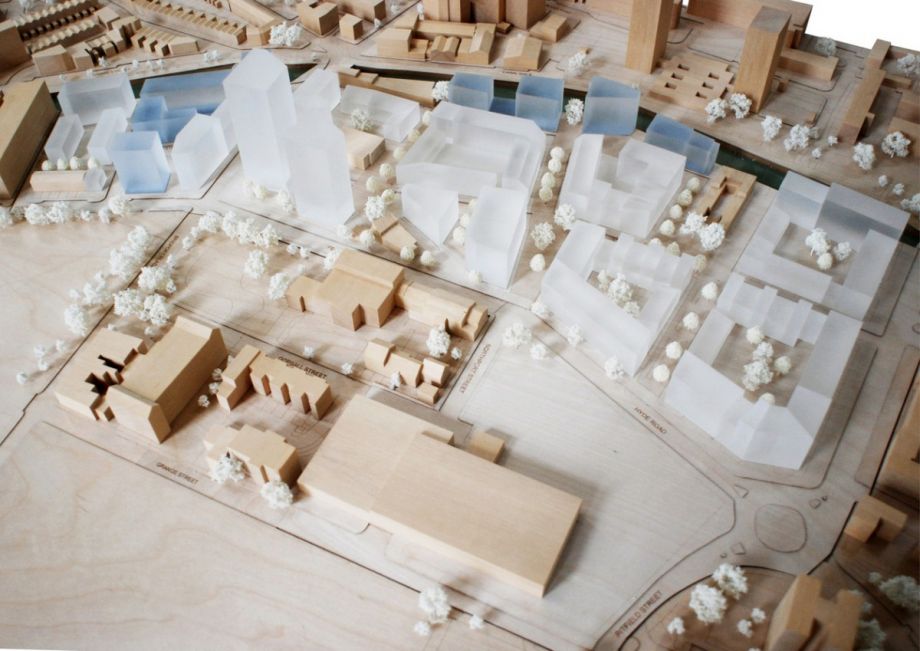
What happens when we take that hyper-local to home right here in downtown Mesa. . . What we get instead is what you < see in the opening image: plans for new construction in the Mormon Temple Area for a Massive Make-Over that mimic the retro-old faux-historic architecture used for the 23-acre Cave Creek, an urban revitalization project in Salt Lake City.
Shall we call it "Cave Creek-Lite" resigning ourselves to outside plans with no local input from downtown residents?
________________________________________________________________________
There's nothing "Mesa-authentic" in the proposed plans that have doubled from about 4 acres into more than 8 acres now. It's not the right thing and it's not the right time.
That's the hype we get and the hype we read:
If you're not directly involved in real estate speculation and development as an investment affiliate of the for-profit tentacles of the LDS Church all this came as a surprise slow-reveal after years of behind-the-scenes planning with city officials, developers, and stakeholders (so they said in announcements from the Mormon Newsroom in May 2018).
No financial details disclosed. No input from the public. 
Is there any redemption at all for this architectural mimicry? 
There's only one local architect - Tim Boyle, with a degree from Columbia University - who did speak up. He's also an appointed member of the City of Mesa's Planning & Zoning Board who panned the bland architecture but nothing else.
_________________________________________________________________________
Here in downtown Mesa, now classified in contiguous census tracts as a distressed low-income neglected neighborhood qualifying to be included in 7,8000 Opportunity Zones nation-wide, we have a crisis in affordable housing that's well documented. 
There's none of that in any of the new behind-the-scenes plans revealed and  announced from Salt Lake City for this new Massive Mormon Make-Over here in Downtown Mesa.
_____________________________________
“The affordable housing crisis here in Mesa is not going away — it’s only getting worse,”
_________________________________________________________________________________

Among three other developer plans made public in the first few months of 2018 - that all somehow seemed to appear at once with no collaboration - there were none that included affordable, equitable, innovative, or inclusive affordable housing.
One stands out like an out-of-scale and out-of-proportion sore thumb proposal in downtown Mesa's mostly one-story historic district for a 15-story luxury high-rise >>
It's featured on the cover of Compass Magazine, published annually by the Mesa Chamber of Commerce.
MESA: A VIBRANT CITY TO LIVE, WORK AND PLAY Now and Tomorrow. . .Inspiring?
“The housing crisis is not going away — it’s only getting worse,”
_________________________________________________________________________
We can do better from the ground-up from the get-go when there's no income-bias that restricts qualifying residents to 40%-50%- 60% of the neighborhood median income level by incorporating 'affordable housing' across the entire income spectrum into any new housing. Otherwise it's a new segregation leading to battles against "Gentrification" that displaces long-time residents.  Easier said than done for sure, but we have to start somewhere here when other cities are proving it can be done.
This study is from Next City if we all been wondering what NextMesa might be:
Elevating the Role of Architects as Advocates for Equitable Housing
"In the early 2000s, urbanist Karen Kubey began thinking about harnessing architecture for social equity. . .

A model of Colville Estates, a publicly-owned, half public housing, half market-rate development in London. (Credit: Karakusevic Carson Architects)
We were sort of fringe characters,” she says of the urbanists, architects and planners who believed architecture could serve as an important piece of more equitable cities. “A lot of [that work] was small-scale, a lot of it was pro-bono.”
In ensuing years, as the world moved toward urbanization and a global housing crisis has emerged, she witnessed a change.
“I’m interested in how some of that thinking has become a part of the way major firms are working and how profitable work is happening,” she says. “The field of architecture is paying much more attention to housing.”
It’s with that in mind Kubey served as guest editor for the latest issue of Architectural Design, titled Housing as Intervention: Architecture Towards Social Equity.
She points out that regulatory constraints, profits for banks and developers, NIMBYism and supply-chain challenges often take center stage in discussions around housing. Architects, Kubey believes, can be powerful voices in the complex housing challenges increasingly dominating cities.
Gordon Lasner’s essay, “Architecture’s Progressive Imperative: Housing Betterment in the 19th and 20th centuries,” presents a historical look in architect’s roles for social change.
“In many respects, architects have limited control, especially in such a diffuse arena as housing,” Lasner writes. Policymakers, developers and lenders tend to shape the larger contours of the system."
Take, for example, the early history of the multi-family apartment building, a common housing type for centuries in Scotland but virtually unknown in England and the United States. In the 1840s, British architects promoted the idea of the multi-family building as a solution to the high cost of urban housing; a parallel campaign in the United States, led by architects like Calvert Vaux, emerged after the Civil War.
Blogger Note: Vaux & Olmstead designed New York City's Central Park
Kaja Kühl and Julie Behrens highlight the work of architects in Berlin in their essay, “Spaces of Migration: Architecture for Refugees.
Local architects rejected the concept of emergency, dormitory-style shelters for refugees and instead advocated for units with private kitchens and bathrooms that could be converted into permanent affordable housing.
In further collaboration, they challenged the mindset of “architecture for refugees” to instead design “architecture for all.”
In London, where city government has re-invested in its public housing stock, the role of architect as advocate has never been more important, argues Paul Karakusevic in his essay, “A New Era of Social Housing: Architecture as the Basis for Change.”
He cautions against a “one-size-fits-all approach” to build or rehabilitate public housing and pushes architects to forge close relationships with residents’ associations and local authorities and use it as the basis for their work.
HERE'S WHERE SOME OF THESE IDEAS HIT HOME HERE IN MESA:
Karakusevic’s firm, Karakusevic Carson Architects, worked to rehabilitate a public housing project with “a community left disillusioned and disengaged after 18 years of stalled schemes,” he writes. “In 2000, approximately half of the estate was demolished, leaving behind a rubble-filled wasteland.”
The firm kicked off its design process in 2013 with the resident’s association at the center. He writes that “through regular steering-group meetings and public-consultation events, the residents were heavily engaged throughout; from the site planning of new streets right through to the internal specifications.”
__________________________________________________________
ONE MORE TIME:
“The housing crisis is not going away — it’s only getting worse,”

Zelensky Calls for a European Army as He Slams EU Leaders’ Response

      Jan 23, 2026 During the EU Summit yesterday, the EU leaders ...