Here's to Memorialize An Epic Year: Living History in 2018
Illustration: Lazaro Gamio/Axios
During many of the peaks and troughs of history, the people living it didn't fully realize what was unfolding: Societal change builds slowly, and the events only added up in retrospect.
But we all know we're navigating breathtaking history: Nearly every day could be — maybe will be — a book.
Part of soaking it in, and understanding and appreciating these consequential times, is hitting "pause" now and then.
Here are just 32 of the momentous events we lived through in 2018, as told on the front page of The New York Times: (Yours to discover .....)
This post today is a somewhat delayed follow-up to an invitation to attend a meeting here in Mesa earlier in this year Please see > SEARCHBOX on this blog site It's from an email Update received in my inbox from Walter Unger, CCIM and Commercial Broker with Kasten Long Commercial Group Walter Unger: Arizona Opportunity Zones As We Understand Them .\
PLEASE NOTE: Disclaimer: This post is by no means intended as an endorsement of any kind - it's information with some maps. No other purpose is implied. Arizona Opportunity Zones As We Understand Them Here's the Nitty-Gritty from Walter Unger: Opportunity Zones As We Understand
If the capital gain from the sale of an asset (real estate or other) is invested in an “Opportunity Zone Fund (O-Fund), the gain can be deferred to December 31, 2026 with a 15% decrease in the taxable gain amount.
If the O-Fund is held for 10 years and sold, there would be no capital gains tax on the O-Fund’s appreciation.
If you are an investor, the ability to defer a capital gain to 2026 might be very attractive PLUS, having no capital gains tax on the O-Funds appreciation could be huge!
Certain Tax Incentive Programs
New Markets Tax Credits (subsidy program for commercial projects and businesses): MNTC Kept
Investment Tax Credit (Solar): Kept
–Bonus depreciation
Historic Tax Credits (subsidy for rehabilitation of older buildings):
–No 10% credit –20% tax credit is kept but is now taken over 5 years instead of in the year of placed in service.
Investment in Opportunity Act
New program – Opportunity Zones (O-Zones) History – Investment in Opportunity Act
Drafted in 2016/Introduced February 2017
Bipartisan Legislation
– Rep. Tiberi (R) – Rep. Kind (D) – Sen. Scott (R) – Sen. Booker (D)
Goal to encourage private capital investment in economically distressed areas.
Opportunity Zone Program
Opportunity Zone Program – The Investment in Opportunity Act was included in the Tax Cuts and Jobs Act 2017
"Phoenix Commercial Real Estate and Investment Real Estate: Investors and Owner / Users need to really know the market today before making a move in owner user Commercial Properties, Investment Properties and land in Phoenix / Maricopa County, Pinal County / Arizona, as the market has a lot of moving parts today. What is going on socio-economically, what is going on demographically, what is going on with location, with competing businesses, with public policy in general — all of these things affect the quality of selling or purchasing your Commercial Properties, Commercial Investment Properties and Commercial and large tracts of Residential Land Therefore, you need a broker, a CCIM (Certified Commercial Investment Member) who is a recognized expert in the commercial and investment real estate industry and who understands Commercial Properties and Investment Properties."
The subject of Opportunity Zones has been highlighted multiple times in posts on this blog starting with a rare public appearance in 2017 by yours truly in front of the City of Mesa's Economic Development Advisory Board commenting on the mystery of a massive 10-parcel low-ball grab of commercial properties on Main Street swooped-up in a monopoly buy-out by one group of what were then 'unknown and private' transactions by investors gambling on rampant real estate speculation for their own personal wealth-creation.
In a series of slow revelations that provoked public anger in public meetings in February 2018, Mesa Conservative Mormon Republican/Mega-Millionaire and Arizona State Senator Bob Worsley provided public testimony at a Mesa City Council session (accompanied by revolving-door ASU lobbyist and former U.S. Congressman Matt Salmon) that yes while holding the public trust elected to public office, he was speculating as a private investor in commercial properties risking what he said was $20 million.
In spite of what seems to most reasonable persons as the appearance of an obvious conflict-of-interest for his own personal wealth-creation while holding public office, that issue was conveniently never addressed or looked into.
The question of an ethical violation never got asked However, citing 'the acerbic political climate' Worsley chose not to run again for another term in the AZ State House. No worries there - he named another conservative Mesa Republican to fill his seat to join the cohort of Mesa Conservative Republicans that exercise control in The State House - among them Rusty Bowers, a couple of Farnsworths and other conservative Mesa Republicans elected in state legislative and congressional districts. ________________________________________________________________________ In April 2018 The U.S. Treasury and Internal Revenue Service announced 7800+ pre-designated "Opportunity Zones" across urban and rural areas in the United States, that include among others in Arizona both Phoenix and Mesa. Mesa has 11 OZones. Blogger Note: Use THE SEARCHBOX on this site to find oodles of opinion and data. One recent publication is this Opportunity Zone Fund Directory Published on November 9, 2018
WASHINGTON, DC — The National Council of State Housing Agencies (NCSHA) has released a significantly expanded third edition of its Opportunity Zone Fund Directory featuring 53 Qualified Opportunity Funds (QOFs) representing nearly $15 billion in anticipated investment in designated high-poverty neighborhoods. NCSHA reviewed public information on these 53 funds and found the following for publicly-announced funds that have been formed for the purpose of attracting investment in Opportunity Zones.
Please note thatNCSHA is tracking only multi-project opportunity funds.
The Opportunity Zone Fund Directory is a compilation of Opportunity Zone funding opportunities. This resource provides descriptions and contact information for publicly-announced funds that have been formed for the purpose of attracting investment in Opportunity Zones. NCSHA is tracking only multi-project opportunity funds. Last Updated: December 3, 2018
On 20 December Dan Gauthier, Rose Law Group transactional attorney handling many Opportunity Zones, commented on O-Zones wide-ranging investment potential:
“Although the early focus of Opportunity Zone investments tends to be on commercial real estate (CRE), the scope of potential investment goes far beyond CRE – the Opportunity Zone program allows for investment in new and existing businesses, infrastructure, renewable energy, and much more.” Link >Rose Law Group Reporter
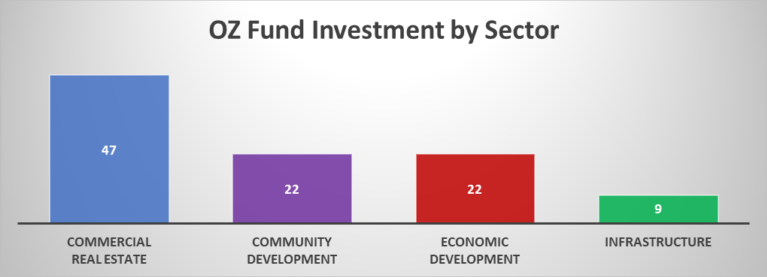
One infographic tells the story where OZone investment goes: and it also tells the story of how and where the OZone private investor monies are getting dumped here in Mesa in the neglected downtown Central Business District 1. OZ Funds Predominantly Target Commercial Real Estate Investment
________________________________________________________________________________
Investment Focus by Sector
% of Funds Investing
Commercial Real Estate: Commercial, Hospitality, Mixed-Use, Multifamily Residential, or Student Housing
89%
Community Development: Affordable Housing, Workforce Housing, or Community Revitalization
42%
Economic Development: Economic or Small Business Development
42%
Infrastructure: Infrastructure or Renewable Energy Development
17%
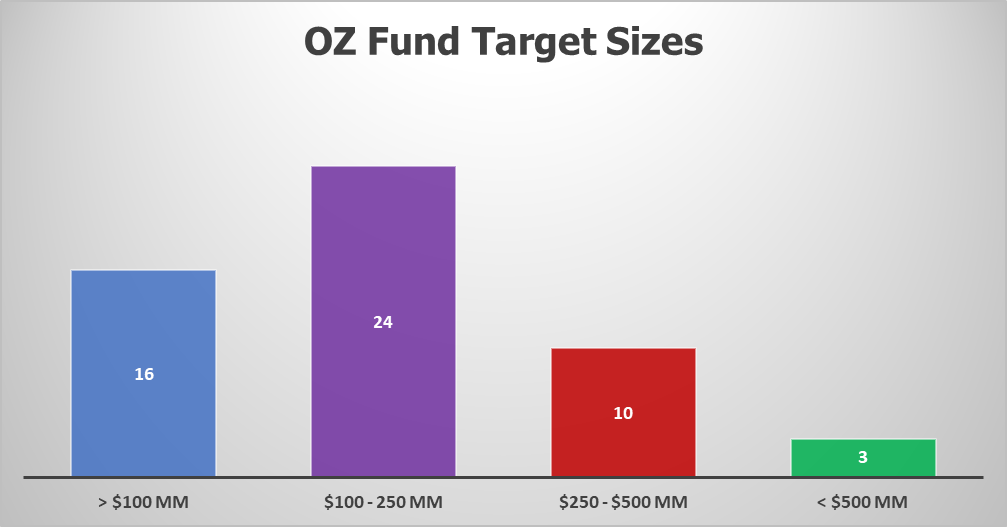
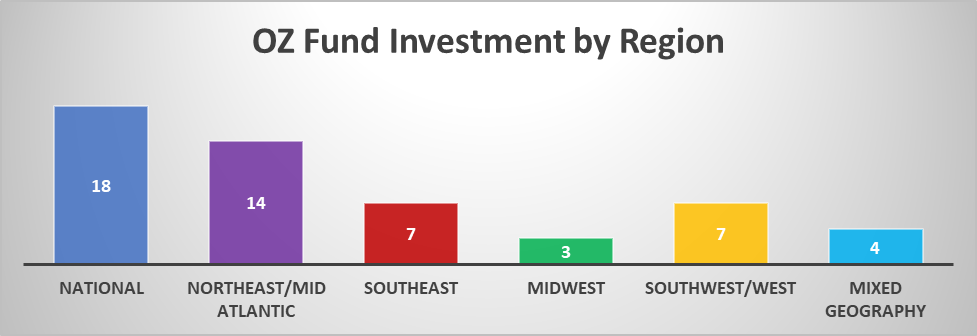
2. Target Sizes of OZ Funds Range Widely Source: NCSHA Opportunity Zone Fund Directory 3.OZ Fund Investment Is Spread Throughout the United States Source: NCSHA Opportunity Zone Fund Directory “The Treasury Department’s recent release of regulations clarifying many important aspects of Opportunity Zone investing has spurred further interest in the program among fund managers,” said NCSHA Executive Director Stockton Williams. “With additional regulatory clarity that we hope is forthcoming soon, the program will be even better able to achieve its promise to revitalize rural as well as urban areas.”
Complying with the new “Opportunity Zones” section of the Tax Cuts and Jobs Act of 2017, the Fund will invest directly into a diversified portfolio of assets in qualifying zones, allowing investors to take advantage of preferential tax treatment.
Caliber Tax Advantaged Opportunity Zone Fund, LP Investment Details
$500m Equity Offering
$250k Minimum Investment
13% Target IRR
______________________
Discover Opportunity Zones
Opportunity Zones are communities that have been designated by state and federal governments where new investments aimed at improving these areas are incentivized with preferential tax benefits.
HUH? We're not talkin' about adultery or cheating or white-collar crime scandals or dirty money and/or other vices that that either get taxed, go unpunished or afflict the human spirit. No no no - in another report from Dan Primack on Axios.com it's sports-betting and what he calls 'marijuana' [stuck in a champagne flute-glass in the article's illustration]
Illustration: Aïda Amer/Axios
Don't bet against sin industries like marijuana and sports betting in 2019, even if the broader economy and markets stumble, Axios' Dan Primack wrote:
Industries usually develop organically, including all the layers of infrastructure and logistics. These won't. Instead, they're being born into adulthood by rapidly-expanding legalization.
As a sign of high times, former Speaker John Boehner and former Massachusetts governor Bill Weld this year joined the board of a cannabis company, Acreage Holdings. Boehner invoked the need for veterans to access the drug legally.
And the farm bill signed this month legalizes hemp at the federal level.
Be smart: Lots of these companies will fail. But there will be some analysts who can't see the growth for the growing pains.
The legal marijuana industry had a banner year in 2018, as the global market exploded and cannabis pushed its way into the financial and cultural mainstream, Gillian Flaccus ("a member of the AP's marijuana beat team") writes:
"Liberal California became the largest legal U.S. marketplace, conservative Utah and Oklahoma embraced medical marijuana, and the U.S. East Coast got its first commercial pot shops" in Massachusetts in November.
"Canada ushered in broad legalization, and Mexico's Supreme Court set the stage for that country to follow."
"U.S. drug regulators approved the first marijuana-based pharmaceutical to treat kids with a form of epilepsy, and billions of investment dollars poured into cannabis companies. Even main street brands like Coca-Cola said they are considering joining the party."
"A majority of U.S. states have legalized marijuana to varying degrees, and U.S. companies are scrambling to get in on the action," the AP Markets Team adds:
"Both the NYSE and Nasdaq saw their first purely cannabis companies list shares in 2018. But stocks in the companies that produce and sell marijuana have largely underperformed the overall market this year."
An exception to the trend, per the Boston Globe: "New Hampshire’s libertarian streak has long been a source of pride for residents, but for cannabis users, that self-image isn’t living up to reality. With pot legalization sweeping through New England, New Hampshire is now an island of prohibition."
"Unlike Rhode Island, whose governor recently said the tiny state could be driven by peer pressure into legalizing the drug soon, [the Granite State] wants to hold out against the rising political tide."
"New Hampshire is surrounded by Vermont, Canada, Maine, and Massachusetts — all of which have legalized marijuana."
Flashback: The battle to legalize sports betting was won in May at the U.S. Supreme Court, and the specifics are being worked out in state legislatures and by the professional sports leagues.
Go deeper: Dan Primack, "The high-stakes game for sports betting dollars."
Yeah! 1 fun thing: Way back in 1969 your MesaZona blogger was there, driving up from Philadelphia with five other Temple University grad students - along with more than 400,000 other people arriving in one huge celebration in August 1969 for what was to become a history-making 3-day event of almost over-sized biblical proportions to a small town in New York State. The surprise gathering blew everyone's minds when thousands arrived en masse in unprecedented numbers all-at-once at Max Yasgur's farm for a music festival soon-to-become an American legend that no one was really prepared for . . .
Woodstock!
N.Y. Daily News Archive via Getty Images
A three-day music festival will be held in August at the original Woodstock concert site in Bethel, N.Y., to mark the 50th anniversary, the AP reports:
"The Bethel Woods Center for the Arts, a concert venue built on the original Woodstock site, announced ... that it will host the golden anniversary event Aug. 16-18."
"The center says performers will include 'prominent and emerging artists spanning multiple genres and decades.' The venue says talks by 'leading futurists and retro-tech experts' will also be featured."
"The Woodstock Music and Arts Fair held Aug. 15-17, 1969, drew more than 400,000 people to Max Yasgur’s farm in the Sullivan County town of Bethel, 85 miles ... northwest of New York City."
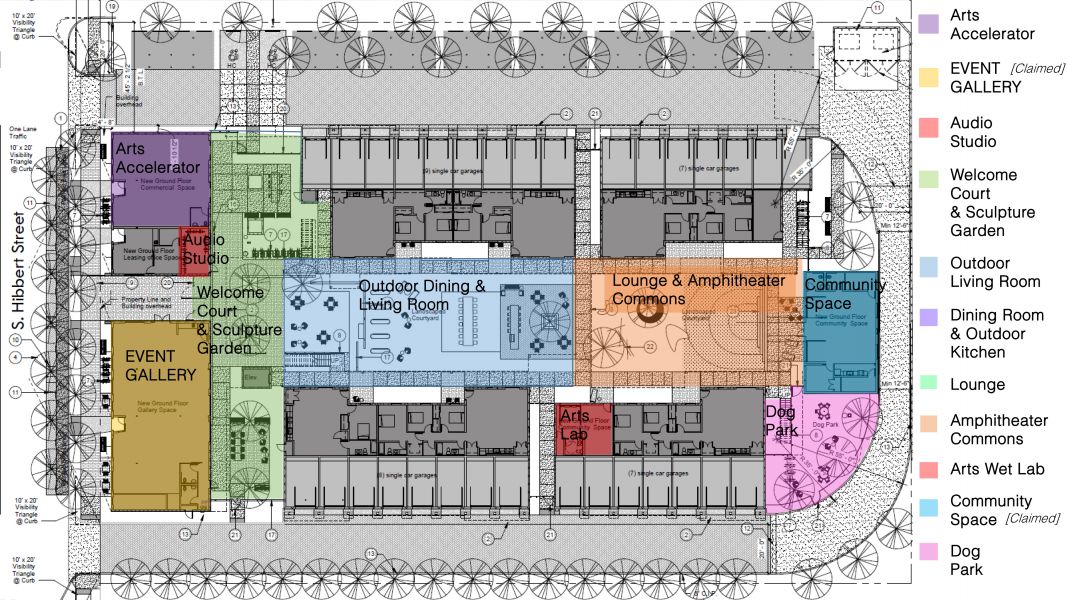
Here we go > 1/23. What began as an idea six years ago in 2012, followed by feasibility studies and surveys that struggled to get funded in rounds-of-financing, that finally got shovel-ready to rise in July 2017 in a Ground-Breaking Celebration over a long-vacant neighborhood downtown eyesore/city-owned lot called Temple Square, is now ready for the public to experience the space after artists moved in April 2018. Now in operation since the Summer of 2018, the Mesa Artspace Lofts includes 50 units of 1-, 2-, and 3-bedroom live/work space for artists and their families. Unit rents serve households below 60% of area median income levels.
"Art has such a great effect on the community, an emphasis on art provides so much richness and brings people together."
- Liz Morales, Mesa Housing and Community Development Director
Please join the Mesa Artspace Lofts resident artists and Artspace staff for an evening of art, performances, and family-friendly fun on Wednesday, January 23rd, 2019 Experience the Space! Celebrate the Grand Opening of the Mesa Artspace Lofts, home to 50 artist families including musicians, painters, poets, singers, writers and more. The Mesa Artspace Lofts resident artists invite you to experience their space and explore the Mesa Artspace Lofts campus with performances galore.
Attendees should be ready to be wowed with a supercharged line-up including: ventriloquist-rapper Zack Beard and Fuzzy (the puppet); Mister Stitch’s Radio (aka Daniel Coon); musician-poet Loryn (aka Lorin Drexler); poet Isarae Koval; comedian Faith Morris; musician-poet Therosia Reynolds; painter Gina Ribaudo-Delap; DJ Ronnie Digital (aka Ronnie Sunday); musician Tina Vale; vocalist Alejandra Valenzuela; and writer Michelle Ann Vincent. The evening will also include a heartfelt speaking program, refreshments, open artist studios, and art installations. Expect a little something fun for the kiddos, too. This community event is FREE and open to the public.
We encourage you to RSVP at artspace.org/mesa Tell your friends & share the fun with #experiencethespace and #mesaartspace Artspace gratefully acknowledges the following lead contributors to the Mesa Artspace Lofts: JP Morgan Chase
Gotta wonder exactly what Bloomberg News was thinking for what they said were some of 2018’s hottest social trends that somehow told us about America’s economy. Hard to believe that e-scooters are #1 at the top of their list that was published online yesterday at 10 pm calling them all a catch-all phrase of recent 'cultural phenomena'. Notice in the opening image that riders are wearing helmets in the street, not on the sidewalks. The City of Mesa has still not figured out to regulate the hazards to public safety after 3 Venture Capital-funded start-ups dumped them on the sidewalks here in downtown months ago. . . note helmets and scooters on the street There's a lot of these looking-back and looking-ahead stories:
What Eight Social Trends Told Us About America's Economy in 2018
1. Sidewalk Scooters . . .the hippest toy circa 2000 staged a comeback among suit-and-tie clad urbanites. Electric two-wheelers are a thing from Washington to Los Angeles. It’s a sign that as the American population shifts away from small metros and toward cities and their immediate suburbs, it’s prompting people to look for new, inexpensive and efficient means of getting around. 2. The Headquarters Showdown Mark Muro and Jacob Whiton at the Brookings Institution found in a December analysis that job-creation in four key big tech industries -- software publishing, data processing and hosting, computer systems design, and web-publishing and search -- employment is concentrating as it grows. The top 10 metro areas for digital services held 44.3 percent of all jobs in 2017, but captured 49.1 percent of new jobs added in the sector from 2015 to 2017.
3. Adult DormsOne dark side of winner-takes-all metro growth?
See the infographic > Decelerating, Accelerating
Of the 100 largest markets, these ones saw the biggest rent declines or gains
4. Insta-Shopping
. . . Millennials and Gen Z are far more diverse than prior generations, so it makes sense that they’d reshape commerce in their image.
5. Sneaker Bubble?
. . . while the fate of sneaker speculation remains to be seen, stocks have started coming back to Earth. Equity prices fell late this year after rising steadily following President Donald Trump’s 2016 election. 6. Bitcoins vs. Cash Coins
. . . are we looking at the future of money?
7. Juice and Crystals
When it comes to cash, consumers have been pouring theirs into goods and services loosely labeled “self-care” -- from vitamins to jade facial rollers, plant-based diets to snuggly clothes and blankets. Google searches for the term “self care” headed up sharply this year and last.
8. Ghosting, Quitting, and Moving On In fact, this was a good year for labor all around, as open positions exceeded unemployed people for the first time on record.
Workers embraced their newfound leverage by bringing an online-dating playbook to the job.
They walked out on unwanted gigs and ignored interview callbacks like a bad Tinder match.
Some even began “ghosting”: simply failing to turn up to work.
It could be that 2018 is peak labor-power this cycle, but most economists project a tight 2019 job market.
So here’s to a prosperous, paycheck-padding New Year.
— With assistance by Reade Pickert, Andrew Mayeda, and Steve Matthews