Monday, July 27, 2020

Arizona Corporate Commission 8/7/2020 BTA Special Open Meeting Notice & Agenda

Please stay tuned - The Agenda will follow. . .
OK > SPECIAL OPEN MEETING OF THE ARIZONA CORPORATION COMMISSION
11th BIENNIAL TRANSMISSION ASSESSMENT
Docket No. E-00000D-19-0007


ARIZONA CORPORATION COMMISSION
 EXECUTIVE DIRECTOR
Matthew J. Neubert

SECRETARY
Carolyn D. Buck
Phone: 602-542-3931
cdbuck@azcc.gov
 COMMISSIONERS
Chairman Robert "Bob" Burns
Boyd Dunn
Sandra D. Kennedy
Justin Olson
Lea Márquez Peterson
 
 
   Print 
 
NOTICE
SPECIAL OPEN MEETING OF THE ARIZONA CORPORATION COMMISSION

11th BIENNIAL TRANSMISSION ASSESSMENT
Docket No. E-00000D-19-0007
 
Friday, August 7, 2020
 
10:00 a.m.
 
Hearing Room One
1200 W. Washington St.
Phoenix, AZ 85007
                                                                             
This shall serve as notice of an open meeting at the above location for consideration, discussion, and possible vote of the items on the agenda and other matters related thereto.  Commissioners may attend the proceedings in person, or by telephone, video, or internet conferencing, and may use this open meeting to ask questions about the matters on the agenda. The parties to the matters to be discussed or their legal representatives are requested, though not required, to attend telephonically.  The Commissioners may move to executive session, which will not be open to the public, for the purpose of legal advice pursuant to A.R.S. § 38-431.03 (A) (3) on the matters noticed herein.
 
Because of the guidance issued by state and federal officials regarding the Covid-19 pandemic, meetings of 10 or more should be by teleconference only. Only essential Commission staff will attend in person. The public is strongly discouraged from attending in person.  The public will be able to participate by either watching and listening to the meeting online or listening to the meeting via telephone.  For those wishing to enter an appearance or provide public comment for a particular item please use the dial in phone numbers. Once the item for which you are appearing or providing public comment is concluded, please hang up and watch the live stream.
 
Persons with a disability may request reasonable accommodations by contacting the Commission Secretary listed above.

 
Agendas are also available online atazcc.gov/agendas
 
Dial-in Phone Number: 1-866-705-2554 Passcode to Speak: 241497
                                        1-866-705-2554 Passcode to Listen Only: 2414978
 
This meeting will be available online athttp://www.azcc.gov/live
 
NOTE:  The Commission may choose to take testimony under oath.
 
 
AGENDA
 
  1. Agenda to Follow

GeoSpatial: Changing The Design of Cities

We'll have to wait-and-see . . .
off the cuff
Anusuya Datta
Editor-At-Large
Technology & Innovation
anusuya@geospatialmedia.net
Anusuya Datta

Will COVID-19 change how our cities are designed in the future?

Major cities around the world have borne the brunt of the COVID-19 pandemic. Like it has been throughout history. The Black Death ravaged every major European city in the Middle Ages. This time too, the virus originated in Wuhan, the most populous city in Central China, before spreading to other major cities around the world. If New York has so far been the grimmest example of a COVID-19 hotspot, the scene has been only a shade better for London, Madrid, New Delhi, Mumbai, Sao Paulo or Moscow. Urban areas have been most affected because of a combination of factors such as city size, population, connectivity to other major cities whether nationally or internationally, health infrastructure, and most importantly, the sizeable number of the urban poor.

The current chaos has exposed some of the fundamental flaws in the way our cities were planned and designed, or, in some cases, not planned or designed at all. It has also exposed the vulnerabilities in our public health systems, quality of governance and growing inequalities, bursting the bubble around some of the concepts of smart cities.

Is there an opportunity here for urban planners to plan for the future? Right now, the imperative is to contain the spread of the virus and reopen the economy to start production. Towards that, the immediate shifts could be felt in rising remote work culture, digitalization of retail and move to a cashless economy. In the longer run, there could be an acceleration towards contactless smart infrastructure, driverless cars and total automation of assembly lines.

This is also an opportunity now for city planners to focus on green initiatives, upgrade their zoning and procurement policies to promote smart density and greener investment. The lessons learnt from this crisis should be used to make our cities more resilient, more sustainable and smarter in their use of technology.


Read More >>
 

ICYMI: HUD Secretary Ben Carson Provides Update on Opportunity Zones Initiative During Virtual Event with Bisnow

Ooops! Your MesaZona blogger did miss this - buried in the inbox on July 13th.
The Best Practices Report is 69 pages long - from May 2020
SPOILER ALERT: The press release with some details from 17 June 2020 is inserted below for your reference, but first a note that there have - all of a sudden - a series of pressers
_________________________________________________________________________
Here's one from 3 days ago about a discussion Ben Carson had on Fox & Friends

In Case You Missed It | HUD Secretary Ben Carson Discusses Return of Local Control in Advancing Fair Housing on ‘Fox and Friends First’
____________________________________
 
U.S. Department of Housing and Urban Development (HUD) Secretary Ben Carson joined ‘Fox and Friends First’ on Friday morning to discuss HUD’s termination of the Obama Administration’s Affirmatively Furthering Fair Housing (AFFH) regulation issued in 2015, which proved to be complicated, costly, and ineffective.
In an effort to advance fair housing nationwide, HUD’s  brand-new rule, called Preserving Community and Neighborhood Choice, returns control to localities and those that live in them. It defines fair housing broadly to mean housing that, among other attributes, is affordable, safe, decent, free of unlawful discrimination, and accessible under civil rights laws. It then defines “affirmatively furthering fair housing” to mean any action rationally related to promoting any of the above attributes of fair housing.
 
 
Highlights
Restoring Federalism: “[The 2015 AFFH Rule] was overly burdensome, cumbersome. It put the government in charge of how communities and neighborhoods were built and how they were operated – that is anti-federalism. That’s not how our system was built.”
 
Obliterating the Backlog of Fair Housing Complaints: “When we came in [to HUD], there were thousands upon thousands of back-logs of civil rights cases, housing rights cases. We obliterated 22,933 cases since we’ve been in [office] that were backlogged from before.”
 
A Clear Record on Furthering Fair Housing: “We’ve taken actions against cities like Los Angeles that were not accommodating disabled individuals, Facebook, all these places. We’re very active in doing it, all you have to do is look at the record. We want to do things that make sense, not things that impose bureaucratic control over the people of the United States.”
 
Protests and Unrest: “Don’t listen to these forces of hatred and division that have popped up all over the place. We need to recognize that there is something we can each do in our sphere of influence and we need to teach that – the people…must be willing to stand for what they believe. You can’t stand in the corner and let the radicals speak all the time because people start to believe that maybe that’s the mainstream now - it is not the mainstream by any stretch of the imagination.”
 __________________________________________________________________________________
HUD No. 20-083
HUD Public Affairs
(202) 708-0685
FOR RELEASE
Wednesday
June 17, 2020
WHITE HOUSE OPPORTUNITY AND REVITALIZATION COUNCIL DELIVERS REPORT TO PRESIDENT DONALD J. TRUMP
Report Outlines Best Practices and Features Examples of Community Revitalization Occurring Across the Nation in Opportunity Zones
WASHINGTON - Dr. Ben Carson, Secretary of the U.S. Department of Housing and Urban Development and Chairman of the White House Opportunity and Revitalization Council (Council), delivered a report this month to President Donald J. Trump outlining Opportunity Zone best practices and examples of revitalization occurring across the Nation.
On December 12, 2018, President Trump established the Council to support the Administration's pledge to encourage public and private investment in urban and economically distressed areas, including Opportunity Zones.
Since the Council's one-year report was issued in December of 2019, the Council has taken approximately 80 additional action items-for a total of more than 270-to promote the mission of Opportunity Zones.
"On behalf of the Council, we are pleased to issue this report, which includes case studies and best practices observed by the Council across the country," said Council leadership in the report to the President.
"There are inspiring stories happening in real time, with action being taken by State governments, local governments, Qualified Opportunity Funds, public-private partnerships, and others to spur revitalizing investments in the areas of most need. This report will prove to be especially helpful and encouraging to communities as they continue to admirably fight the invisible enemy known as COVID-19."
The Council's report features months of hard work and observation of community redevelopment and nourishment.
The report is divided into five sections and makes references to the newly released Volume Two of the Council's Community Toolkit, which is also available on the "OpportunityZones.gov" website.
The five sections of the report include the following:
(1) Best Practices of Local Governments,
(2) Best Practices of State Governments,
(3) Best Practices of the Foundations and Non-Profits Making an impact in Opportunity Zones,
(4) Best Practices of Qualified Opportunity Funds, and
(5) Pairing Opportunity Zone Capital with Federal Resources.
A brief description and excerpt of each of the five sections can be viewed below.
  1. Best Practices of Local Governments
    The report features examples of communities that have put their residents' voices first with respect to Opportunity Zones. It identifies several cities that have emerged as national leaders in the Opportunity Zones space. The best practices of local governments include utilization of existing community infrastructure and anchor institutions in accordance with revitalization strategies, and removal of unnecessary barriers to construction. Additionally, this section discusses projects planned for years that had languished until the Opportunity Zones incentive was established. The report looks beyond Qualified Opportunity Fund investments and considers the ways that Opportunity Zone communities have leveraged their designation for other types of investment as well.

  2. State-Level Actions Benefiting Opportunity Zones
    The report identifies legislation and executive actions that States have taken to aid the Federal Opportunity Zones mission. The report further discusses the efforts of State agencies to become involved in the Opportunity Zones space, including through contests and competitions, and outlines ways that State-specific actions regarding Opportunity Zones have created certainty and stability for investors. The second section also features examples of State websites that offer a "matchmaking service" between investors and entrepreneurs in Opportunity Zones. Each State's Opportunity Zones-related website link can be found on the homepage of the "OpportunityZones.gov" website.

  3. Foundations and Non-Profits Making an Impact in Opportunity Zones
    The report offers examples of national foundations with billions of dollars in assets that provide support to Opportunity Zone communities and investors who seek to make a positive social and economic impact. It also offers examples of charitable organizations that are focused on issues within the Council's work streams-issues like reentry for those who have served time in prison; housing affordability for those who are cost-burdened; and mentorship for at-risk youth.
    The third section also highlights best practices of private financial institutions that have devoted considerable resources towards establishing unique and innovative tools that can help drive investment in Opportunity Zones and benefit communities across economically distressed areas, whether they be rural, urban, suburban, or tribal. For example, MasterCard's Center for Inclusive Growth has developed a toolkit that reveals insights into the current state and potential for inclusive growth in Opportunity Zones across the country. Likewise, Citi has launched a data-driven platform to support Opportunity Zone investments by aggregating key social information about different Opportunity Zones. The report also references the teams that competed in the Opportunity Zones component of the 2019 Opportunity Project sprints, an initiative of the U.S. Census Bureau.

  4. Best Practices for Qualified Opportunity Funds
    As the private sector engine of the Opportunity Zones initiative, Qualified Opportunity Funds are critical on the path towards revitalization. This report provides overviews of specific deals across the country, with the understanding that none of the examples identified are endorsed by the Council. This section considers different geographies, varying industries, and multiple ways that private sector investors have interacted with public sector counterparts, emphasizing examples of Opportunity Zone investments that correlate with the mission of the Council's different work streams. Readers will discover how Qualified Opportunity Fund capital can be paired with other elements of a given capital stack and how those utilizing this new tax incentive can also leverage existing incentives for revitalization.

  5. Paring Opportunity Zone Capital with Federal Resources
    The report traces many of the individual agencies that comprise the Council and focuses on the relevant work streams that drive the Council's activities. There are case studies that describe the pairing of Qualified Opportunity Fund capital with Federal grants and outline how Federal resources have been used to host roundtables and workshops focused on the Opportunity Zones initiative. The report dives into some of the data that agencies have collected thus far. For example, this section discusses ways that the Opportunity Zones efforts of the U.S. Department of Agriculture (USDA) have helped bring broadband to underserved areas; how Economic Development Administration (EDA) grants have allowed rural tribal communities to welcome more tourists and fishermen; and the potential for better health outcomes experienced by Opportunity Zone residents via U.S. Department of Health and Human Services (HHS) grants. This section also highlights tools developed by Federal agencies for the purpose of benefiting Opportunity Zones through the sharing of information-such as EDA's web-based tool, developed in partnership with Indiana University and its Kelley School of Business, and an interactive map by the U.S. Department of Transportation (DOT) that highlights Federal investment in major infrastructure projects located in and around Opportunity Zones.
This report closes by discussing Federal and private data resources for analysis by researchers and decision making for investors, communities, and policymakers.
In its conclusion, the report looks both backward and forward. It assesses the current state of Opportunity Zone revitalization across America, and outlines what must be done to protect and expand the progress that has been made.
The report also makes clear that one of the important features of the Opportunity Zones incentive is its decentralized nature.
Thus, the Council is not in a position to identify every single best practice, and this report should not be construed as an all-inclusive or exhaustive list of best practices and case studies.
The Opportunity Zones incentive will be successful only if the voices and needs of each community and its residents are heard-a core belief of the Council's mission.
###
HUD's mission is to create strong, sustainable, inclusive communities and quality affordable homes for all.
More information about HUD and its programs is available at www.hud.gov and https://espanol.hud.gov.

For information about Opportunity Zones visit: https://opportunityzones.hud.gov/

_________________________________________________________________________

In Case You Missed It | hud Secretary Ben Carson Provides Update on Opportunity Zones Initiative During Virtual Event with Bisnow
____________________________________
 
During a virtual event with Bisnow, U.S. Department of Housing and Urban Development (HUD) Secretary Ben Carson discussed the Best Practices Report that the White House Opportunity and Revitalization Council recently submitted to President Trump.
“[I]t is important to note that action on Opportunity Zones has not been limited to the Federal level. Across the country, State and local governments, and community leaders are developing Opportunity Zone strategies that best suit the needs of their unique communities,” said Secretary Ben Carson.
“Our new Opportunity Zone Best Practices report is a toolkit for communities across the Nation.”
The event, which was co-sponsored by the National Multifamily Housing Council (NMHC), also featured Deputy Assistant to the President Ja’Ron Smith,  HUD’s Deputy Chief of Staff Alfonso Costa, and Executive Director of the White House Opportunity and Revitalization Council Scott Turner, who provided updates on the initiative.
A person wearing a suit and tie

Description automatically generated


Find Secretary Carson’s full remarks here.
To learn more about the Opportunity Zones initiative, visit www.OpportunityZones.gov

On-Track: Brightline XPressWest High-Speed Train From La-La-Land to Las Vegas

Brightline-Los Angeles-Las Vegas-high-speed-train
That's right! Florida-based Brightline got a final private activity bond allocation needed to build its high-speed ... [+] rail line between Southern California and Las Vegas. Brightline
XpressWest, a high-speed rail line that will connect Southern California to Las Vegas, won $200 million of private activity bonds from Nevada, a critical final public allocation that allows the company owned by Wall Street investor Wes Edens to raise an additional $800 million for the project.
Los Angeles-To-Las Vegas High-Speed Train Wins $200 Million Nevada Bond Allocation
“This plan creates jobs without using taxpayer dollars and without impacting our state's ability to finance future projects, and will allow a new, convenient mode of transportation between Nevada and California,”
Nevada Governor Steve Sisolak said. XpressWest says the project will create a total of 30,000 construction jobs and 1,000 permanent jobs in the neighboring states once the line is up and running in a few years.
“The lack of passenger travel by train in this country is a travesty,” Edens told Forbes early this year.
“It’s a gigantic opportunity.” 
Construction is to start late this year and the company estimates it will attract 10 million riders annually.
“Large-scale construction projects are a critical piece of rebuilding our economy, and private activity bonds are a perfect mechanism to incentivize the private sector to deliver public benefits,” said Sarah Watterson, chief development officer for XpressWest.
Private activity bonds, created by the federal government for high-cost infrastructure projects, are tax-exempt but do not use public funds."

Sunday, July 26, 2020

Economic Out-Takes > Delays, Surges, Gaps, Changes + Strategies

Here we go again! 
Fed to Debate Dimming Outlook as Virus Surges,
Fiscal Help Hangs
                    
New outbreak has taken hold since policy committee last met           
Central bank to debate strategy shift as Congress works on aid
 
". . . U.S. central bankers have primarily been pondering two things in recent months, according to the records of their April and June policy meetings.
The first is whether the economy would gradually recover throughout the rest of 2020 from the sharp contraction in the second quarter, or whether a second wave of coronavirus outbreaks later in the year would put that rebound on ice. Fed staff economists had been advising policy makers that, given the extraordinary degree of uncertainty, both scenarios were equally plausible. . .
. . . More important for the economy at this juncture is the decision lawmakers in Congress will make about another fiscal relief package for households and businesses -- on top of the roughly $3 trillion in aid that’s been authorized so far -- which is currently being debated and expected to be finalized in early August. . . "
READ THE SOURCE > Bloomberg 07.26.2020
________________________________________________________________________
Summers Warns Economy in Grave Danger If Stimulus Lapses
Updated on     
Ex-Treasury secretary has never seen more uncertain recovery           
Echoes former NY Fed chief Dudley on risks from benefits cliff 
"Former U.S. Treasury Secretary Larry Summers said he’s never seen a more uncertain recovery, especially if Congress doesn’t act “strongly and quickly” to continue economic stimulus to offset the coronavirus pandemic.
More important than the size of the next relief package is how long the emergency measures last, given the vast number of Americans now unemployed, the former Obama and Clinton administration official said in an interview on “Bloomberg Wall Street Week.”
". . . A growing body of evidence indicates America’s rebound is stalling, days before hundreds of billions of dollars’ worth of federal aid is set to expire. It could be weeks before the next round of stimulus is completed given wrangling between the White House and Congress; talks are expected to continue this weekend. . .
Summers, a former Harvard University president who headed the National Economic Council under President Barack Obama, warned that the U.S. risks the biggest falloff in stimulus in the country’s history as Congress drags its heels.
His comments echoed those of former New York Fed President William Dudley, who said on Thursday that the U.S. economy will be weaker if the Congress doesn’t replace expiring unemployment insurance assistance.
We’re basically right at the edge of a huge fiscal cliff . . ."
________________________________________________________________________
                     
                    
Europe’s Economy to Outpace U.S. in Upending of Past Roles
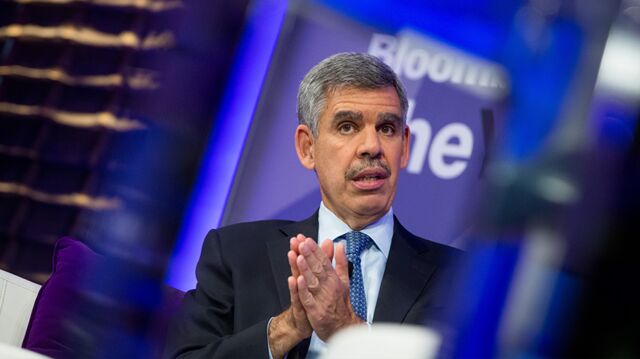
El-Erian Says U.S. Recovery Slowing, Not 'Moving Backwards'
The euro area economy is for once set for a sprightlier recovery from crisis than the U.S., thanks to starkly different responses to the coronavirus.
America’s failure to get a grip on the pandemic is putting the brakes on its rebound compared with Europe, where many former virus hot spots managed to resume economic activity without causing a similar surge in infections.
Crucial for a sustainable recovery is confidence that the virus is no longer out of control, and Europe’s relative success may help encourage shoppers to spend and businesses to invest, further propelling demand and growth. The region has also done a better job of protecting jobs and incomes, at least for now, with furlough programs keeping millions of workers on payrolls.
Daily Activity Indices
In the race to recover, Europe extends its lead over the U.S. and U.K.
According to JPMorgan Chase & Co., Europe will do better because it has “broken the chain” that links mobility and the virus. Goldman Sachs Group Inc. has cited effective virus control as one reason it expects a “steeper and smoother rebound in the euro area than elsewhere.”
“It’s very clear that the euro area turned down more sharply but we also expect it to bounce back more sharply,” said Jari Stehn, chief European economist at Goldman Sachs.
“It’s pretty rare that the euro area would outgrow the U.S. over a horizon of one to two years.”
Sources: Bloomberg Economics, Google, Moovitapp.com, German Statistical Office, BloombergNEF, Indeed.com, Shoppertrak.com, Opportunity Insights
 
> Just because Europe is in a relatively better position to come out of this in the second half of the year, “doesn’t mean the U.S. can’t catch up,” said Michael Gapen, chief U.S. economist at Barclays Plc.
> In the U.S., the $2 trillion rescue package that Congress passed in March ranks among the most aggressive in history, but the distribution has been patchy and uneven. . .
> High-frequency data suggests “things have stalled out, either because there’s exhaustion of initial pent-up demand or because of the virus creating a change in consumer behavior,” said Michelle Meyer, head of U.S. economics at Bank of America Corp. While the third quarter will get a boost from initial state reopenings, “now the question is, how sustainable is that bounce?”
Read More:
— With assistance by Bjorn Van Roye, Zoe Schneeweiss, Brian Swint, and Michael Msika
________________________________________________________________
ONE MORE >
Intel Corp.’s decision to consider outsourcing manufacturing heralds the end of an era in which the company, and the U.S., dominated the semiconductor industry.
 
The move could reverberate well beyond Silicon Valley, influencing global trade and geopolitics
 
 
Intel ‘Stunning Failure’ Heralds End of Era for U.S. Chip Sector
  • World’s largest chipmaker considers outsourcing manufacturing
  • Crucial technology expertise is shifting overseas, to TSM
  •                     
Most other U.S. chip companies shut or sold domestic plants years ago, and had other firms make the components, mostly in Asia. Intel held out, arguing that doing both improved each side of its operation and created better semiconductors. That strategy is in tatters now, with the company’s factories struggling to keep up with the latest 7-nanometer production process.
After Chief Executive Officer Bob Swan said Intel is considering outsourcing, the company’s shares slumped 16% on Friday, the most since March, when the stock market plummeted in the early days of the Covid-19 pandemic.
“We view the roadmap missteps to be a stunning failure for a company once known for flawless execution, and could well represent the end of Intel’s computing dominance,” Chris Caso, an analyst at Raymond James, wrote in a research note on Friday.
. . . Intel’s Xeon chips run computers and data centers that support the design of nuclear power stations, spacecraft and jets, while helping governments quickly understand intelligence and other crucial information.
Many of these processors are made at facilities in Oregon, Arizona and New Mexico.
If Intel outsources this work, it would likely be done by Taiwan Semiconductor Manufacturing Co., which focuses on production and is currently the world leader. It’s based in Hsinchu, one of the closest Taiwanese cities to China, which considers the Asian island a rogue province rather than an independent country.
“With the latest push out of process technology, we believe that Intel has zero-to-no chance of catching or surpassing TSMC at least for the next half decade, if not ever,” Susquehanna analyst Chris Rolland wrote in a research note. He thinks Intel should sell its plants to TSMC, although he says that’s unlikely.