Saturday, June 12, 2021
Inside The World's Largest Chips Factory TSMC: A Robot Factory In Taiwan China
Off-Shoring to Inland Ports (or Safe Havens?)
Friday, June 11, 2021
Dateline June 11,2021 12:39 PM EDT 2021 Pulitzer Awards Announcement: Prizes, Contenders and Speculation + A SPECIAL CITATION FOR A CELLPHONE RECORDING
Pulitzer Prizes 2021: The Full List Of Winners
The 2021 Pulitzer Prizes, journalism’s highest honor, were announced Friday after a historic year shaped by a nationwide racial justice reckoning, a polarizing presidential election and a devastating global pandemic.
The Pulitzer Prize Board postponed the awards, originally slated for April 19, for the second consecutive year so that its 18 members could deliberate in person, rather than remotely. The annual awards luncheon, usually held at Columbia University, is also delayed until the fall.
> One big contender for a Pulitzer this year was The New York Times’ investigation of the income tax information former President Donald Trump kept from the public called “The President’s Taxes,” written by Scripps Howard Award and the George Polk Award winners Russ Buettner, Susanne Craig and Mike McIntire. Although that story didn’t take home a prize, The Times won the Public Service and Criticism Pulitzers for its extensive coronavirus coverage and Wesley Morris’ piece titled “My Mustache, My Self” on the intersection of race and culture in America, respectively.
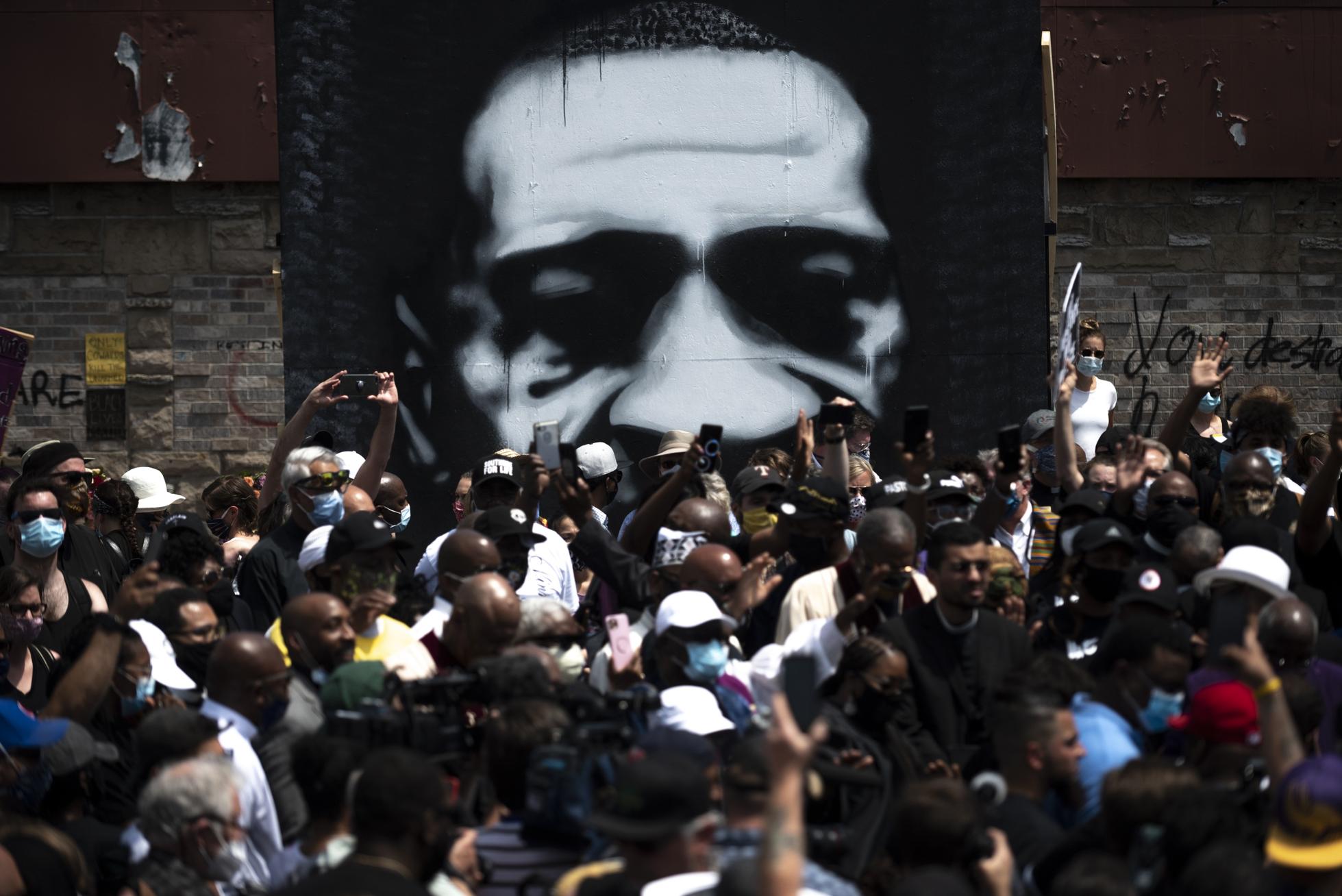
> Minneapolis’ Star Tribune, which was honored bythe Scripps, Polk and Online News Association Awards, was also speculated to win for its piece “The Killing of George Floyd,” as Scripps called the article “a local news story that quickly became the global epicenter of America’s long struggle with racial inequality and injustice,” according to Poynter. For that story and more, the publication’s staff was named the winner of the Breaking News Reporting Pulitzer.
> Notably, 18-year-old Darnella Frazier was honored with the Special Citation for her cell phone recording of Floyd’s murder, “a video that spurred protests against police brutality around the world, highlighting the crucial role of citizens in journalists' quest for truth and justice.”
Stay tuned for the full list of 2021’s winning storytellers in journalism, books, poetry and more below as they are announced:
JOURNALISM
Breaking News Reporting
Winner: Staff of Star Tribune, Minneapolis, Minn.
Finalists: Helen Branswell, Andrew Joseph and the late Sharon Begley of STAT, Boston, Mass; Staff of The Courier-Journal, Louisville, Ky.
Investigative Reporting
Winner: Matt Rocheleau, Vernal Coleman, Laura Crimaldi, Evan Allen and Brendan McCarthy of The Boston Globe
Finalists: Dake Kang and the Staff of Associated Press; Margie Mason and Robin McDowell of Associated Press
Explanatory Reporting
Winners: Ed Yong of The Atlantic; Andrew Chung, Lawrence Hurley, Andrea Januta, Jaimi Dowdell and Jackie Botts of Reuters
Finalists: Megha Rajagopalan, Alison Killing and Christo Buschek of BuzzFeed News, New York
Local Reporting
Winner: Kathleen McGrory and Neil Bedi of Tampa Bay Times
Finalists: Jack Dolan and Brittny Mejia of the Los Angeles Times; Staff of The Post and Courier, Charleston, S.C.
National Reporting
Winner: Staffs of the Marshall Project, AL.com, Birmingham; IndyStar, Indianapolis; and the Invisible Institute, Chicago
Finalists: Staff of The New York Times; Staff of The Wall Street Journal
International Reporting
Winner: Megha Rajagopalan, Alison Killing and Christo Buschek of Buzzfeed News, New York
Finalists: BuzzFeed News, New York, and the International Consortium of Investigative Journalists, Washington, D.C.; Staff of The New York Times; Staff of The Wall Street Journal
Feature Writing
Winners: Nadja Drost, freelance contributor, The California Sunday Magazine; Mitchell S. Jackson, freelance contributor of Runner’s World
Finalists: Greg Jaffe of The Washington Post
Commentary
Winner: Michael Paul Williams of Richmond Times-Dispatch
Finalists: Melinda Henneberger of The Kansas City Star; Roy S. Johnson of Alabama Media Group, Birmingham
Criticism
Winner: Wesley Morris of The New York Times
Finalists: Craig Jenkins of New York magazine; Mark Swed of the Los Angeles Times
Editorial Writing
Winner: Robert Greene of Los Angeles Times
Finalists: Alan Wirzbicki and Rachelle G. Cohen of The Boston Globe; Lee Hockstader of The Washington Post
Editorial Cartooning
Winner: N/A
Finalists: Ken Fisher, drawing as Ruben Bolling, for “Tom the Dancing Bug,” Andrews McMeel Syndicate; Lalo Alcaraz, Andrews McMeel Syndicate; Marty Two Bulls Sr., freelance cartoonist
Breaking News Photography
Winner: Photography Staff of Associated Press
Finalists: Hassan Ammar, Hussein Malla and Felipe Dana of Associated Press; Joshua Irwandi, freelance photographer, National Geographic
Feature Photography
Winner: Emilio Morenatti of Associated Press
Finalists: Staff of Getty Images; Tyler Hicks of The New York Times
Audio Reporting
Winner: Lisa Hagen, Chris Haxel, Graham Smith and Robert Little of National Public Radio
Finalists: Staff of National Public Radio; Staffs of the Invisible Institute, Chicago: The Intercept and Topic Studios
Public Service
Winner: The New York Times
Finalists: ProPublica, The Courier-Journal, Louisville, Ky.
LETTERS, DRAMA AND MUSIC
Drama
Winner: The Hot Wing King by Katori Hall
Finalists: Circle Jerk by Michael Breslin and Patrick Foley; Stew by Zora Howard
History
Winner: Franchise: The Golden Arches in Black America by Marcia Chatelain
Finalists: The Deviant’s War: The Homosexual vs. the United States of America by Eric Cervini (Farrar, Straus and Giroux); The Three-Cornered War: The Union, the Confederacy, and Native Peoples in the Fight for the West by Megan Kate Nelson (Scribner)
Biography
Winner: The Dead Are Arising: The Life of Malcolm X by the late Les Payne and Tamara Payne (Liveright/Norton)
Finalists: Red Comet: The Short Life and Blazing Art of Sylvia Plath by Heather Clark (Alfred A. Knopf); Stranger in the Shogun’s City: A Japanese Woman and Her World by Amy Stanley (Scribner)
Fiction
Winner: The Night Watchman by Louise Erdrich (Harper)
Finalists: A Registry of My Passage Upon the Earth by Daniel Mason (Little, Brown and Company); Telephone by Percival Everett (Graywolf Press)
Poetry
Winner: Postcolonial Love Poem by Natalie Diaz (Graywolf Press)
Finalists: A Treatise on Stars by Mei-mei Berssenbrugge (New Directions); In the Lateness of the World by Carolyn Forché (Penguin Press)
General Nonfiction
Winner: Wilmington’s Lie: The Murderous Coup of 1898 and the Rise of White Supremacy by David Zucchino (Atlantic Monthly Press)
Finalists: Minor Feelings: An Asian American Reckoning by Cathy Hong Park (One World/Random House); Yellow Bird: Oil, Murder, and a Woman's Search for Justice in Indian Country by Sierra Crane Murdoch (Random House)
Early Onslaught of Trump Apprentices Lurch into Arizona Election Races For 2022

Arizona Senate candidate poured millions into voter registration group
"Days before the first Republican candidate jumped into next year's Arizona Senate race, he poured millions into an ostensibly nonpartisan voter registration operation affiliated with prominent election fraud conspiracy theorists.
Why it matters: GOP candidate Jim Lamon embraces many of these theories, and a drive to register voters with the same inclination has the potential to benefit his candidacy. Lamon also stands to get a substantial tax break from his $2 million effort to turn out conservative voters.
What's happening: In late April, Lamon, a renewable energy executive, announced his donation to the nonprofit Look Ahead America, designed to help register "tens of thousands of new conservative voters."
- A week later, Lamon officially entered the race to challenge Sen. Mark Kelly, a Democrat.
- Records indicate Lamon had been laying the groundwork for his run by the time he donated to LAA: his campaign website's domain was registered in March, and its social media pages were created in April.
- LAA is officially a nonpartisan charity and can legally engage in voter registration activities as long as they're not geared toward benefitting a specific candidate or party.
- The group said it planned to use Lamon's $2 million to register and turn out "America First patriots."
- LAA executive director Matthew Braynard told Axios the group is in the process of reapplying for tax exemption. If it's granted, Lamon's donation to the group will be retroactively tax-deductible.
- "We take our nonpartisan obligation extremely seriously," Braynard said in an email. "We do not have any direct contact with Mr. Lamon or anyone working with him regarding our activities in AZ other than sending the reminders for payment to his accountant (it’s a monthly commitment)."
Between the lines: Efforts byBraynard's group to root out supposed voter fraud last year were cited in multiple failed lawsuits seeking to overturn election results in states carried by Joe Biden in his matchup with President Trump.
- The group has turned its attention this year to lobbying state and local governments to abandon contracts with voting machine companies at the center of Trump-backed conspiracy theories about the 2020 election.
- Lamon has pushed many of the same conspiracy theories.
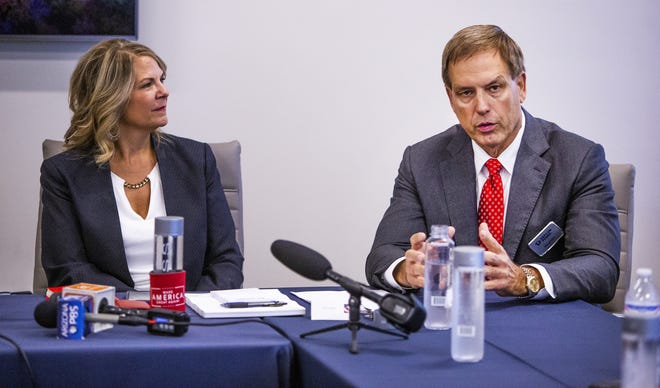
- He joined Arizona Republican Party chair Kelli Ward late last year in unsuccessfully suing to block Biden's victory in the state.
- Lamon's company donated $300,000 to the Arizona GOP in March, as the state party used a Republican-led "audit" of the state's 2020 election results to boost its fundraising substantially.
Peter Thiel makes $10M bet on associate in Arizona Senate race
"Libertarian tech titan Peter Thiel is spending $10 million to boost one of his closest allies in next year’s Arizona Senate race, a contest crucial to the fight for the majority.

NOTE: ". . .Those close to Thielsay he’s also looking at potentially supporting other 2022 contenders, such as Florida Gov. Ron DeSantis, who is seeking reelection, and army veteran Joe Kent, who is waging a challenge to GOP Rep. Jaime Herrera Beutler, a Trump impeachment backer, in Washington state's all-party primary next year."
The billionaire is coming out in support of Blake Masters, the chief operating officer of Thiel Capital and the president of the Thiel Foundation, who is expected to soon enter the race. Thiel, who co-founded PayPal, is bankrolling Saving Arizona PAC, a newly formed, pro-Masters super PAC, according to a person familiar with the investment. . .Thiel’s support could play a major role in Arizona by helping Masters possibly scare away would-be Republican opponents.
The list of potential candidates also includes state Attorney General Mark Brnovich,
energy company executive Jim Lamon and Rep. Andy Biggs. The anti-tax Club for Growth has signaled it would likely back Biggs, the chair of the conservative House Freedom Caucus and an outspoken supporter of former President Donald Trump, should he enter the contest. . .
============================================================================
Reported earlier
Senate hopeful Jim Lamon ripped Capitol Hill spending, but his company got COVID-19 relief
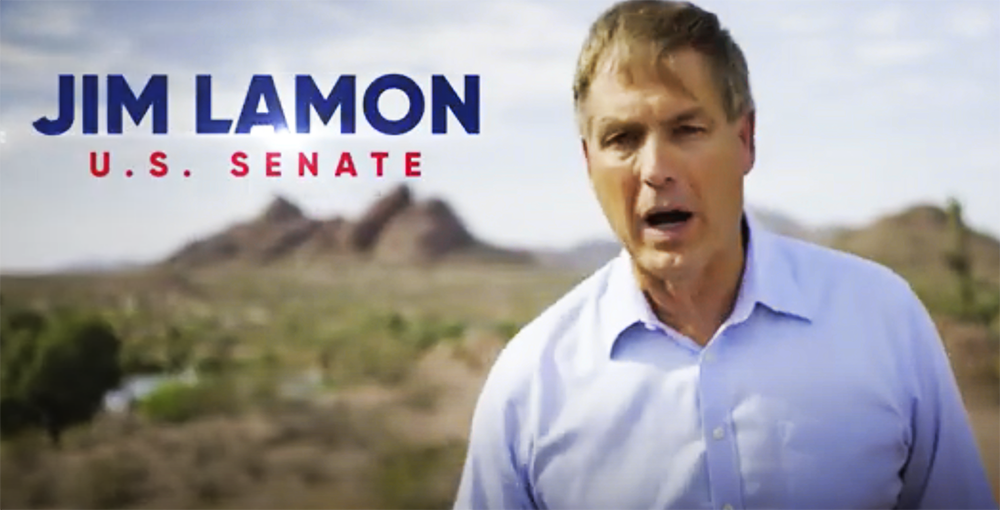
Screengrab campaign video/YouTube
By Yvonne Wingett Sanchez |Arizona Republic
Republican Jim Lamon, who entered Arizona’s GOP U.S. Senate race this week, suggested Congress was spending excessively to deal with the pandemic’s economic fallout.
In an announcement video, Lamon lamented the power “to spend so much money, our grandchildren will struggle to pay off the debt” while an on-screen headline noted that Congress has already spent $4 trillion in COVID-19 relief spending.
But records show his own company, Depcom Power, received $2.6 million in relief last year from the Paycheck Protection Program, intended by Congress to provide some economic reprieve for payroll, rent, mortgage interest or utilities. Lamon is the founder and chairman of the Scottsdale-based solar engineering and construction company.
The company was among the thousands of Arizona businesses that received federal aid.
Lamon did not respond Wednesday to The Arizona Republic’s attempts to reach him for comment
============================================================================
The Rise of the Thielists
Has the Republican Party found its post-Trump ideology?

HALCYON MAPS Creative Place-Making: The Alexa Web-Traffic Data Visualization of The 2021 World Wide Web Internet

Just the fact that looking at this smaller version above it's nearly impossible to read what most of the "countries" are should give you just a taste of how vast the non-big-tech part of the world wide web really is. There's a lot of "land" out there that isn't controlled by the big players, and we should be celebrating that. On his website he's got a few zoomed in examples as well, including the part that is my favorite: "Protocol Ocean."

Now some may quibble with various aspects of this. It's based on Alexa data, which isn't the most reliable, and it's only covering web traffic, which likely misses a lot of activity that is purely mobile these days. But still, when laid out this way, you really begin to get a sense of the diversity of the web.
Map Of The Internet Exposes The Lie That 'Big Tech' Controls The Internet
from the it's-a-wide-wide-world-wide-web dept
"To hear many people talk about things, the entire internet these days is controlled by just a few companies, mainly Google, Facebook, and Amazon. Depending on who you're talking to, you may hear them throw in companies like Netflix. But some of us keep pointing out that while those guys are big, that doesn't mean the rest of the internet stops existing. And it's still incredibly large. If you want this point really driven home, check out this amazing map of the 2021 internet by Martin Vargic (first spotted via Fast Company).
Since its inception in 1989, the internet has been in a state of continuous flux as millions of different sites emerged and then fell by the wayside. From this initial chaos, many major corporate players have emerged over the decades, and have since become dominant in heir respective niches. This trend has been especially evident in the last decade, as Google, Youtube, Amazon and Facebook have far outgrown or absorbed most of their previous competition on an international global scale. Increasingly, this has led to mounting accusations of monopolistic behavior, censorship and misuse of user data.

This work was originally inspired by the “Map of Online Communities“ by Randall Munroe, and further by my own maps of the internet 1.0, 2.0 and 3.0 previously published in 2014-2015."
Thursday, June 10, 2021
STATES OF EMERGENCY: Deep In Decades-Old Drought Utah Governor Cox Urges Prayer For Rain (Regardless of Religious Affiliation)
:no_upscale()/cdn.vox-cdn.com/uploads/chorus_asset/file/22649983/usdroughtmonitor_weekly_ndmc__web__2021_06_01.png)
Amid dangerous drought conditions, we’re inviting all Utahns — regardless of religious affiliation — to join us this weekend in collective and humble prayer for rain.
— Utah Gov. Spencer J. Cox (@GovCox) June 3, 2021
Read more: https://t.co/uJzFARl7BI pic.twitter.com/HS755aXEy3
The Hoover Dam reservoir is at an all-time low
Much of the Western US faces drought, extreme heat, and fire risk
/cdn.vox-cdn.com/uploads/chorus_image/image/69433929/1253437187.0.jpg)
Lake Mead, the reservoir created by the Hoover Dam, that feeds water to 25 million people across Western states, is historically low. On June 9th, the water level dipped to 1,071.57 feet above sea level, narrowly beating a record low last set in 2016.
It didn’t help that a sweltering spring heatwave hit much of the continental US this past weekend. Las Vegas, some 30 miles from Lake Mead, reached 109 degrees Fahrenheit and could see even higher temperatures next week. Altogether, the drought and heat are scary omens for this year’s fire season. An above-normal risk of fire is forecasted for the Southwest through June, according to the National Interagency Fire Center.
In July, the Southwest’s monsoon season is expected to kick in and provide some relief — at least temporarily. Climate change has brought on higher spring and summer temperatures, more severe wildfires, less snow (which much of the West relies on for water), and more intense dry seasons.
=========================================================================
ARIZONA ( Reference: https://new.azwater.gov/drought/drought-status )
Monthly Drought Status Summary: MAY 2021

May is typically one of the two driest months in Arizona. Up to 0.50 inches of rain were received throughout Coconino, Yavapai, Gila, and Apache counties. However, this was not enough to improve current drought conditions. While north central Arizona received most of the rain, the rest of the state remained exceedingly dry, roughly 60%-90% below last year’s average precipitation levels for the month.
Drought conditions have remained largely unchanged through the month with 95% of the state in Severe (D2) to Exceptional (D4) drought.
No substantial improvement to drought is expected in June
Wildland fires continued to impact the state with above-normal fire risk. Stage 2 fire restrictions were issued on state lands in Cochise, Graham, Greenlee, Pima, Pinal, and Santa Cruz counties. All other counties continued Stage 1 fire restrictions.
May temperatures across the state were generally average for the month. The outlook for summer shows above average temperatures expected, with equal chances for above, normal, or below average amounts of rain.
This report was prepared by the Arizona Drought Monitoring Technical Committee on June 7, 2021. Arizona's short-term drought status map is updated during the first week of each month.
=========================================================================


The ...

1930s ...
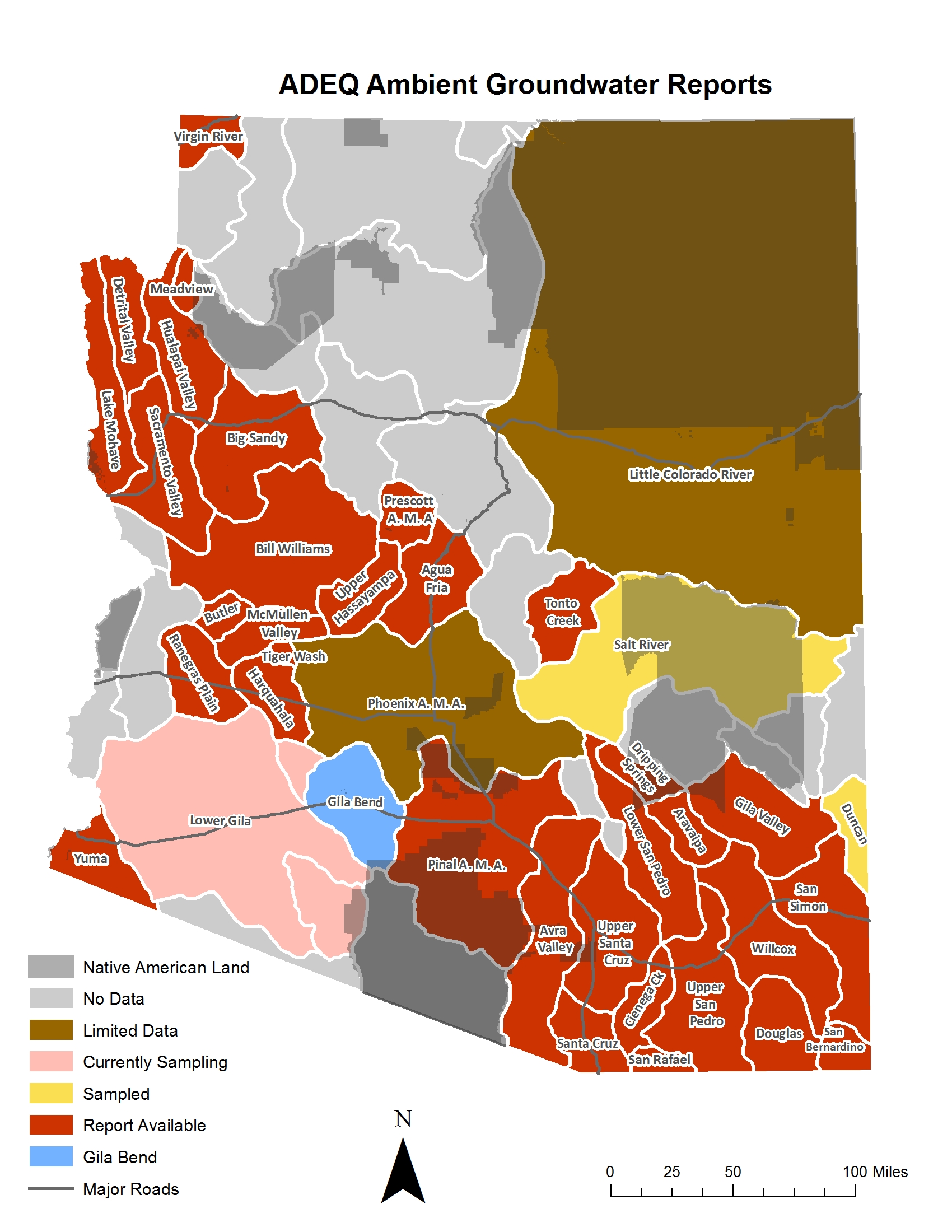
ARIZONA ADEQ Monitoring and Assessment: Ambient Groundwater Monitoring Program
( Reference: https://legacy.azdeq.gov/environ/water/assessment/ambient.html )
---- NOTHING MORE RECENT THAN 2015???????????????????????????\
The groundwater monitoring program seeks to characterize groundwater quality in each of the 51 groundwater basins that have been designated in Arizona by state agencies. Comprehensive groundwater sampling is conducted in a basin following the approval of a sample plan. . .
The ADEQ Ambient Monitoring Program has completed reports covering 20 groundwater basins within Arizona. These reports are available in two formats: a comprehensive Open File Report (OFR) and a compact four-page fact sheet (FS). The OFR is designed for audiences seeking an indepth hydrologic analysis of the basin. In contrast, the FS is designed for a more general audience seeking a brief overview of the groundwater quality of the basin.
The data for all samples collected for these studies, besides being available in the individual OFRs are also available through the ADEQ Groundwater Database. This database includes all samples collected by the ADEQ Ambient Groundwater Monitoring Program as well as other monitoring programs within the agency.
More
Groundwater Basin Fact Sheets
- Agua Fria Basin (2004-2006) -- (PDF)
- Aravaipa Canyon Basin (2003) -- (PDF)
- Avra Valley Sub-Basin (1998-2001) -- (PDF)
- Big Sandy Basin (2003-2004) -- (PDF)
- Bill Williams Basin (2003-2009) -- (PDF)
- Butler Valley Basin (2008-2012) -- (PDF)
- Cienega Creek Basin (2000-2001) -- (PDF)
- Detrital Valley Basin (2002) -- (PDF)
- Douglas Basin (1995-1996) -- (PDF)
- Dripping Springs Wash Basin (2004-2005) -- (PDF)
- Gila Bend Basin(2012-2015) -- (PDF)
- Gila Valley Sub-Basin (2004) -- (PDF)
- Harquahala Basin (2009-2014) -- (PDF)
- Hualapai Valley Basin (2000) -- (PDF)
- Lake Mohave Basin (2003) -- (PDF)
- Lower San Pedro Basin (2000) -- (PDF)
- McMullen Valley Basin (2008-2009) -- (PDF)
- Meadview Basin (2000-2003) -- (PDF)
- Pinal Active Management Area (2005-2006) -- (PDF)
- Prescott Active Management Area (1997-1998) -- (PDF)
- Ranegras Plain Basin (2008-2011) -- (PDF)
- Sacramento Valley Groundwater Basin (1999) -- (PDF)
- San Bernardino Valley Basin (2002) -- (PDF)
- San Rafael Basin (2002) -- (PDF)
- San Simon Sub-Basin (2002) -- (PDF)
- Sierra Vista Basin (1996) (in conjunction with the USGS) -- (PDF)
- Tiger Wash Basin (2014) -- (PDF)
- Tonto Creek (2002-2012) -- (PDF)
- Upper Hassayampa Basin (2003-2009) -- (PDF)
- Virgin River Basin (1997) -- (PDF)
- Willcox Basin (1999) -- (PDF)
- Yuma Basin (1995) -- (PDF)
Groundwater Open File Reports
- Groundwater Quality in Arizona: A 15-Year Overview of the ADEQ Ambient Monitoring Program (1995-2009) -- (PDF)
- Agua Fria Basin (2004-2006) -- (PDF)
- Aravaipa Canyon Basin (2003) -- (PDF)
- Avra Valley Sub-Basin (1998-2001) -- (PDF)
- Big Sandy Basin (2003-2004) -- (PDF)
- Bill Williams Basin (2003-2009) -- (PDF)
- Butler Valley Basin (2008-2012) -- (PDF)
- Cienega Creek Basin (2000-2001) -- (PDF)
- Detrital Valley Basin (2002) -- (PDF)
- Douglas Basin (1995-1996) -- (PDF) (Download PDF Maps)
- Dripping Springs Wash Basin (2004-2005) -- (PDF)
- Fort Valley Septic Study (1997) -- (PDF)
- Gila Bend Basin (2012-2015) -- (PDF)
- Gila Valley Sub-Basin (2004) -- (PDF)
- Harquahala Basin (2009-2014) -- (PDF)
- Hualapai Valley Basin (2000) -- (PDF)
- Lake Mohave Basin (2003) -- (PDF)
- Lower San Pedro Basin (2000) -- (PDF)
- McMullen Valley Basin (2008-2009) -- (PDF)
- Meadview Basin (2000-2003) -- (PDF)
- Pinal Active Management Area (2005-2006) -- (PDF)
- Prescott Active Management Area (1997-1998) -- (PDF)
- Ranegras Plain Basin (2008-2011) -- (PDF)
- Sacramento Valley Basin (1999) -- (PDF)
- San Bernardino Valley Basin (2002) -- (PDF)
- San Rafael Basin (2002) -- (PDF)
- San Simon Sub-Basin (2002) -- (PDF)
- Sierra Vista Sub-basin/Upper San Pedro Basin (1996-1997) -- (PDF)
- Tiger Wash Basin (2014) -- (PDF)
- Tonto Creek (2002-2012) -- (PDF)
- Upper Hassayampa Basin (2003-2009) -- (PDF)
- Upper Santa Cruz Basin (1998) -- (PDF)
- Virgin River Basin (1997) -- (PDF)
- Willcox Basin (1999) -- (PDF)
- Yuma Basin (1995) -- (PDF)
Believe it or not > This is severa degrees above the daily "normal" for summer temperatures...remainder of the week a degree or two warmer :)
US National Weather Service Phoenix Arizona t͏ o͏ r͏ o͏ S͏ d͏ n͏ p͏ e͏ s͏ 5͏ 3͏ 8͏ c͏ u͏ 5͏ a͏ 6͏ 1͏ t͏ f͏ 2͏ c͏ 6͏ m͏ g͏ 4͏ u͏ i͏ 1͏ 5͏...

-
 Flash News: Ukraine Intercepts Russian Kh-59 Cruise Missile Using US VAMPIRE Air Defense System Mounted on Boat. Ukrainian forces have made ...
 -
A nor’easter is about to hit the Northeast in May. That’s very unusual.

