Tuesday, November 02, 2021

Image updated every 5 minutes. . .Superstition Mountains from Downtown Mesa

Forecast discussion: Image updated every 5 minutes.

????????????????????????????????????????????????????????

Superstition Mountains

Webcam Image
  • Zoom In Zoom In
  • Refresh Refresh
  • Larger Image View Larger
  • Landmarks Landmarks
  • Map It Map It
Clock Image Archive                                        

Image updated every 5 minutes.

=============================

Air quality-wise, mild weather conditions this time of year typically means locally-driven pollution. Cooler morning temperatures and light winds are favorable for the buildup of PM10 (dust) and PM2.5 (smoke) from local activity. However, warmer afternoon temperatures will help to mix out PM10 and PM2.5 from the mornings.

EXCEEDANCE REPORT

AQ Exceedance

This report displays the number of days a monitor exceeded the federal health standard for the given year. Click the monitor to view the dates of each exceedance and the associated concentration.

Previous Day

  2021  


Maricopa County
Monitor
Ozone
PM10
PM2.5
Date
ppb
5/5/2021
72
5/6/2021
76
7/8/2021
71
7/19/2021
71
7/22/2021
75
7/28/2021
71
Date
µg/m3
-
Date
µg/m3
-
Date
ppb
6/11/2021
71
6/29/2021
71
7/30/2021
72
8/3/2021
78
8/4/2021
73
Date
µg/m3
7/12/2021
163
10/11/2021
259
Date
µg/m3
-
Date
ppb
5/13/2021
71
6/11/2021
85
6/15/2021
91
7/21/2021
73
7/22/2021
74
7/28/2021
71
8/4/2021
74
Date
µg/m3
-
Date
µg/m3
-
Date
ppb
6/11/2021
74
6/12/2021
73
6/15/2021
91
6/29/2021
80
7/1/2021
82
7/17/2021
75
7/19/2021
73
7/22/2021
71
7/28/2021
81
7/31/2021
71
8/2/2021
79
8/3/2021
84
8/4/2021
78
8/5/2021
74
8/25/2021
73
8/27/2021
75
8/28/2021
71
9/3/2021
75
9/4/2021
78
9/5/2021
71
Date
µg/m3
10/12/2021
170
Date
µg/m3
-
Date
ppb
-
Date
µg/m3
10/12/2021
163
Date
µg/m3
1/1/2021
53.5
Date
ppb
6/11/2021
77
6/12/2021
71
6/15/2021
93
6/28/2021
75
7/21/2021
78
7/28/2021
72
7/30/2021
73
8/2/2021
73
8/3/2021
76
8/4/2021
82
8/26/2021
73
8/27/2021
74
Date
µg/m3
7/10/2021
170
10/11/2021
155
Date
µg/m3
-
Date
ppb
5/6/2021
75
5/24/2021
76
6/11/2021
78
6/12/2021
80
6/15/2021
89
6/16/2021
76
6/24/2021
72
6/26/2021
73
6/29/2021
72
7/1/2021
78
7/4/2021
72
7/8/2021
77
7/9/2021
71
7/13/2021
71
7/17/2021
77
7/19/2021
78
7/20/2021
71
7/22/2021
82
7/27/2021
73
7/28/2021
87
7/31/2021
80
8/1/2021
73
8/2/2021
73
8/3/2021
76
8/4/2021
77
8/5/2021
77
8/6/2021
73
8/26/2021
76
9/3/2021
74
9/4/2021
77
9/5/2021
72
Date
µg/m3
-
Date
µg/m3
-
Date
ppb
-
Date
µg/m3
10/12/2021
207
Date
µg/m3
-
Date
ppb
5/24/2021
74
6/11/2021
82
6/15/2021
98
6/16/2021
74
7/1/2021
73
7/8/2021
73
7/19/2021
73
7/21/2021
72
7/22/2021
78
7/28/2021
76
8/5/2021
73
Date
µg/m3
-
Date
µg/m3
-
Date
ppb
5/24/2021
72
6/11/2021
79
6/12/2021
75
6/15/2021
97
6/28/2021
72
6/29/2021
72
7/1/2021
71
7/19/2021
74
7/21/2021
76
7/28/2021
75
7/30/2021
73
8/2/2021
73
8/3/2021
73
8/4/2021
80
8/26/2021
74
8/27/2021
75
8/29/2021
75
9/4/2021
79
Date
µg/m3
7/10/2021
173
Date
µg/m3
1/1/2021
51.2
Date
ppb
-
Date
µg/m3
3/3/2021
208
10/12/2021
219
Date
µg/m3
-
Date
ppb
6/11/2021
74
Date
µg/m3
-
Date
µg/m3
-
Date
ppb
5/6/2021
73
5/24/2021
73
6/11/2021
76
6/12/2021
74
6/15/2021
88
6/16/2021
73
7/1/2021
75
7/8/2021
76
7/17/2021
74
7/19/2021
76
7/22/2021
80
7/27/2021
71
7/28/2021
84
7/31/2021
74
8/2/2021
73
8/3/2021
75
8/4/2021
76
8/5/2021
71
8/26/2021
74
Date
µg/m3
-
Date
µg/m3
-
Date
ppb
5/5/2021
72
5/6/2021
71
5/12/2021
71
5/24/2021
75
6/11/2021
72
6/12/2021
81
6/15/2021
85
6/26/2021
72
6/29/2021
76
7/1/2021
83
7/2/2021
72
7/4/2021
73
7/14/2021
71
7/17/2021
80
7/19/2021
73
7/20/2021
71
7/22/2021
76
7/27/2021
73
7/28/2021
83
7/31/2021
80
8/2/2021
77
8/3/2021
83
8/4/2021
77
8/5/2021
75
8/6/2021
72
8/24/2021
74
8/26/2021
71
8/27/2021
76
8/28/2021
82
9/3/2021
79
9/4/2021
80
9/5/2021
76
Date
µg/m3
7/9/2021
199
10/12/2021
170
Date
µg/m3
1/1/2021
72.3
Date
ppb
5/12/2021
72
5/24/2021
76
5/27/2021
72
5/28/2021
71
6/9/2021
71
6/11/2021
82
6/12/2021
76
6/15/2021
108
6/16/2021
72
6/29/2021
73
7/1/2021
78
7/8/2021
75
7/13/2021
73
7/17/2021
71
7/19/2021
77
7/20/2021
80
7/21/2021
74
7/22/2021
74
7/27/2021
79
7/28/2021
85
7/31/2021
71
8/2/2021
75
8/3/2021
75
8/4/2021
81
8/5/2021
73
8/25/2021
81
8/26/2021
72
8/27/2021
73
8/28/2021
76
9/4/2021
81
9/5/2021
77
Date
µg/m3
-
Date
µg/m3
1/1/2021
61.2
Date
ppb
5/6/2021
73
5/24/2021
73
6/11/2021
77
6/12/2021
74
6/15/2021
90
6/16/2021
72
7/1/2021
77
7/8/2021
77
7/17/2021
73
7/19/2021
76
7/20/2021
73
7/22/2021
78
7/27/2021
72
7/28/2021
83
7/31/2021
72
8/2/2021
72
8/3/2021
73
8/4/2021
75
8/5/2021
74
8/26/2021
73
9/3/2021
71
9/4/2021
74
Date
µg/m3
10/12/2021
174
Date
µg/m3
-
Date
ppb
5/12/2021
72
5/24/2021
79
5/28/2021
71
6/11/2021
82
6/12/2021
78
6/15/2021
100
6/16/2021
75
6/28/2021
74
6/29/2021
82
7/1/2021
83
7/8/2021
76
7/13/2021
71
7/17/2021
74
7/19/2021
77
7/20/2021
78
7/21/2021
72
7/22/2021
72
8/2/2021
78
8/3/2021
79
8/4/2021
79
8/5/2021
71
8/25/2021
78
8/26/2021
76
8/27/2021
81
8/28/2021
72
8/29/2021
72
8/30/2021
72
9/3/2021
71
9/4/2021
80
9/5/2021
72
Date
µg/m3
-
Date
µg/m3
1/1/2021
104.6
Date
ppb
5/5/2021
72
5/6/2021
78
5/12/2021
74
5/13/2021
72
5/24/2021
73
5/26/2021
71
5/27/2021
74
5/28/2021
72
6/11/2021
86
6/12/2021
73
6/15/2021
107
6/18/2021
72
7/1/2021
71
7/19/2021
74
7/20/2021
72
7/21/2021
74
7/22/2021
77
7/27/2021
80
7/28/2021
79
8/2/2021
71
8/4/2021
76
8/5/2021
71
8/17/2021
72
9/4/2021
71
Date
µg/m3
-
Date
µg/m3
-
Date
ppb
5/6/2021
75
5/24/2021
74
6/11/2021
78
6/12/2021
74
6/15/2021
92
6/16/2021
76
7/1/2021
75
7/8/2021
78
7/17/2021
73
7/19/2021
77
7/28/2021
83
7/31/2021
72
8/3/2021
72
8/4/2021
75
8/5/2021
76
Date
µg/m3
-
Date
µg/m3
-
Date
ppb
5/6/2021
71
6/11/2021
76
6/12/2021
71
6/15/2021
89
6/16/2021
72
7/1/2021
71
7/8/2021
71
7/20/2021
73
7/22/2021
74
7/28/2021
77
8/5/2021
71
Date
µg/m3
10/12/2021
156
Date
µg/m3
-
Date
ppb
6/11/2021
72
6/15/2021
80
6/29/2021
76
7/1/2021
73
8/2/2021
74
8/3/2021
74
9/3/2021
72
Date
µg/m3
-
Date
µg/m3
1/1/2021
74.5
Date
ppb
5/24/2021
71
6/11/2021
75
6/12/2021
73
6/15/2021
96
6/16/2021
74
6/29/2021
74
7/1/2021
80
7/2/2021
71
7/8/2021
79
7/13/2021
71
7/17/2021
75
7/19/2021
78
7/20/2021
78
7/21/2021
72
7/22/2021
80
7/27/2021
75
7/28/2021
85
7/31/2021
75
8/2/2021
79
8/3/2021
80
8/4/2021
81
8/5/2021
82
8/26/2021
76
8/27/2021
75
8/28/2021
80
9/3/2021
76
9/4/2021
80
9/5/2021
77
Date
µg/m3
7/9/2021
188
10/12/2021
180
Date
µg/m3
-
Date
ppb
-
Date
µg/m3
7/9/2021
182
8/28/2021
207
10/12/2021
162
Date
µg/m3
-
Date
ppb
6/11/2021
73
6/12/2021
77
6/15/2021
83
6/29/2021
78
7/1/2021
86
7/17/2021
78
7/22/2021
74
7/28/2021
79
7/31/2021
75
8/2/2021
73
8/3/2021
79
8/4/2021
76
8/5/2021
73
8/24/2021
73
8/27/2021
74
8/28/2021
78
9/3/2021
80
9/4/2021
79
9/5/2021
74
Date
µg/m3
7/9/2021
208
10/12/2021
158
Date
µg/m3
1/1/2021
47.1
Date
ppb
-
Date
µg/m3
-
Date
µg/m3
1/1/2021
113.4
Date
ppb
-
Date
µg/m3
3/3/2021
177
10/12/2021
166
Date
µg/m3
-
Date
ppb
5/24/2021
71
7/1/2021
81
7/17/2021
73
7/28/2021
76
7/31/2021
73
8/2/2021
74
8/3/2021
72
9/3/2021
72
Date
µg/m3
7/9/2021
166
10/11/2021
160
10/12/2021
181
Date
µg/m3
-
Date
ppb
6/15/2021
76
6/29/2021
78
7/1/2021
74
7/8/2021
72
7/19/2021
72
7/20/2021
73
7/28/2021
76
8/2/2021
77
8/3/2021
81
8/4/2021
78
9/4/2021
78
Date
µg/m3
1/1/2021
250
Date
µg/m3
1/1/2021
222.4
1/2/2021
36.4


For now, PM

10 is forecast in the Moderate Air Quality Index (AQI) category each day. This is primarily to account for industrial activity south/southwest of the Phoenix metro area, particularly in the mornings. Elsewhere around the Valley will most likely see PM10 remain in the Good AQI category


Dust-wise, PM-10 (dust) levels are expected to be elevated in the morning hours each day, highest in industrial areas south/southwest of the Phoenix metro area. However, warmer afternoon temperatures will help to mix out PM-10 from the mornings.

Air Quality Hourly Forecast | Phoenix

Click on each day to view forecast.
 

PRO PUBLICA: The Most Detailed Map of Industrial Pollution in USA (02 Nov 2021)

The Daily Digest
Tue. Nov 2, 2021
Using the EPA’s data, we mapped the spread of cancer-causing industrial air emissions down to the neighborhood level. Look up your home to see if you and your loved ones are living in a hot spot.
by Al Shaw and Lylla Younes
VIEW STORY
The EPA allows polluters to turn neighborhoods into “sacrifice zones” where residents breathe carcinogens. ProPublica reveals where these places are in a first-of-its-kind map and data analysis.
by Lylla Younes, Ava Kofman, Al Shaw and Lisa Song, with additional reporting by Maya Miller, photography by Kathleen Flynn for ProPublica
If you live close to certain industrial facilities, you may have a higher estimated cancer risk. This may sound alarming. Here are answers to common questions, some crowdsourced tips and how to share your experience to help our investigation.
by Maya Miller, illustrations by Laila Milevski, with additional reporting by Lisa Song, Lylla Younes, Ava Kofman and Al Shaw
We analyzed billions of rows of EPA data to do something the agency had never done before: map the spread of cancer-causing industrial air emissions down to the neighborhood level.
by Lylla Younes, Al Shaw and Ava Kofman

CDMX

2021 Mexico City
Day of the Dead Parade and Festivities

Day of the Dead Parade Mexico City 2021


Even admidst an ongoing COVID-19 pandemic, Mexico City will proceed with 2021 Day of the Dead celebrations. Pandemic contingency procedures are being enforced, and guests are reminded to maintain social distances (1.5 meters between parties) and to use antiseptic hand gel when frequent handwashing is not possible. Outdoors and well-ventilated spaces are to be preferred for maximum safety.

October 29 to November 2, 2021:  Activities in Mexico City will center around the Second Annual Festival of Offerings and Floral Arrangements. (See the events calendar entry here.) The festival presents altars of offering (ofrendas) all over the Historic Center. There were 62 registered when the festival was last held in 2019.

The Day of the Dead Parade will take place on October 31. (Events Calendar.)  Likely the single most spectacular event in Mexico City, every year the parade is different. 2021 promises to be no less incredible.

The Parade covers 8.7 Kms and will last about 4.5 hours.

♦ You can find a spot for your family and loved ones anywhere along the Parade Route.


muertos discounts

CURB YOUR ENTHUSIASM: Moral Panic by Adults Goes Viral While THe Kids Laugh and Mock All THe Adults Falling For This Nonsense

Yesterday Nov 01 from Mike Masnick [. . .] But, scratch the surface a little, and beyond a few dumb kids, this seems a lot more like adults over-reacting and freaking out, and making the story go much, much, much more viral than it did in reality.
Indeed, the only news organization I've seen that recognized that most of this was a moral panic by adults was Curbed, which noted that, yes, there was some actual vandalism done by kids, but a lot of it seemed to be kids mocking the trend as well:

Forget 'The Kids These Days'; It's The Adults And Their Moral Panics To Worry About

from the truly-devious-licks dept

" A  recent episode of the Reply All podcast, Absolutely Devious Lick, touched on a bunch of interesting points regarding the never-ending debates about social media, content moderation, and how it's supposedly damaging the kids these days.
It's worth listening to the entire episode, but it begins by talking about a very slightly viral TikTok "challenge" which became known as Devious Licks -- lick being slang for something you stole.
It started with a kid putting up a TikTok video of him holding a box of disposable masks, suggesting that he had stolen it from the school. Because school kids sometimes do stupid things to copy their stupid friends, a few others posted similar videos, including one early one of a kid taking a soap dispenser. And then there were some stories of it spreading and people going more extreme, because, you know, kids. But it didn't seem to spread that far initially. . .
> But, of course, the thing became a lot more viral after mainstream media jumped on it with their typical "OMG, the kids these days" kind of coverage, starting with the New York Times, CNN, USA Today and then like every random local news jumping on the trend to tsk tsk about the kids these days.

For all the real-life vandalism, what is also very real is that some of these teen punks might be punking us all too. One student, Gavino, a 17-year-old high schooler in Minnesota, uploaded a video showing a classroom sink gushing water, describing it as a “Devious Lick” gone wrong. When I contacted him over Snapchat, however, he told me he wasn’t actually trying to poach the faucet. It was broken, so he made a video about it. When I reached out to another student, a 14-year-old, who posted a TikTok stuffing Chromebooks into his backpack, he told me he didn’t even take them out of the building.

“Seeing people do it, others think they can ‘one-up’ the last person and get something better without getting caught,” Gavino said, adding, “It’s just being funny, trying to get five seconds of fame on a big platform.” Said a 17-year-old girl in L.A., who posted a video “stealing” a microscope from her science lab (she actually owned it, and she filmed the TikTok at home), “I made the video because obviously it was trending. Mostly, it’s for internet clout. And to be funny. It’s not a ‘fitting in’ type of thing. It’s literally just for clout, to show off or … whatever.”

Meanwhile, pretty damn early in all of this, TikTok banned the "Devious Lick" tag and told people searching for it to knock it off:

Also, as far as I can tell, none of the media orgs that covered the whole moral panic freak-out noted that a bunch of kids started to counterprogram whatever vandalism occurred in the opposite direction, posting the opposite of "devious licks": angelic yields, where they would show themselves adding new items to schools (often school bathrooms, since so many of the devious licks stories were about soap and toilet paper being taken from bathrooms).

And that brings us back around to the Reply All episode, which followed a secondary freak-out, after the Devious Licks challenge, in which a document was being passed around claiming to have pre-planned a bunch of other "challenges" for kids in school throughout the rest of the school year. Each month, the posting suggested, kids were planning to do crazy stupid shit (I mean, more crazy and more stupid than any normal teenager) in schools... for TikTok. But, as Reply All's Anna Foley noted, everything about the story just seemed weird -- including (1) teenagers actually planning shit out for an entire school year, and (2) the language on the document didn't sound at all like kids ("slap a teacher on the backside"?!?!?).

Foley started investigating and... basically tracked it down to adults freaking out. She found a School Resource Officer (SRO) who had been early posting the list to Facebook, who didn't seem particularly concerned at all whether or not it was accurate or not -- taking the typical "better safe than sorry" kind of approach. And from there, she traced it back to a school superintendent who claimed she had gotten it from students, though wouldn't say who. But what becomes pretty clear is that almost no kids were passing it around or seriously considering it.

Indeed, there's a hilarious moment in the podcast in which Foley quotes posts from kids laughing and mocking all the adults falling for this nonsense.

It's hard not to look at this like any other moral panic by adults who somehow have forgotten what it's like to be a teenager.

Are there teenagers doing stupid stuff -- including some theft and vandalism? Yes, of course.

Because that's something teenagers do. I mean, I did stupid shit as a teenager too. But, the idea that this is something new, or is caused by social media doesn't really get much support in reality. It does seem like the real "disinformation" came from the adults, not the kids, and the people who bought into it were the adults, not the kids -- and the leading vector of it being sent around was the mainstream media, not social media.

But I don't see Senator Blumenthal calling the head of CNN, the NY Times, and USA Today to come testify about their role in spreading "devious lick" news to gullible adults. Because then he'd have to admit that he, too, is a silly gullible adult."

Hide this

Thank you for reading this Techdirt post. With so many things competing for everyone’s attention these days, we really appreciate you giving us your time. We work hard every day to put quality content out there for our community.

Techdirt is one of the few remaining truly independent media outlets. We do not have a giant corporation behind us, and we rely heavily on our community to support us, in an age when advertisers are increasingly uninterested in sponsoring small, independent sites — especially a site like ours that is unwilling to pull punches in its reporting and analysis.

While other websites have resorted to paywalls, registration requirements, and increasingly annoying/intrusive advertising, we have always kept Techdirt open and available to anyone. But in order to continue doing so, we need your support. We offer a variety of ways for our readers to support us, from direct donations to special subscriptions and cool merchandise — and every little bit helps. Thank you.

–The Techdirt Team
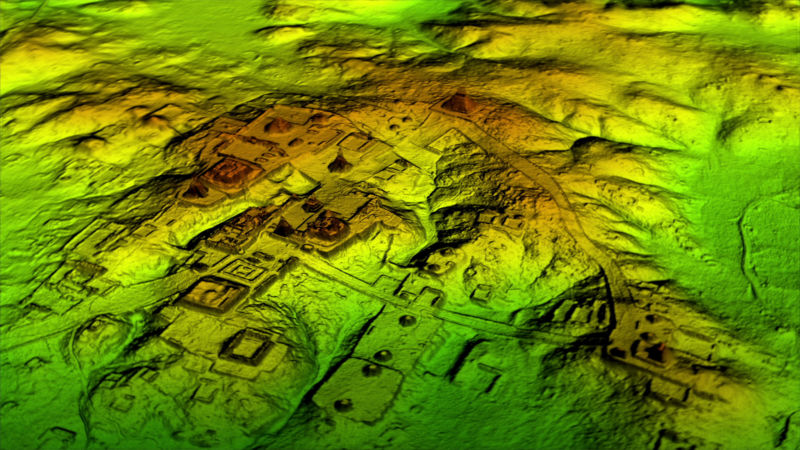
LIDAR: Infrared Beams Reveal Ancient New World Civilization Cultural Centers and Infrastructure

Intro: City plans built around calendars or cosmology were key features of several Mesoamerican civilizations, including both the Maya and the Olmec.
The 32,800-square-mile area was surveyed by the Mexican Instituto Nacional de Estadistica y Geografia, which made the data public.
Over the last several years, lidar surveys have revealed tens of thousands of irrigation channels, causeways, and fortresses across Maya territory, which now spans the borders of Mexico, Guatemala, and Belize.
Infrared beams can penetrate dense foliage to measure the height of the ground, which often reveals features like long-abandoned canals or plazas. The results have shown that Maya civilization was more extensive, and more densely populated, than we previously realized.
Enlarge21st Century Fox

Lidar reveals hundreds of long-lost Maya and Olmec ceremonial centers

<div class=__reading__mode__extracted__imagecaption>Enlarge21st Century Fox

The sites suggest cultural links between the two Mesoamerican civilizations.

An airborne lidar survey recently revealed hundreds of long-lost Maya and Olmec ceremonial sites in southern Mexico. The 32,800-square-mile area was surveyed by the Mexican Instituto Nacional de Estadistica y Geografia, which made the data public. When University of Arizona archaeologist Takeshi Inomata and his colleagues examined the area, which spans the Olmec heartland along the Bay of Campeche and the western Maya Lowlands just north of the Guatemalan border, they identified the outlines of 478 ceremonial sites that had been mostly hidden beneath vegetation or were simply too large to recognize from the ground.

“It was unthinkable to study an area this large until a few years ago,” said Inomata. “Publicly available lidar is transforming archaeology.”

Over the last several years, lidar surveys have revealed tens of thousands of irrigation channels, causeways, and fortresses across Maya territory, which now spans the borders of Mexico, Guatemala, and Belize. Infrared beams can penetrate dense foliage to measure the height of the ground, which often reveals features like long-abandoned canals or plazas. The results have shown that Maya civilization was more extensive, and more densely populated, than we previously realized.

The recent survey of southern Mexico suggests that the Maya civilization may have inherited some of its cultural ideas from the earlier Olmecs, who thrived along the coastal plans of southern Mexico from around 1500 BCE to around 400 BCE

Cosmological construction

The oldest known Maya monument is also the largest; 3,000 years ago, people built a 1.4 kilometer-long earthen platform at the heart of a ceremonial center called Aguada Fenix, near what is now Mexico’s border with Guatemala. And the 478 newly rediscovered sites that dot the surrounding region share the same basic features and layout as Aguada Fenix, just on a smaller scale. They’re built around rectangular plazas, lined with rows of earthen platforms, where large groups of people would once have gathered for rituals.

Inomata and his colleagues say the sites were probably built in the centuries between 1100 BCE (around the same time as Aguada Fenix) and 400 BCE. Their construction was likely the work of diverse groups of people who shared some common cultural ideas, like how to build a ceremonial center and the importance of certain dates. At most of the sites, where the terrain allowed, those platform-lined gathering spaces are aligned to point at the spot on the horizon where the Sun rises on certain days of the year.

“This means they were representing cosmological ideas through these ceremonial spaces,” said Inomata. “In this space, people gathered according to this ceremonial calendar.” The dates vary, but they all seem linked to May 10, the date when the sun passes directly overhead, marking the start of the rainy season and the time for planting maize. Many of the 478 ceremonial sites point to sunrise on dates exactly 40, 80, or 100 days before that date."

AUGMENTED REALITY: iT'S ALL-OUT-THERE AS A POTENTIAL MARKET PLATFORM

Something you can see - "Over the last decade AR hardware designers have laid the groundwork for a new generation of mass-market products, even as technical hangups still limit its viability.

Over the next one, AR threatens to supercharge existing crises of privacy, trust, and consent.
But it’s also a chance to deliberately reset how we approach computing.
"Imagine a world where you barely notice the barriers between digital and physical space. Instead of looking at a TV or phone, you have a pair of glasses that can project a screen anywhere. You can seamlessly pull up translations for any street sign or instructions for any task. You can amplify a difficult-to-hear conversation through an earpiece or highlight a hard-to-see detail in your surroundings.

Now imagine the same world — but your glasses scan every conversation to personalize a barrage of advertising. Some locations are replete with helpful holographic instructions, while in other places, neglect and poor connectivity make them few and far between. A sophisticated facial recognition system tracks every stranger you encounter... and, in turn, lets those strangers track your every move.

These are a few of the best- and worst-case scenarios for augmented reality, a technology that some of the world’s biggest tech companies are spending billions to promote as the future of computing.

[. . .]

> Facebook founder Mark Zuckerberg predicted in 2016 that televisions and phones would be replaced by holographic glasses.

> Apple CEO Tim Cook called AR “a big idea, like the smartphone.”

> Microsoft envisioned people watching the Super Bowl in its HoloLens headset.

> Google launched its ambitious Glass platform as a potential successor to phones, then helped propel the AR startup Magic Leap toward billions of dollars in investments.

> More recently, telecoms have partnered with AR companies like the Chinese startup Nreal, hoping high-bandwidth holograms will create a demand for 5G networks.

These companies’ products — as well as those of other major players, including Snap, Vuzix, and Niantic — often look very different. But most of them promise a uniquely powerful combination of three features.

  • Their hardware is wearable, hands-free, and potentially always on — you don’t have to grab a device and put it away when you’re done using it
  • Their images and audio can blend with or compensate for normal sensory perception of the world, rather than being confined to a discrete, self-contained screen
  • Their sensors and software can collect and analyze huge amounts of information about their surroundings — through geolocation and depth sensing, computer vision programs, or intimate biometric technology like eye-tracking cameras

Over the past decade, nobody has managed to merge these capabilities into a mainstream consumer device. Most glasses are bulky, and the images they produce are shaky, transparent, or cut off by a limited field of view. Nobody has developed a surefire way to interact with them either, despite experiments with voice controls, finger tracking, and handheld hardware. . .Despite this, we’ve gotten hints of the medium’s power and challenges — and even skeptics of the tech should pay attention to them.

[. . .]

Writer and researcher Erica Neely says that laws and social norms aren’t prepared for how AR could affect physical space. “I think we’re kind of frantically running behind the technology,” she tells The Verge. In 2019, Neely wrote about the issues that Pokémon Go had exposed around augmented locations. Those issues mostly haven’t been settled, she says. And dedicated AR hardware will only intensify them.

Smartphone cameras — along with digital touchup apps like FaceTune and sophisticated image searches like Snap Scan and Google Lens — have already complicated our relationships with the offline world. But AR glasses could add an ease and ubiquity that our phones can’t manage. “A phone-based app you have to actually go to,” says Neely. “You are making a conscious choice to engage with it.” Glasses remove even the light friction of unlocking your screen and deliberately looking through a camera lens.

Augmentation also doesn’t just mean adding things to a wearer’s surroundings. It also means letting a computing platform capture and analyze them without other people’s consent. . .

Take facial recognition — a looming crisis at the heart of AR. Smartphone apps have used facial recognition for years to tag and sort people, and one of the most intuitive AR glasses applications is simply getting reminded of people’s names (as well as other background information like where you met them). It’s also a potential privacy disaster.

[. . .] But the EFF’s concern wasn’t premature. Andrew Bosworth, an executive at Facebook and Meta, reportedly told employees the company is weighing the costs and benefits of facial recognition for its Project Aria glasses, calling it possibly “the thorniest issue” in AR. And outside AR, some people are pushing for a near-total ban on the technology. Researcher Luke Clark has likened facial recognition to “the plutonium of AI,” saying any potential upsides are far eclipsed by its social harms. AR is a ready-made testbed for the widespread public use of facial recognition, and by the time any potential harms are obvious, it might be too late to fix them.

[. . .]

AR technology also isn’t going to develop in a vacuum. Despite talking up AR glasses’ novelty, figures like Zuckerberg and Cook still describe people using them almost exactly the way they use smartphones: as devices they carry around casually all the time. But ubiquitous, short-lived electronics like smartphones have imposed a steep environmental cost on the planet, and rolling out AR could add billions more devices that are replaced as readily as phones and powered by vast amounts of cloud computing infrastructure. “What are the environmental implications? And do those make sense?” Friedman asks. “If not, I think really the question for us is, what are the really critical areas in which some kind of augmented reality technology really does bring a substantial benefit to people?”

Either way, the past 10 years of tech have been a long struggle to manage crises once they’re already at a boiling point. Meanwhile, AR glasses’ status as a long-awaited, not-quite-there dream can buy us time to figure out what they can do for the world — and whether we actually want them."

Monday, November 01, 2021

Announcing the 2021 Social Progress Index and special report on social progress and climate change!

GLOBAL INDEX.png

The Social Progress Index enables policymakers, business and finance executives, to put people and the planet at the heart of policy and investment decisions.

We are delighted to announce the release of the 2021 Social Progress Index.


As we focus on an inclusive, resilient, and sustainable recovery, a common agreement on the truth of a society's successes and failures has never been more important. We don't yet know the true social cost of the pandemic, from health to education, to food insecurity, and beyond, we expect the impact will not be minimal. As billions of dollars are being poured into recovery efforts we need to have a good understanding of where we need investment and policies that can make the most positive impact.


This year's Social Progress Index reveals how countries across the world are doing in light of the many challenges we all face. Our rich publicly available data set allows you to look at which countries are doing better than others and in what areas, so we can figure out what is working and where we need to focus our efforts. Explore the 2021 global index today to learn the strengths and vulnerabilities of 168 countries!


For the first time, we have released a special report that examines the complex relationship between social progress, development, and greenhouse gas emissions. As world leaders gather for COP26, many across the world hold their collective breath hoping that accountability and action taken and pledged, will be strong enough to avoid catastrophic climate calamity. In this report, we find that social progress does not have to come at the cost of the planet. Our report provides a compelling data-driven story about what is achievable.


Join us at 10 am ET on November 2nd, for a special live stream with our CEO Michael Green, as he shares the latest findings from the index and the report. Watch here.


Thanks to all of our partners and donors, we could not do this without their support.

To help keep our work alive, please donate today.


Social-Progress-Imperative-.png

Best wishes,


The Social Progress Imperative Team


GI-COVER.jpg

The 2021 Social Progress Index is here! Discover how your country progressed over the last year.


Find out more

SR-GHG-COVER.jpg

Download the special report on greenhouse gas emissions and its relationship with societal progress.


Download the report

countries3.jpg

168 countries

socialandenvironment.jpg

53 social and environmental indicators

people.jpg

Data insights for 7.6+ billion people

Supporting sponsor

download-3.png

P.S. To find out how you can get involved, from partnerships, to sponsor opportunities and more, please get in touch with us: hello@socialprogress.org

Zelensky Calls for a European Army as He Slams EU Leaders’ Response

      Jan 23, 2026 During the EU Summit yesterday, the EU leaders ...