Sunday, December 12, 2021
Saturday, December 11, 2021
Hmmm...So Santa Claus is an effective image to convey the importance of giving, generosity, sharing
Catholic Diocese Apologizes After Scrooge Bishop Gets Real About Santa
The bishop intended to attack consumerism during the holidays but instead presented a shocking reveal about Santa Claus, the diocese claims

All you need to know: 2021’s December solstice
For us in the Northern Hemisphere, the December solstice marks the longest nights and shortest days of the year. Meanwhile, the Southern Hemisphere is having short nights and long days. The 2021 December solstice moment – when the sun reaches its southernmost point in the sky – will happen on Tuesday, December 21, 2021, at 15:59 UTC (9:59 a.m. CST; translate UTC to your time).
This solstice is when the sun reaches its most southerly point on the sky’s dome for the year. At this solstice, the Northern Hemisphere has its shortest day and longest night of the year. The Southern Hemisphere has its longest day and shortest night.
No matter where you live on Earth’s globe – no matter what time the solstice happens for you – it’s your signal to celebrate seasonal change
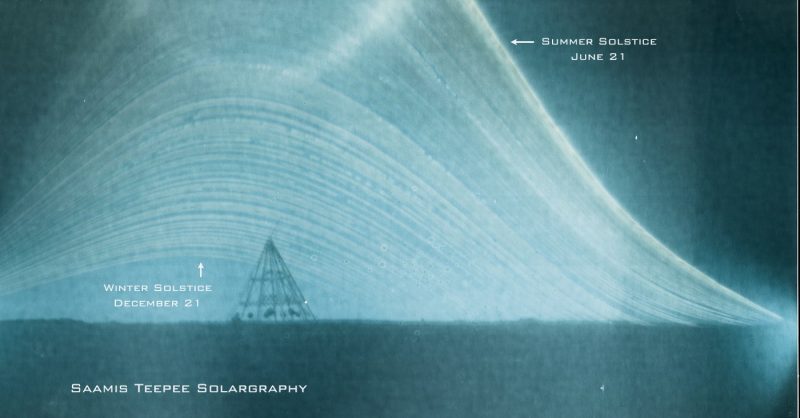

What is a solstice?
The earliest people on Earth knew that the sun’s path across the sky, the length of daylight, and the location of the sunrise and sunset all shifted in a regular way throughout the year. They built monuments such as Stonehenge in England and at Machu Picchu in Peru – to follow the sun’s yearly progress.
But today, we see the solstice differently. We can picture it from the vantage point of space, and we know that the solstice is an astronomical event. It’s caused by the tilt of Earth’s axis and by its orbital motion around the sun.
Earth doesn’t orbit upright. Instead, it’s tilted on its axis by 23 1/2 degrees. Through the year, this tilt causes Earth’s Northern and Southern Hemispheres trade places in receiving the sun’s light and warmth most directly. It’s this tilt, not our distance from the sun – that causes winter and summer. In fact, we’re closest to – not farthest from – the sun at the turn of every new year. But we in the Northern Hemisphere are moving into winter. That’s because the Northern Hemisphere leans farthest away from the sun for the year around this time.
> At the December solstice, Earth is positioned so the sun stays below the North Pole’s horizon. As seen from 23 1/2 degrees south of the equator, at the imaginary line encircling the globe known as the Tropic of Capricorn, the sun shines directly overhead at noon. This is as far south as the sun ever gets, and all locations south of the equator have day lengths greater than 12 hours.
Meanwhile, all locations north of the equator have day lengths shorter than 12 hours.
For us on the northern part of Earth, the shortest day comes at the solstice. After the winter solstice, the days will get longer, and the nights shorter.
It’s a seasonal shift that nearly everyone notices.

Where should I look to see signs of the December solstice in nature?
Everywhere.
For all of Earth’s creatures, nothing is so fundamental as the length of daylight. After all, the sun is the ultimate source of all light and warmth on Earth.
In the Northern Hemisphere, you’ll notice late dawns and early sunsets, the low arc of the sun across the sky each day, and how low the sun appears in the sky at local noon. Look at your noontime shadow, too. Around the time of the December solstice, it’s your longest noontime shadow of the year.
In the Southern Hemisphere, it’s opposite. Dawn comes early, dusk comes late, the sun is high, and it’s your shortest noontime shadow of the year.
Why doesn’t the earliest sunset come on the shortest day?
The December solstice marks the shortest day of the year in the Northern Hemisphere and longest day in the Southern Hemisphere. But the earliest sunset – or earliest sunrise if you’re south of the equator – happens before the December solstice.
Instead of focusing on the time of sunset or sunrise, the key is in what is called true solar noon, which is the time of day that the sun reaches its highest point in its journey across your sky.
In early December, true solar noon comes nearly 10 minutes earlier by the clock than it does at the solstice around December 21. With true noon coming later on the solstice, so will the sunrise and sunset times.
It’s this discrepancy between clock time and sun time that causes the Northern Hemisphere’s earliest sunset and the Southern Hemisphere’s earliest sunrise to precede the December solstice.
This happens primarily because of the tilt of the Earth’s axis. A secondary but another contributing factor to this discrepancy between clock noon and sun noon comes from the Earth’s elliptical – oblong – orbit around the sun. Earth’s orbit is not a perfect circle, and the closer we are to the sun, the faster we move in our orbit. Our closest point to the sun – or perihelion – comes in early January. So we are moving fastest in orbit around now, slightly faster than our average speed of about 18.5 miles per second (30 kilometers per second). The discrepancy between sun time and clock time is greater around the December solstice than the June solstice because we’re nearer the sun at this time of year."
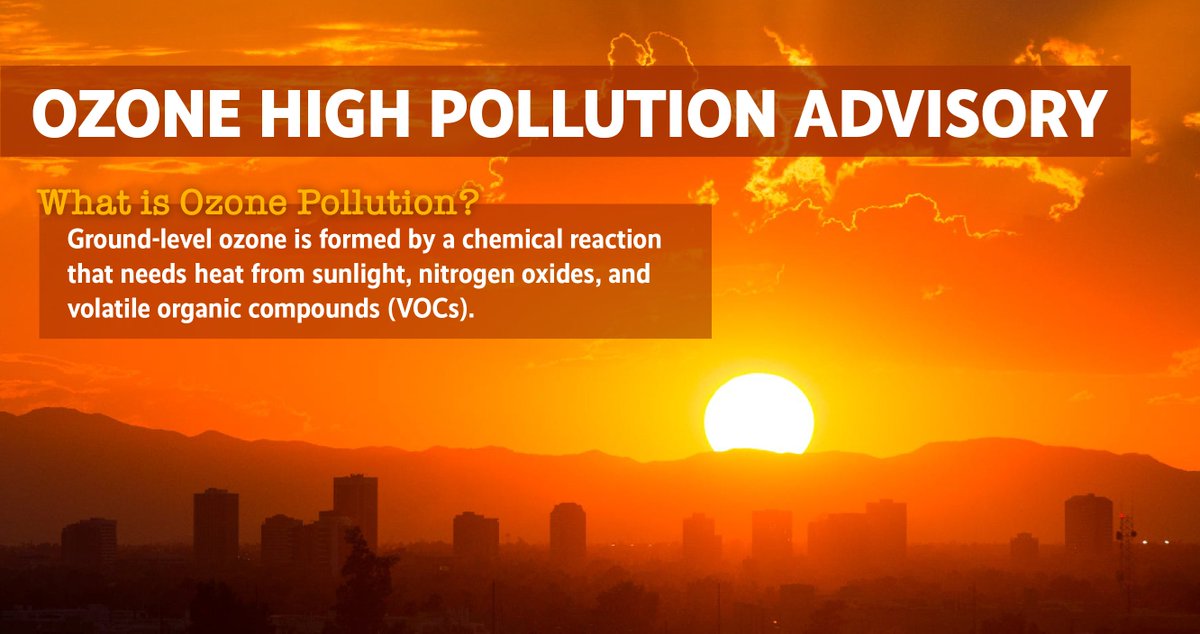
ARIZONA DEPARTMENT OF ENVIRONMENTAL QUALITY? ...Effective Immediately No More High Pollution Alerts!


Five major pollutants
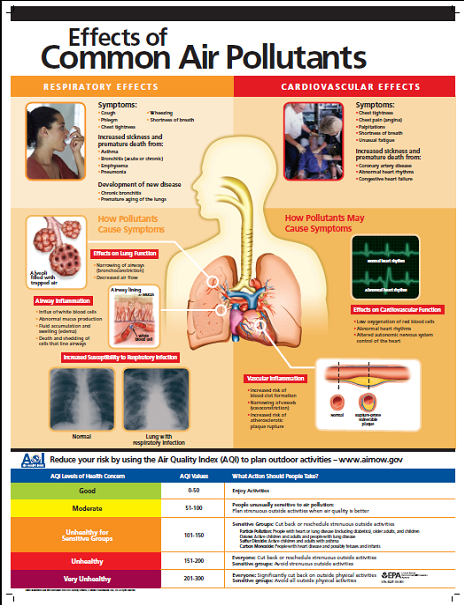
EPA establishes an AQI for five major air pollutants regulated by the Clean Air Act. Each of these pollutants has a national air quality standard set by EPA to protect public health:
- ground-level ozone
- particle pollution (also known as particulate matter, including PM2.5 and PM10)
- carbon monoxide
- sulfur dioxide
- nitrogen dioxide
BACKGROUND
- High Pollution Advisory (HPA): An alert that notifies the public that the level of an air pollutant is expected to exceed the federal health standard.
- Particulate Matter: State and county agencies measure levels of particulate matter (PM) in the air. PM is extremely small solid particles and liquid droplets that circulate in air. PM comes from combustion (cars, industry, wood burning) or dust stirred up into the air. High levels of PM occur when air is especially stagnant or windy. Two types of PM are measured: PM10, commonly called dust, refers to dust particles 10 microns or less, and PM2.5, or soot particles, are 2.5 microns or less. For perspective, one strand of human hair is 70-100 microns in size.
News Releases for High Pollution Advisories Discontinued
ADEQ strives to efficiently deliver public health information to residents and visitors in regions of Arizona experiencing air quality issues and the media is an important partner in this aspect of our mission. To this end, we want to ensure you stay informed about High Pollution Advisories, air quality forecasts, and other air quality alerts that are relevant to your DMA.
What's Changing?
Effective immediately, news releases for High Pollution Advisories (HPAs) will no longer be distributed to our statewide media list
YOU CAN EXPECT MORE OF THIS . . .| Eric Taborek via Facebook
Looks like a one-off DOUBLE-WHAMMY Eric Taborek Suggested for you · a day ago · It not just the El Nino area that is heating up, it is...

-
 Flash News: Ukraine Intercepts Russian Kh-59 Cruise Missile Using US VAMPIRE Air Defense System Mounted on Boat. Ukrainian forces have made ...
 -
A nor’easter is about to hit the Northeast in May. That’s very unusual.

