Monday, February 14, 2022

"LET THE PEOPLE STARVE": $7 billion in Afghan assets frozen in the U.S. / Millions facing starvation and almost the entire country – 98% – short of food

“This money does not belong to any government … this money belongs to the people of Afghanistan.”
Joe Biden signed an executive order on Friday releasing $7bn in frozen Afghan reserves to be split between humanitarian efforts for the Afghan people and American victims of terrorism, including relatives of 9/11.
In a highly unusual move, the convoluted plan is designed to tackle a myriad of legal bottlenecks stemming from the 2001 terrorist attacks and the chaotic end of the 20-year war in Afghanistan, which ignited a humanitarian and political crisis, . .critics warned that it could tip Afghanistan’s already-strained banking system over the edge into systemic failure and deepen a humanitarian crisis that has left millions facing starvation and almost the entire country – 98% – short of food.
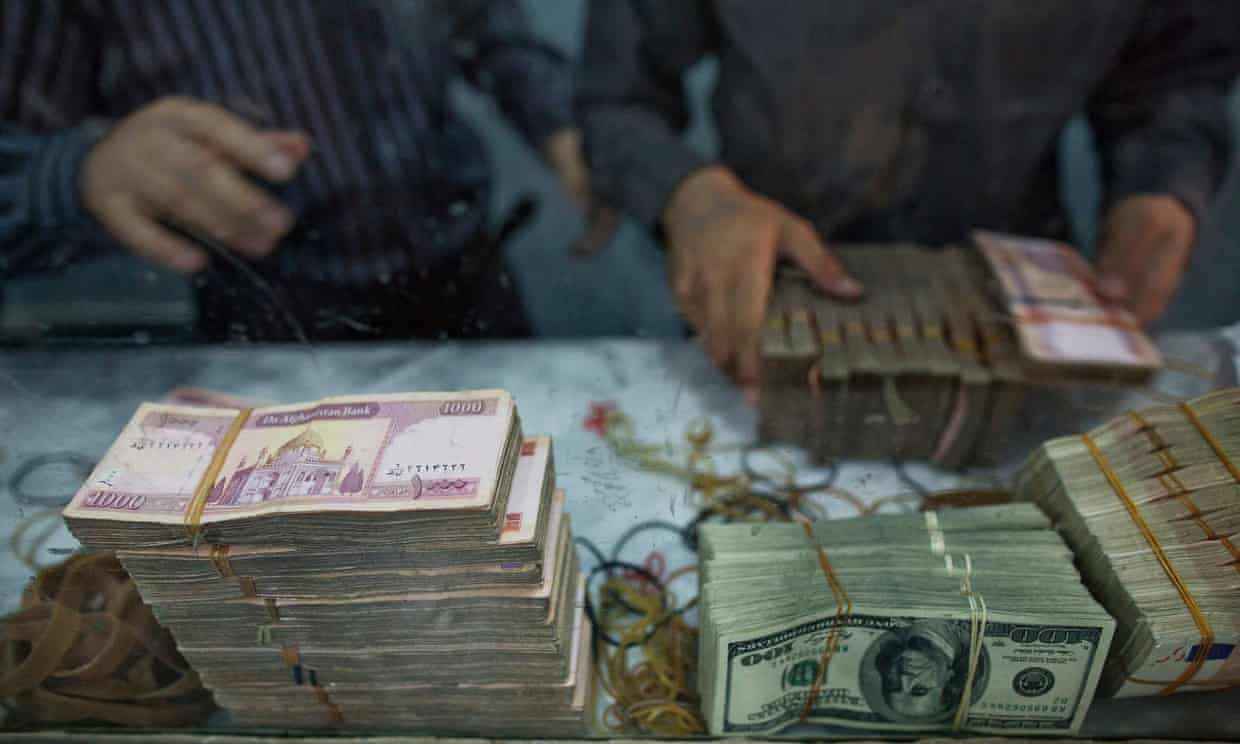
Workers count banknotes of various currencies at the headquarters of the Da Afghanistan Bank in Kabul, Afghanistan.
Two narratives are included in this post today -- the first is an NPR podcast with the transcript included:
Millions of Afghans are on the brink of starvation.
NPR's Leila Fadel talks to Naser Shahalemi, founder of the group End Afghan Starvation, about how the U.S. is splitting up the Afghan assets.
Economy

The Biden administration frees up $7 billion in Afghan assets frozen in the U.S.

 
=======================================================================
The latest bid to unlock aid follows meetings in Oslo late last month between Taliban representatives and governments that heavily bankrolled Afghanistan’s previous government, which imploded in the face of a Taliban military offensive in August last year.

Aljazeera News|Business and Economy

Karzai: Biden order on frozen funds ‘atrocity against Afghans’

President Biden signed an order to free $7.1bn in Afghan assets to be divided between 9/11 victims and humanitarian aid to Afghans

<div class=__reading__mode__extracted__imagecaption>Former Afghan leader Karzai called on President Joe Biden to rescind last week's order [Pablo Martinez Monsivais/AP Photo]


FBI: BlackByte ransomware breached US critical infrastructure in the last three months as of November 2021

OK so let's see what they said

FBI: BlackByte ransomware breached US critical infrastructure orgs

By February 14, 2022 10:41 AM

"The US Federal Bureau of Investigation (FBI) revealed that the BlackByte ransomware group has breached the networks of at least three organizations from US critical infrastructure sectors in the last three months.

This was disclosed in a TLP:WHITE joint cybersecurity advisory released Friday in coordination with the US Secret Service.

"As of November 2021, BlackByte ransomware had compromised multiple US and foreign businesses, including entities in at least three US critical infrastructure sectors (government facilities, financial, and food & agriculture).," the federal law enforcement agency said [PDF].

"BlackByte is a Ransomware as a Service (RaaS) group that encrypts files on compromised Windows host systems, including physical and virtual servers."

The advisory focuses on providing indicators of compromise (IOCs) that organizations can use to detect and defend against BlackByte's attacks.

The IOCs associated with BlackByte activity shared in the advisory include MD5 hashes of suspicious ASPX files discovered on compromised Microsoft Internet Information Services (IIS) servers and a list of commands the ransomware operators used during attacks.

The 49ers ransomware attack

In related news, NFL's San Francisco 49ers team revealed over the weekend that it's recovering from a BlackByte ransomware attack.

The threat actors claimed the attack, saying that they also stole data from the football org's servers during the incident and leaked almost 300MB worth of files on their data leak blog.

The 49ers confirmed the ransomware attack in a statement to BleepingComputer and said it only caused a temporary disruption to portions of its IT network.

BlackByte ransomware operation has been active since at least July 2021, when it started targeting corporate victims worldwide.

This gang is known for exploiting software vulnerabilities (including Microsoft Exchange Server) to gain initial access to their enterprise targets' network, illustrating that keeping your servers updated will most likely block their attacks.

In October, cybersecurity firm Trustwave created and released a free BlackByte decryptor, enabling some victims to restore their files for free after the ransomware gang used the same decryption/encryption key in multiple attacks.

The two agencies also shared a list of measures that can help admins mitigate BlackByte attacks:

  • Implement regular backups of all data to be stored as air gapped, password protected copies offline. Ensure these copies are not accessible for modification or deletion from any system where the original data resides.
  • Implement network segmentation, such that all machines on your network are not accessible from every other machine.
  • Install and regularly update antivirus software on all hosts, and enable real time detection.
  • Install updates/patch operating systems, software, and firmware as soon as updates/patches are released.
  • Review domain controllers, servers, workstations, and active directories for new or unrecognized user accounts.
  • Audit user accounts with administrative privileges and configure access controls with least privilege in mind. Do not give all users administrative privileges.
  • Disable unused remote access/Remote Desktop Protocol (RDP) ports and monitor remote access/RDP logs for any unusual activity.
  • Consider adding an email banner to emails received from outside your organization.
  • Disable hyperlinks in received emails.
  • Use double authentication when logging into accounts or services.
  • Ensure routine auditing is conducted for all accounts.
  • Ensure all the identified IOCs are input into the network SIEM for continuous monitoring and alerts.

Related Articles:

US govt warns of Russian hackers targeting critical infrastructure

CISA warns critical infrastructure to stay vigilant for ongoing threats

FBI warns of fake job postings used to steal money, personal info

FBI warns of malicious QR codes used to steal your money

NFL's San Francisco 49ers hit by Blackbyte ransomware attack 

OTHER RELATED CONTENT

Who Is the BlackByte Ransomware Group and How Does the Decryptor Works?

Ransomware attacks impact organizations every single day. But it doesn’t always have to be bad news. Victims of BlackByte ransomware can now decrypt and get back their files as a free decryption tool has just been made public this week.

In this blog post you will find information about the ransomware group BlackByte, which has victims in many countries, and how to use the latest released decryptor. 

Who is BlackByte?

BlackByte is a ransomware operation that began targeting corporate victims worldwide in July 2021. The first findings regarding this group emerged after victims sought help decrypting their files.

In C#, BlackByte attempts to terminate numerous security, mail server, and database processes to encrypt a device successfully. The BlackByte ransomware group disables Microsoft Defender on target devices before attempting encryption.

According to the information reported so far, BlackByte was not as active as other ransomware operations, but the researchers’ eyes were on it. . .

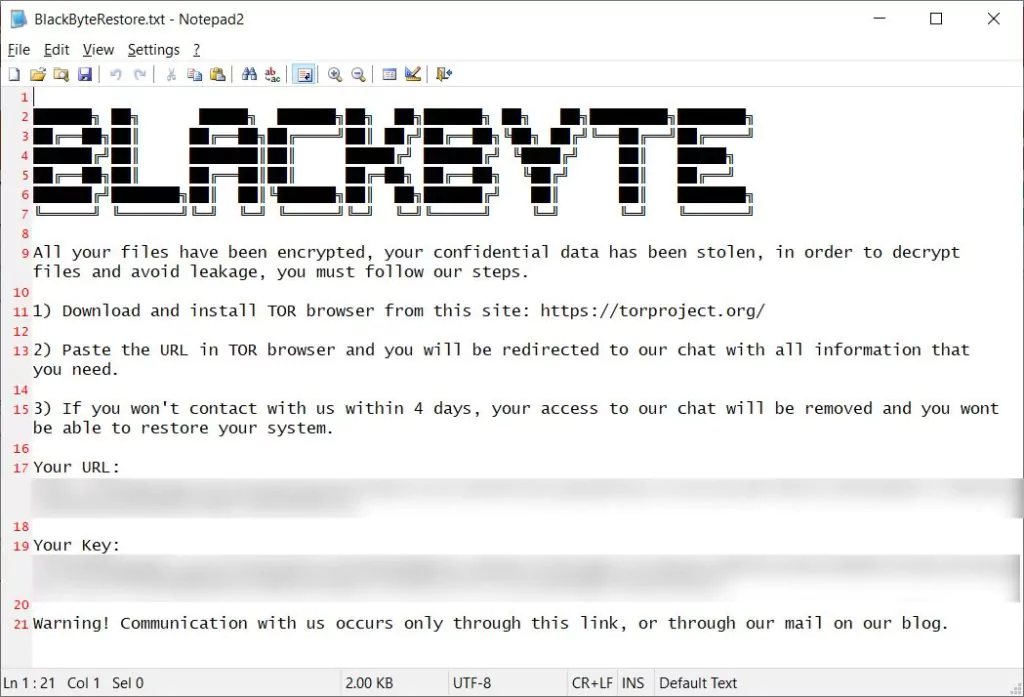
<div class=__reading__mode__extracted__imagecaption>A BlackByte Ransom Note

Which Companies Did BlackByte Ransomware Target?

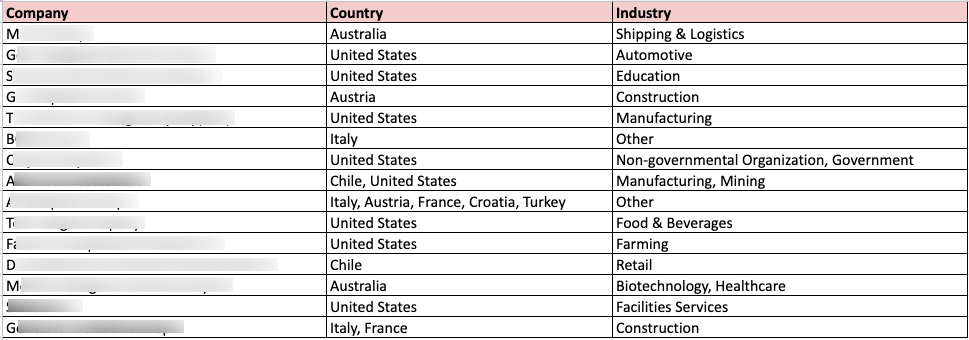
According to information obtained by SOCRadar, the BlackByte ransomware group has so far attacked companies in the manufacturing, mining, food, beverage, healthcare, and construction sectors from the USA, France, Australia, Italy, Austria, Croatia, Chile, and Turkey. 

Countries and companies targeted by the BlackByte ransomware group

ARIZONA FREEDUMB & DEMOCRAZY: "Locked-and-Loaded' Jim Lamon Gunning for a Seat in U.S. Senate

Playing a sheriff

Fake GQP Elector Jim Lamon’s Cringeworthy Ad Normalizing Political Violence

By |February 14th, 2022|AZ Elections, AZ Politics

"Retired energy industry executive Jim Lamon is banking that Super Bowl fans this weekend will be inspired to cast votes for him at the polls in August.

Lamon is a former CEO for DEPCOM, a Scottsdale-based utility-scale solar company that has grown to several hundred workers over the years. Before that, Lamon worked in the coal and natural gas-fired power plant industry.

The Republican who lives in Fountain Hills is gunning for a seat in the U.S. Senate, seeking to oust the incumbent Democratic Senator Mark Kelly.

> Lamon is among several prominent Republicans who submitted false information trying to certify Arizona’s November 2020 election results in favor of Donald Trump. He even bankrolled efforts related to the election audit security detail and has bragged about pushing Karen Fann, a key Republican state senator to move forward with the partisan election “fraudit” in Maricopa County.

Lamon is using political theater for attention with a polarizing 30-second long campaign ad that NBC will show Arizonans watching the Super Bowl. The advertisement package cost the campaign “upwards of six figures,” according to the campaign’s manager Stephen Puetz.

[The ad ran on] Tucson’s NBC station [KVOA 4] on Sunday during the football game and then will be broadcast statewide on Sunday night.

Curious that the KVOA web page does not have a story about this controversial ad.

But Lamon is already being shot down by critics on social media, some of whom he was hoping would become his constituents.

In the advertisement, Lamon is the sheriff and hero on the set of a “spaghetti western-style” movie scene where he pursues a gun battle with top-ranking Democrats, including Mark Kelly.

One local political campaign executive criticized the advertisement for missing the mark with voters.

“It’s embarrassing, desperate, and cringeworthy all in one,” Barrett Marson, a long-time bipartisan campaign strategist in Phoenix, told Phoenix New Times.

Super Bowl fans might catch just a half-minute glimpse of the advertisement between plays. Avid supporters and critics alike may watch the 70-second-long clip campaign organizers described as the “directors cut” afterward.

Lamon garnered $600,000 of individual donations for his campaign, upwards of $10 million from his own coffers, and has spent $1 million each month since his bid for office began.

The Super Bowl ad is one of his biggest investments so far.

“The only candidates with the resources to afford Super Bowl ads are statewide campaigns,” said Ben Petersen, the Republican National Convention’s Arizona representative.

It was not immediately clear if any other state-level office campaigns in Arizona — eight in all — are running an advertisement during the Super Bowl.

Lamon promised to spend $50 million by Election Day.

His campaign manager, Puetz, called Lamon’s commercial a “one-of-a-kind campaign ad.”

The Lamon campaign has spent nearly $1 million on TV advertisements each month.

Last month, Yahoo rejected a different video ad campaign, calling it “overly inflammatory and offensive.” That commercial featured the emergent GOP slogan, “Let’s Go, Brandon,” a play on “Fuck Joe Biden.”

In the ad, Lamon plays himself as “Big Jim Lamon,” the altruistic Wild West sheriff who saves the good people of Arizona from the unholy Washington D.C. Gang in a Hollywood-esque quick-draw duel.

The U.S.-Mexico border security debate is center stage. . ."

READ MORE: https://blogforarizona.net/fake-gqp-elector-jim-lamons-cringeworthy-ad-normalizing-political-violence/
EXECUTIVE ORDER 12333 (1981)

Tim Cushing writing in TechDirt last week includes a number of details - dots-to-connect
Connected Dots
Here's one to keep in mind "Even if the spying isn't direct, the outcome is pretty much identical to direct targeting. With EO 12333, the CIA obtains the compliance from other federal agencies envisioned by Ronald Reagan back in 1981 as his administration ran headlong into the CIA-implicating Iran-Contra scandal.
____________________________________________________________________________

And what are the most important things Americans should understand about Iran-Contra?

  1. In December 1981, President Reagan signed an executive order authorizing a covert C.I.A. operation to support the Contras in Nicaragua - guerilla warriors who were trying to overthrow the rule of the Communist Sandinista government.
  2. In 1982, Congress passed an amendment to the War Powers Act of 1973 stating that U.S. Agencies were prohibited from providing military equipment, training or support to anyone "for the purpose of overthrowing the Government of Nicaragua."
  3. The Reagan Administration, however, narrowly interpreted the amendment to apply only to U.S. intelligence agencies, thus allowing the National Security Council to channel funds to the Contra rebels. The administration then got foreign countries to finance and further operations the Congress wouldn't fund, and it raised private charity contributions for foreign policies for which they could not receive national support.
    • This mainly involved outsourcing the job of funding the Contras to a small band of private sector covert operators and to foreign governments, which were privately requested or pressured by the Reaganites to support the secret contra support operation through buying weaponsf.
    • The "Iran" side of the scandal came from Reagan's covert efforts to sell weapons to Iran to obtain the release of American hostages held by terrorist groups supposedly under the control of Tehran - at a time when the White House was publicly declaring it would not negotiate with terrorists.
    • The two secret projects merged when cash generated from the weapons transactions with Iran was diverted to the Contra operation.
  4. In short, a group of anti-communist, ultra conservatives in the the Reagan administration managed for two years to supply and direct a war in Central America despite congressional prohibitions, to arrange an swap of weapons for hostages with Iranian backers of terrorist groups and to come periously close to setting up a permanent secret team to carry out plots for the White House.
  5. These covert operations were inherently dangerous to the checks and balances of American government since they evaded Congress' primary check on the executive branch - the power of the purse strings.
  6. The Iran/contra vets were not to be trusted. Consequently, most of the officials involved in Iran-Contra went on to prosperous careers, with some even becoming part of the policymakers who advised George W. Bush to engage in the war in Iraq...

Richard Cheney - the vice president - played a prominent part as a member of the joint congressional Iran-Contra inquiry of 1986, taking the position that Congress deserved major blame for interfering with Executive privilege

Robert M. Gates - President Bush's nominee to succeed Donald Rumsfeld - was accused of knowing more about Iran-Contra while it was underway than he admitted once the scandal broke. He was forced to give up his chance to head the CIA in early 1987 because of suspicions about his role but managed to attain the position when he was re-nominated in 1991.

John Negroponte - appointed U.N. representative from 2001-2004,rambassador to Iraq in 2004 and director of national intelligence in 2005 - was the career diplomat who increased the U.S. military and intelligence presence in Central America as ambassador to Honduras, as well as participated in efforts to get the Honduran government to support the Contras after Congress banned direct U.S. aid to the rebels...

Elliott Abrams (former consulting attorney to Reagan) became director of the Office for Democracy, Human Rights and International Operations at the National Security Council - a White House position which is not subject to Senate confirmation. Abrams was convicted of lying to Congress about the Iran-Contra affair, but was later pardoned by Bush's father in 1992.

Perhaps more important is that no one involved in the highest ranks of the presidential administrations was held accountable. Bush was elected president while Abrams and other scandal vets were rewarded with prominent posts in the next Republican administration of George W. Bush."

Reference: http://gorhistory.com/hist111/irancontra.html 

____________________________________________________________________________
Domestic data is supposed to be "masked" if incidentally acquired by foreign-facing surveillance collections.
Sometimes this simply doesn't happen.
Sometimes unmasking occurs without proper permission or oversight.
The FBI uses this to its advantage.
So does the CIA. But the FBI handles domestic terrorism. The CIA does not.
That makes the CIA's abuse possibly more egregious than the FBI's numerous violations of the same restrictions placed on domestic surveillance via foreign interception of communications by the NSA.
____________________________________________________________________________

Declassified Documents Shows The CIA Is Using A 1981 Executive Order To Engage In Domestic Surveillance

VALENTINE'S DAY: Our Modern Day of Love...Today the holiday is big business

And so the celebration of Valentine's Day goes on, in varied ways. . .from a pagan festival observed on February 3-5 where Romans were drunk and naked and a match-making lottery in which young men drew the names of women from a jar.
The couple would then be, um, coupled up for the duration of the festival — or longer, if the match was right.
The ancient Romans may also be responsible for the name of our modern day of love. Emperor Claudius II executed two men — both named Valentine — on Feb. 14 of different years in the 3rd century A.D. Their martyrdom was honored by the Catholic Church with the celebration of St. Valentine's Day.

The dark origins of Valentine's Day

<div class=__reading__mode__extracted__imagecaption>
                A drawing depicts the death of St. Valentine — one of them, anyway. The Romans executed two men by that name on Feb. 14 of different years in the 3rd century A.D.


                    Hulton Archive/Getty Images
                    
                hide captiontoggle caption
        
        Hulton Archive/Getty Images

Valentine's Day is a time to celebrate romance and love and kissy-face fealty. But the origins of this festival of candy and cupids are actually dark, bloody — and a bit muddled.

Though no one has pinpointed the exact origin of the holiday, one place to start is ancient Rome.

The Romans' celebrations were violent

From Feb. 13 to 15, the Romans celebrated the feast of Lupercalia. The men sacrificed a goat and a dog, then whipped women with the hides of the animals they had just slain.

The Roman romantics "were drunk. They were naked," Noel Lenski, now a religious studies professor at Yale, told NPR in 2011. Young women would actually line up for the men to hit them, Lenski said. They believed this would make them fertile.

The brutal fete included a matchmaking lottery, in which young men drew the names of women from a jar. The couple would then be, um, coupled up for the duration of the festival — or longer, if the match was right.

The ancient Romans may also be responsible for the name of our modern day of love. Emperor Claudius II executed two men both named Valentine — on Feb. 14 of different years in the 3rd century A.D. Their martyrdom was honored by the Catholic Church with the celebration of St. Valentine's Day.

As the holiday spread, it evolved

William Shakespeare helped romanticize Valentine's Day in his work, and it gained popularity throughout Britain and the rest of Europe. Perry-Castañeda Library, University of Texas hide captiontoggle caption Perry-Castañeda Library, University of Texas

Later, Pope Gelasius I muddled things in the 5th century by combining St. Valentine's Day with Lupercalia to expel the pagan rituals. But the festival was more of a theatrical interpretation of what it had once been. Lenski added, "It was a little more of a drunken revel, but the Christians put clothes back on it. That didn't stop it from being a day of fertility and love."

Around the same time, the Normans celebrated Galatin's Day. Galatin meant "lover of women." That was likely confused with St. Valentine's Day at some point, in part because they sound alike.

As the years went on, the holiday grew sweeter. Chaucer and Shakespeare romanticized it in their work, and it gained popularity throughout Britain and the rest of Europe. Handmade paper cards became the tokens-du-jour in the Middle Ages.

Eventually, the tradition made its way to the New World. The industrial revolution ushered in factory-made cards in the 19th century. And in 1913, Hallmark Cards of Kansas City, Mo., began mass producing valentines. February has not been the same since.

How we celebrate now

Today, the holiday is big business. But that commercialization has spoiled the day for many. Helen Fisher, a sociologist at Rutgers University, said we have only ourselves to blame.

"This isn't a command performance," she said. "If people didn't want to buy Hallmark cards, they would not be bought, and Hallmark would go out of business."

And so the celebration of Valentine's Day goes on, in varied ways. Many will break the bank buying jewelry and flowers for their beloveds. Some will celebrate in a SAD (that's Single Awareness Day) way, dining alone and binging on self-gifted chocolates — while others find a way to make peace with singlehood in a society that wants everyone to partner up."


Bleeping Computer: Last Week in Review Feb 5-11

OK Let's also keep an eye on macro issues
Two Take-Aways
1

2021 Trends Show Increased Globalized Threat of Ransomware

In 2021, cybersecurity authorities in the United States,[1][2][3] Australia,[4] and the United Kingdom[5] observed an increase in sophisticated, high-impact ransomware incidents against critical infrastructure organizations globally. The Federal Bureau of Investigation (FBI), the Cybersecurity and Infrastructure Security Agency (CISA), and the National Security Agency (NSA) observed incidents involving ransomware against 14 of the 16 U.S. critical infrastructure sectors, including the Defense Industrial Base, Emergency Services, Food and Agriculture, Government Facilities, and Information Technology Sectors. The Australian Cyber Security Centre (ACSC) observed continued ransomware targeting of Australian critical infrastructure entities, including in the Healthcare and Medical, Financial Services and Markets, Higher Education and Research, and Energy Sectors. The United Kingdom’s National Cyber Security Centre (NCSC-UK) recognizes ransomware as the biggest cyber threat facing the United Kingdom. Education is one of the top UK sectors targeted by ransomware actors, but the NCSC-UK has also seen attacks targeting businesses, charities, the legal profession, and public services in the Local Government and Health Sectors.

2

February 10th 2022

As Ransomware Payments Continue to Grow, So Too Does Ransomware’s Role in Geopolitical Conflict

Sure enough, we updated our ransomware numbers a few times throughout 2021, reflecting new payments we hadn’t identified previously. As of January 2022, we’ve now identified just over $692 million in 2020 ransomware payments — nearly double the amount we initially identified at the time of writing last year’s report.

 
++++++++++++++++++++++++++++++++++++++++++++++++++++++++++++++++++++++

The Week in Ransomware - February 11th 2022 - Maze, Egregor decryptors

By February 11, 2022 04:57 PM
Decryptor
 
"We saw the Maze ransomware developers reemerge briefly this week as they shared the master decryption keys for the Egregor, Maze, and Sekhmet ransomware operations.

After the Maze ransomware operation began shutting down in October 2020, it was always hoped that they would publicly release decryption keys to allow remaining victims to recover their files.

Tuesday night, almost fourteen months later, the alleged ransomware developer released the decryption keys in a BleepingComputer forum post.

While the developer says they had always planned to publish the keys, it is generally believed that they did it now as a gesture of goodwill due to the recent arrests and server seizures.

Using these keys, cybersecurity firm Emsisoft created a decryptor allowing victims to recover their files for free.

The other big news is the sentencing of a Netwalker ransomware affiliate from Canada, who obtained more than $27.6 million by attacking companies worldwide. After pleading guilty, the affiliate was sentenced to six years and eight months in prison.

This week's other interesting ransomware news includes publishing LockBit 2.0 ransomware technical details by the FBI, a free decryptor for the TargetCompany ransomware, and Puma announcing a data breach due to the Kronos ransomware attack.

Contributors and those who provided new ransomware information and stories this week include: @Seifreed, @billtoulas, @malwareforme, @VK_Intel, @BleepinComputer, @FourOctets, @DanielGallagher, @serghei, @malwrhunterteam, @jorntvdw, @fwosar, @Ionut_Ilascu, @PolarToffee, @LawrenceAbrams, @demonslay335, @struppigel, @chainalysis, @emsisoft, @Avast, @LadislavZezula, @coveware, @ddd1ms, @BrettCallow, @pcrisk, @USCERT_gov, and @CISAgov.

Reference: https://www.bleepingcomputer.com/news/security/the-week-in-ransomware-february-11th-2022-maze-egregor-decryptors/

February 5th 2022

BlackCat (ALPHV) ransomware linked to BlackMatter, DarkSide gangs

The Black Cat ransomware gang, also known as ALPHV, has confirmed they are former members of the notorious BlackMatter/DarkSide ransomware operation.

FBI shares Lockbit ransomware technical details, defense tips

The Federal Bureau of Investigation (FBI) has released technical details and indicators of compromise associated with LockBit ransomware attacks in a new flash alert published this Friday.

February 6th 2022

Law enforcement action push ransomware gangs to surgical attacks

The numerous law enforcement operations leading to the arrests and takedown of ransomware operations in 2021 have forced threat actors to narrow their targeting scope and maximize the efficiency of their operations.

Elon Musk : Ethereum & Bitcoin x2 TODAY. ARK Invest Conference. Crypto News