Thursday, March 10, 2022

SWIPING FUND$$$$$$$$$$$$ TO WAGE FOREIGN WAR$$$$$$$$$$$$

Throwing more money - billions and more billions - at another overseas conflict

First Thing: US’s $13bn Ukraine aid bill passes first hurdle

House passes huge aid package as Volodymyr Zelenskiy accuses Russia of carrying out ‘genocide’ against Ukrainians.

"The US has moved to drastically step up its support for Ukraine, with House lawmakers passing a $13bn aid bill as Volodymyr Zelenskiy condemned a Russian attack on a children’s hospital as proof that a “genocide” is being carried out.

President Zelenskiy shared footage of a destroyed hospital in the besieged city of Mariupol, saying on Telegram: “The aerial bombing of a children’s hospital is the ultimate evidence that genocide of Ukrainians is happening.” The White House condemned the attack as “barbaric”.

The US House speaker, Nancy Pelosi, indicated the $13.6bn US aid package was likely to be just the first part of raft of aid measures to be provided to Ukraine, saying that “all of us will have to do more” to help the country. Meanwhile, the White House press secretary, Jen Psaki, has warned that Russia may be preparing to use chemical or biological weapons.

Trump lawyer knew delaying Biden certification was unlawful

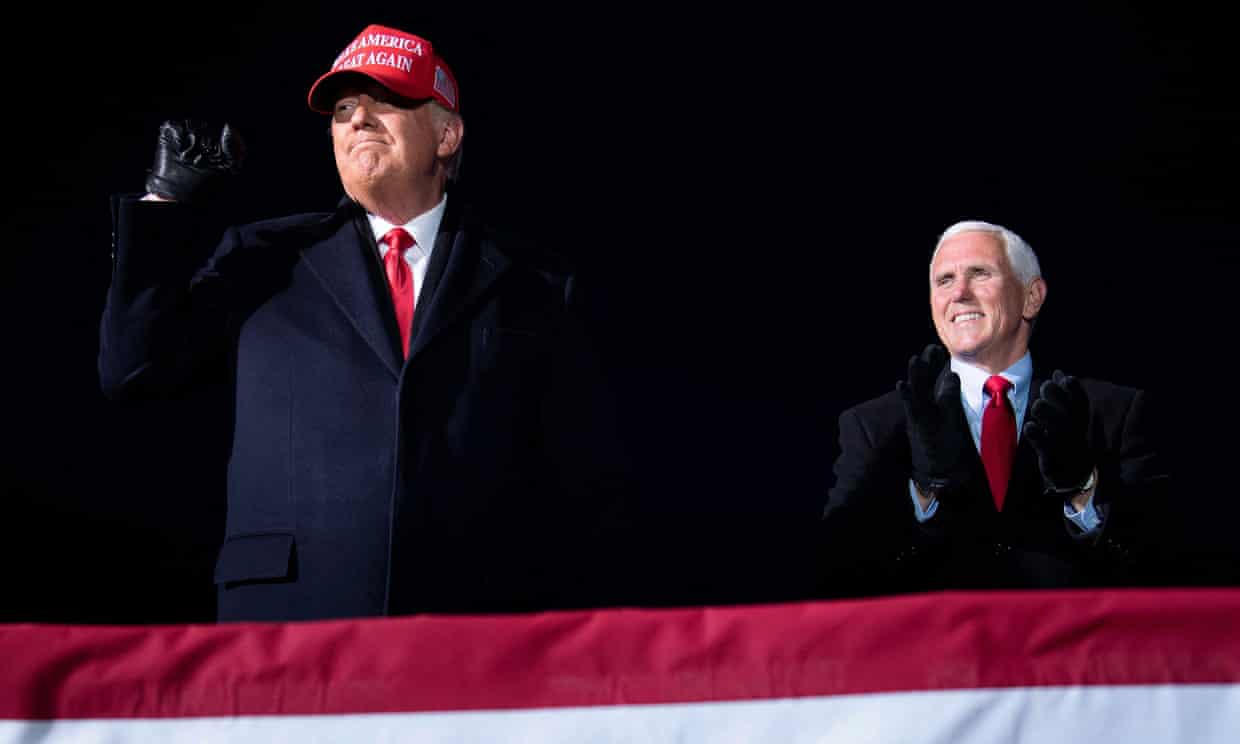
Donald Trump and Mike Pence in November 2020, just before the election. Photograph: Brendan Smialowski/AFP/Getty Images

At least one of Donald Trump’s lawyers knew that interrupting the certification of Joe Biden’s election win as part of a plot to return the former president to office would be unlawful, an email exchange has shown.

John Eastman, Trump’s former lawyer who helped organise the scheme from the “war room” at the Willard hotel in Washington, admitted in an email to Greg Jacob, counsel for the then vice-president, Mike Pence, that it would be a violation of the Electoral Count Act.

However, Eastman encouraged Pence to go ahead with it anyway, saying it was only a “minor violation” of the statute that governed the certification procedure

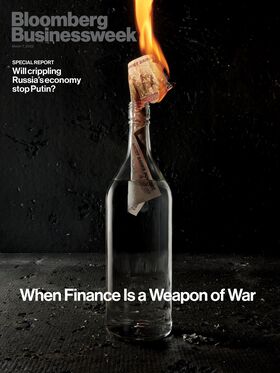
Update March 10 Bloomberg Markets . . .When Finance is A Weapon of War

on March

"U.S. equity-index futures fell amid concerns the nation’s inflation accelerated for a sixth successive month and that the Russian attack on Ukraine will continue. Bonds rallied as investors turned to the European Central Bank to gauge policy makers’ response to the war in Ukraine.

Contracts expiring this month on the S&P 500 and Nasdaq 100 indexes slid at least 0.8% each after U.S. stocks rallied on Wednesday by the most since June 2020. Europe’s Stoxx 600 gauge dropped for the fifth time in six days, and the euro slid, before the ECB’s policy decisions due this afternoon. Treasuries and the dollar advanced, while oil recovered. . ."

======================================================================

Businessweek
Economics

To Punish Putin, the World Turned Finance Into a Weapon of War

Russia’s central bank became the main target on a front that could crater the country’s economy.

relates to To Punish Putin, the World Turned Finance Into a Weapon of War

Illustration: Daphne Geisler

relates to Features

==============================

BREAKING NEWS TAKE-YOUR-PICK...Some stories will survive another day

Intro: The Media Machine keeps churning-out more stories every day

Live: U.K. Sanctions Roman Abramovich, Russian And Ukrainian Foreign Ministers Meet In Turkey

Follow real-time updates on Russia's invasion of Ukraine.

March 10, 2022 11:05 AM EST

Meeting Between Putin And Zelensky Possible: Russian Foreign Minister

A meeting between Russian President Vladimir Putin and Ukrainian President Volodymyr Zelensky may be possible, Russian Foreign Minister Sergei Lavrov said following his meeting with his counterpart from Kyiv, Dmytro Kuleba.

“I hope that this will become necessary at some point. But preparatory work needs to take place for this,” Lavrov said in a press conference following his meeting.

Responding to a reporter, Lavrov said Russia was not planning to attack other countries. “We didn’t attack Ukraine, either,” repeating Moscow’s claims that it was carrying out a “special military operation.”

When asked about the Russian strike on a maternity hospital—condemned by Ukrainian officials as a war crime—Lavrov claimed without evidence that the building was being used by Ukrainian nationalist militias.

Siladitya Ray

March 10, 2022 10:49 AM EST

Russia Has No Ceasefire Plans, But Ukraine Will Not Surrender: Ukrainian Foreign Minister

Thursday’s meeting between Ukrainian foreign minister Dmytro Kuleba and Russian Foreign Minister Sergei Lavrov in Turkey ended with no progress made on a possible ceasefire.

In a press conference following the meeting, Kuleba said Russia had no plans to establish a ceasefire and was instead seeking a surrender from Ukraine. “This is not what they're going to get. Ukraine is strong, Ukraine is fighting.”

Kuleba said that Ukraine has ensured the failure of Russia’s initial invasion plans and was now seeking a diplomatic resolution to the conflict. “But we will not surrender.” The Ukrainian minister added he spent most the time during the meeting trying to address humanitarian issues, seeking a humanitarian corridor in the port city of Mariupol where a maternity hospital was hit by Russian strikes on Wednesday.

According to Kuleba, Lavrov told him he did not have the authority to agree this measure, but would take the proposal back to the Kremlin. The Ukrainian minister then added: “Lavrov has a different impression of what foreign ministers do in a crisis.”

Siladitya Ray

March 10, 2022 10:14 AM EST

Between 5,000 and 6,000 Russian Troops Have Been Killed So Far, According To U.S. Estimates

Between 5,000 and 6,000 Russian troops have been killed during the first two weeks of Russia’s invasion of Ukraine, a U.S. official told various news outlets. That number is significantly higher than the Pentagon’s previous estimate of between 2,000 to 4,000 deaths shared earlier this week.

According to CBS News, the official noted that while accurate casualty numbers are difficult to determine, Russia has suffered “very, very significant casualties,” comparable to some battles from World War II.

While there are no estimates from the number of wounded Russian soldiers, CBS notes that they are generally around three times as many killed, putting that estimate between 15,000 to 18,000.

— Siladitya Ray

March 10, 2022 3:31 AM EST

House Passes $13.6 Billion In Aid For Ukraine

The U.S. House of Representatives on Wednesday approved $13.6 Billion in aid for Ukraine as part of a $1.5 trillion omnibus spending bill.

According to the House Committee on Appropriations the aid package includes $4 billion to help displace refugees, $6.5 billion for military assistance and $1.8 billion for any macroeconomic needs.

— Jonathan Ponciano

March 10, 2022 2:17 AM EST

IMF Approves $1.4 Billion Disbursement To Ukraine

The International Monetary Fund has approved $1.4 billion in emergency financing for Ukraine, the international lender announced Wednesday.

“The war in Ukraine is resulting in tragic loss of life and human suffering,” the IMF said in its release. “While the outlook is subject to extraordinary uncertainty, the economic consequences are already very serious.”

The IMF said it will disburse the loan using its Rapid Financing Instrument, an emergency assistance policy designed to quickly provide funds during a conflict or natural disaster.

The IMF’s emergency funding follows a $723 million support package for Ukraine approved Monday by the World Bank. The bank said another $3 billion package would be sent “in the coming months” for Ukraine and its neighbors, which are receiving millions of refugees.

U.S. lawmakers said it aims to pass a $13.6 billion package that includes military and humanitarian aid for Ukraine, unnamed members of Congress and aides told the New York Times Tuesday. The aid is expected to be passed in a larger government spending package that Congress must approve by Friday in order to avoid a government shutdown, following last month’s approval of a short-term spending bill.

March 10, 2022 2:09 AM EST

‘He Sees That We Are Strong’: Zelensky Thinks Putin Will Eventually End Hostilities In Ukraine

Ukrainian President Volodymyr Zelensky told Vice News on Wednesday he believes Russian President Vladimir Putin will eventually “stop the war” and “begin to speak,” as Ukrainian forces continue to push back against invading Russian troops.

“I think he sees that we are strong,” Zelensky said in an in-person interview with Vice. “He will [cease fighting]. We need some time.”

Zelensky added that he does not trust Putin: “I only trust my family,” he said.

Russian Foreign Minister Sergey Lavrov and Ukrainian Foreign Minister Dmytro Kuleba are expected to meet in Turkey on Thursday. Turkish President Recep Tayyip Erdogan, whose top diplomat has hosted several calls between the two parties since the invasion began, said the meeting could “crack the door open to a permanent cease-fire.” Russian and Ukrainian negotiators have met for several rounds of talks to discuss temporary local ceasefires to allow civilians to evacuate from besieged cities.

Russia has said one of its demands for a permanent ceasefire is that Ukraine remain neutral and not join NATO—a desire Zelensky said he has “cooled down” on recently because “NATO is not prepared to accept Ukraine,” according to a translation of an ABC News interview.

Russia has bombarded Ukrainian cities in recent weeks, but its ground forces have struggled to make extensive progress in the country’s north. Western officials say the invasion’s slower-than-expected pace is partly due to stiff resistance from Ukrainians.

March 10, 2022 12:38 AM EST

Russia ‘Likely’ Deploying Private Mercenaries In Ukraine, U.K. Says

The British Ministry of Defense said in an intelligence update Wednesday Russia is “likely deploying” private military companies as part of its invasion of Ukraine.

Mercenaries were reportedly deployed in Ukraine weeks before Russia began its invasion, unnamed security officials told Reuters last month. The U.S. had warned of Russia using private contractors to stage “false flag” operations in Ukraine to justify its eventual invasion.

Mercenaries from the Wagner Group—a secretive Russian contracting organization—appeared to enter regions of eastern Ukraine controlled by pro-Russian separatists, the New York Times reported hours before the invasion started two weeks ago. A senior U.S. defense official told reporters last week there are indications the Wagner Group is present in Ukraine, but it’s unclear how many of their staff are participating in the war.

Private military contractors such as the Wagner Group have been accused of committing human rights violations in several countries, including the Central African Republic and Syria. Last year, the United Nations raised concerns the group—operating as security and military personnel in the Central African Republic—committed crimes such as arbitrary detention, torture, disappearances and summary execution, along with reports of rape and sexual violence. Russia has denied ties to the Wagner Group.

Mason Bissada

March 9, 2022 11:08 PM EST

White House Warns Russia Could Use Chemical Weapons In Ukraine

White House Press Secretary Jen Psaki tweeted Wednesday the world should "be on the lookout" for Russia possibly using chemical or biological weapons in Ukraine, after the Kremlin accused the U.S. of backing a bioweapons program for the Ukrainian government.

Russian foreign ministry spokesperson Maria Zakharova claimed without offering any proof Wednesday that Russia had amassed evidence of a U.S.-backed chemical weapons program in Ukraine, which Psaki called "preposterous."

Psaki said Russia might be setting the stage for a false flag operation to use its own chemical weapons in Ukraine, noting Russia has "long maintained a biological weapons program in violation of international law" and backs the regime of Syrian President Bashar al-Assad, which has used chemical weapons in the Syrian civil war.

"Russia has a track record of accusing the West of the very violations that Russia itself is perpetrating," Psaki tweeted. "This is all an obvious ploy by Russia to try to try to justify its further premeditated, unprovoked, and unjustified attack on Ukraine."

Pentagon Press Secretary John Kirby said Wednesday there currently isn’t any intelligence indicating that Russia has brought chemical or biological weapons into Ukraine, but he warned “it is … a piece of the Russian playbook to blame others for that which you are about to do.”

Russian President Vladimir Putin justified the invasion of Ukraine by falsely claiming ethnic Russians were facing a genocide in the Donbas region and inconceivably accusing Ukrainian President Volodymyr Zelensky, who is Jewish, of heading a neo-Nazi government.

March 9, 2022 10:44 PM EST


Wednesday, March 09, 2022

DEFENSIVE DEPLOYMENT IN ADVANCE OF UKRAINE CONFLICT: Secret Cyber Mission Teams to Thwart an Unexpected Cyber Attack by Russia

Intro: So far, experts who have watched the Russian cyber assaults have been confused at their lack of success, as well as the lower tempo, intensity, and sophistication of what Russian-government hackers are known to be capable of.
This surge of US personnel (team members were soldiers with the US Army’s Cyber Command, civilian contractors and some employees of American companies) in October and November of last year was different

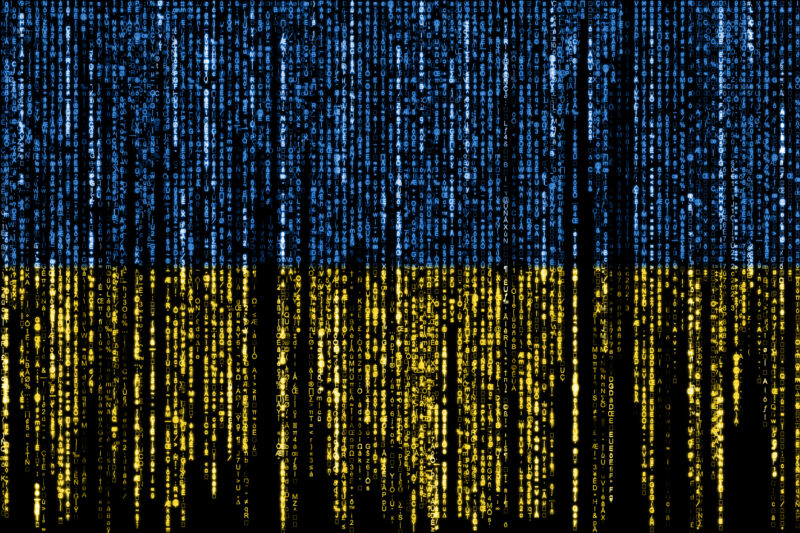
The secret US mission to bolster Ukraine’s cyber defenses ahead of Russia’s invasion

Throughout 2021, US soldiers, experts worked to thwart an expected Russian cyber attack.

<div class=__reading__mode__extracted__imagecaption>Enlargegwengoat | Getty Images

"Months before the Russian invasion, a team of Americans fanned out across Ukraine looking for a very specific kind of threat.

Some team members were soldiers with the US Army’s Cyber Command. Others were civilian contractors and some employees of American companies that help defend critical infrastructure from the kind of cyber attacks that Russian agencies had inflicted upon Ukraine for years.

The US had been helping Ukraine bolster its cyber defenses for years, ever since an infamous 2015 attack on its power grid left part of Kyiv without electricity for hours.

But this surge of US personnel in October and November was different: it was in preparation of impending war.
People familiar with the operation described an urgency in the hunt for hidden malware, the kind Russia could have planted, then left dormant in preparation to launch a devastating cyber attack alongside a more conventional ground invasion.

Experts warn that Russia may yet unleash a devastating online attack on Ukrainian infrastructure of the sort that has long been expected by Western officials. But years of work, paired with the past two months of targeted bolstering, may explain why Ukrainian networks have held up so far.

Officials in Ukraine and the US are careful to describe the work of the “cybermission teams” as defensive, compared with the billions of dollars of lethal weapons that have poured into Ukraine to fight and kill Russian soldiers.

Russian attacks have been blunted because “the Ukrainian government has taken appropriate measures to counteract and protect our networks,” said Victor Zhora, a senior Ukrainian government official. . .

> In the Ukrainian Railways, the team of American soldiers and civilians found and cleaned up one particularly pernicious type of malware, which cyber security experts dub “wiperware”—disabling entire computer networks simply by deleting crucial files on command...

> A similar malware went undetected within the border police, and last week, as hundreds of thousands of Ukrainian women and children tried to leave the country, computers at the crossing to Romania were disabled, adding to the chaos, according to people familiar with the matter.

> With a much smaller budget—about $60 million—these teams also had to lay the groundwork with private groups that provide the backbone for most of the infrastructure that Russian hackers, either government-affiliated or not, were expected to attack.

Its Working Out So Well For Them Graham Hadfield GIF - Its Working Out So Well For Them Graham Hadfield Hinduman GIFs

> On the last weekend in February, the Ukrainian national police, alongside other Ukrainian government arms, were facing a massive onslaught of “distributed denial-of-service attacks” (DDoS), which are relatively unsophisticated attacks that take down networks by flooding them with demands for small amounts of data from a large number of computers.

Within hours, the Americans had contacted Fortinet, a California cyber security group that sells a “virtual machine” designed to counter just such an attack.

Funding was approved within hours, and the US Department of Commerce provided clearance within 15 minutes. Within eight hours of the request, a team of engineers had installed Fortinet’s software onto Ukrainian police servers to fend off the onslaught, said a person familiar with the rapid-fire operation.

The fact that these onslaughts are often targeting commercially available software—mostly from Western manufacturers—has forced major US and European companies to dedicate resources to defending Ukrainian networks.

> Microsoft, for instance, has for months run a Threat Intelligence Center that has thrust its resources in between Russian malware and Ukrainian systems. . .On the US government’s advice, Microsoft immediately extended the warning to neighboring Nato countries, said a person familiar with the late-night decision.

“We are a company and not a government or a country,” Smith wrote, but added that Microsoft and other software makers needed to remain vigilant against what happened in 2017, when a malware attributed to Russia spread beyond the borders of the Ukrainian cyber arena to the wider world, disabling computers at Merck, Maersk, and elsewhere and causing $10 billion of damage.

Friends Chandler GIF - Friends Chandler Joey GIFs

[. ] Ukrainian defenses have proved resilient, said one European official who was briefed this week by the Americans at a NATO meeting, and Russian offenses have proved mediocre. He said the reason was that, so far, Russia has held back its elite corps in the cyber arena, much as it has on the battlefield, perhaps by underestimating the Ukrainians. . ."

Reference : https://arstechnica.com/information-technology/2022/03/the-secret-us-mission-to-bolster-ukraines-cyber-defences-ahead-of-russias-invasion/ 

_____________________________________________________________________________

RELATED CONTENT TODAY | Bleeping Computer

Russia

Russian government sites hacked in supply chain attack

Russia says some of its federal agencies' websites were compromised on Tuesday after unknown attackers hacked the stats widget used to track the number of visitors by multiple government agencies.

Russia cryptocurrency

US Treasury: Russia may bypass sanctions using ransomware payments

The Treasury Department's Financial Crimes Enforcement Network (FinCEN) warned U.S. financial institutions this week to keep an eye out for attempts to evade sanctions and US-imposed restrictions following Russia's invasion of Ukraine.

Hacker threat actor

Hackers fork open-source reverse tunneling tool for persistence

Security experts have spotted an interesting case of a suspected ransomware attack that employed custom-made tools typically used by APT (advanced persistent threat) groups.

Mesa City Council Meeting Mon 03.07.2022. . .Know Your Government

What is The Letter 'Z': Government Supporters are using the letter as a Pro-War Symbol to Show Solidarity

Intro: A clear explanation from the Aljazeera Media Network

Why has ‘Z’ been embraced by supporters of Russia’s Ukraine war?

Government supporters are using the letter as a pro-war symbol to show solidarity with Russia’s armed forces.

First spotted on the side of Russian tanks and military vehicles amassing on the border with Ukraine, the letter “Z” has since become the main symbol of public support for Russia’s war in Ukraine.

Following the February 24 invasion, government supporters have used the letter, which does not exist in the Cyrillic alphabet used in Russia, to show solidarity with the armed forces fighting in the neighbouring country.

In one video shared on social media, former spy Maria Butina, convicted of espionage in the United States, can be seen carving the symbol onto her jacket.

Russian gymnast Ivan Kuliak had the letter prominently taped on the front of his outfit as he stood on the podium next to Ukraine’s Illia Kovtun during an event in Qatar’s capital, Doha. He now faces disciplinary proceedings by the International Gymnastics Federation, which blasted his “shocking behaviour”.

Russian gymnast Ivan Kuliak displayed the symbol at an event in Doha [Screen grab/YouTube]

And at a cancer hospice in the city of Kazan, staff and patients, including children, lined up to form the letter Z in the snow, according to an image circulating online.

Film critic Anton Dolin, who has criticised the “criminal war” in a Facebook post and is now in Latvia, noticed before leaving that the door to his apartment had been spray-painted with the letter Z.

“The purpose of this is clear,” he wrote. “We know where your family live, beware.”

There have been a number of theories suggested over what the letter means [File: Alexander Ermochenko/Reuters]

Meanwhile, Russia’s internet censor board, Roskomnadzor, changed its Telegram channel handle to emphasise the letter Z.

A large sign showing Z alongside a hashtag reading “We don’t leave ours” can also be seen over a street in Saint Petersburg, Russia’s second-largest city.

The symbol has also been embraced by pro-war supporters outside Russia – on Friday, Serbs demonstrating in support of Moscow’s actions carried banners with the Z letter and painted it on the streets of Belgrade as they marched through Serbia’s capital.

A protester paints the ‘Z’ sign on a street in reference to Russian tanks marked with the letter, during a rally organised by Serbian right-wing organisations in support of the Russian invasion in Ukraine, in Belgrade, March 4, 2022 [File: Andrej Isakovic/AFP]

What does it mean?

There have been various theories put forward since Z was first seen emblazoned on military hardware, alongside other letters, including V and O.

They have ranged from suggestions that they stood for the first letters of the full name of Ukraine’s president, Volodymyr Oleksandrovych Zelenskyy, to suspicions that they represent the areas where the soldiers operating them were usually based.

An Instagram post by the Ministry of Defence has meanwhile suggested that the Z symbol stands for “za pobedu”, or “for victory”.

Russia’s war has drawn widespread international condemnation, resulting in Western countries imposing crippling sanctions against Russia and prompting an exodus of a number of multinational companies from the country.

Last week, the Russian Ministry of Defence acknowledged that 498 Russian soldiers have died since what it calls a “special military operation began”.

Russian media are supposed to report on the war using only official, government-approved sources. News outlets and schools have also been banned from referring to the ongoing hostilities as an “invasion”, “attack”, or “declaration of war”."

THE SANCTIONS STRATEGY IS WRONG. . The West misunderstands the Russian concept of Oligarchy

Time to Re-Think: "The central flaw in the design of western sanctions is the premise that putting economic pressure on the inner circle of Russia’s president will cause them to demand change. . . .What the sanctions do achieve is the weakening of Russia’s economy, and with that, its military capacity. It is only a matter of time before the state can no longer pay its entitlements and employees – doctors, teachers, administrators, but also the police and the military-industrial complex. No new tanks, destroyers or howitzers, and no soldiers to shoot them either.
Whether it is going to be weeks or months depends on how Russia plays its remaining cards, such as cooperation with China, and how effectively it exploits its existing resource monopolies. In the meantime, Putin’s war will continue unchecked."
Note on the author: Olga Chyzh researches political violence and repressive regimes, she is an assistant professor in the Department of Political Science at the University of Toronto.
 

The sanctions strategy is flawed. To defeat Putin, you have to know how the Kremlin works

Boris Berezovsky, left, and Roman Abramovich in the state duma in 2000. Berezovsky was forced into exile after he turned on Putin.

O
The west misunderstands the Russian concept of oligarchy, which leaves these powerful actors more beholden to the state
[Image caption:
Boris Berezovsky, left, and Roman Abramovich in the state duma in 2000. Berezovsky was forced into exile after he turned on Putin. Photograph: SVF2/Universal Images Group]
 
Tue 8 Mar 2022 13.00 ESTLast modified on Wed 9 Mar 2022 03.53 EST
 
"Western states hit Russia with a package of sanctions so unprecedented that they were described as a “declaration of war” by Russia’s president, Vladimir Putin. The hope was that beyond the measures targeting the Russian central bank and financial institutions, asset freezes and travel bans would “entice” powerful oligarchs and members of Putin’s inner circle to influence the Russian leader to call off the invasion. Some even suggested that sanctions might topple the regime.

But while the world rejoiced at the spectacle of seized lavish superyachts and secluded chalets, Russian troops continued making inroads and attacking Ukrainian cities. Only two of the sanctioned individuals expressed their rather reserved disapproval of the war – hardly the “mounting pressure” that the west might have envisioned.

Russian oligarchs will not put pressure on Putin, not now and not anytime soon. They stay silent, even as they watch their assets and fortunes dwindle. We should have expected this. The west misunderstands the concept of oligarchy in modern Russia, which leaves these powerful actors more beholden to the state – or president – than any outside influence, and prevents the jet-set tycoons we see in the western media from wielding real political power.

What the west calls “Russian oligarchs” are not a homogenous group in terms of their interests, functions within the state, or political influence. Those who have direct access to the president fall into two broad categories: the economic oligarchs and the strongmen

> The first group – the economic oligarchs – are essentially trustees who manage day-to-day operations of various industries within the Russian economy, such as banking or oil extraction . Beyond the gaudy decor, private jets and extravagant parties, there are two important factors that characterise this group: their dependence on the status quo, and a total mismatch between their wealth and political influence. . .

> The second group, the strongmen, consists of Putin’s St Petersburg political connections . Originally middle managers, low-level administrators, special ops, scientists, athletes and criminal thugs, these individuals are now holding key government and other power positions. These are Putin’s most loyal supporters, who also hold the most political influence.

This group, on balance, are ideologically conservative and hostile towards the West. They view economics as a tool of the state and are unconcerned with western sanctions. If anything, they view Russia’s looming isolation and the forced return of the economic oligarchs to Russia as a benefit. Autarky and isolation facilitate repression, and further strengthen their status. Strongmen have no reason to remove Putin now – he is fulfilling their dream of a ruthless police state.

The above description is simplified, a rough sketch of the power dynamics in today’s Russia, but it offers important insights. These latest sanctions are unlikely to topple the regime because they do not prevent Putin from distributing rents to his core supporters. They decrease the size of the pie but the pie is still very large, and as long as he can do this, his inner circle will stand by him.

TAKE THE TIME TO READ BETWEEN-THE-LINES >> https://www.theguardian.com/commentisfree/2022/mar/08/sanctions-vladimir-putin-kremlin-russian-oligarchy