Wednesday, May 11, 2022

AUTOCRATIC DEMOCRACY: A Reversal of 1986 "People's Power Revolt"

Intro:


Late Dictator's Son Wins Philippine Presidency, Unofficial Count Shows

The namesake son of late dictator Ferdinand Marcos appears to have won the presidency in a reversal of the 1986 “People Power” revolt that ousted his father.
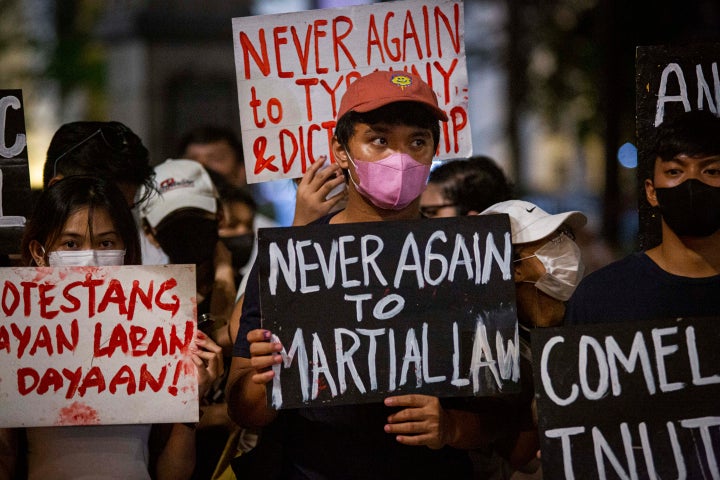
<div class=__reading__mode__extracted__imagecaption>Anti-Marcos and Duterte protesters hold a vigil in Liwasan Bonifacio Park on May 10, 2022 in Manila, Philippines.

MANILA, Philippines (AP) — The namesake son of late Philippine dictator Ferdinand Marcos appeared to have been elected Philippine president by a landslide in an astonishing reversal of the 1986 “People Power” pro-democracy revolt that ousted his father.

Marcos Jr. had more than 30.8 million votes in the unofficial results with more than 97% of the votes tabulated as of Tuesday afternoon. His nearest challenger, Vice President Leni Robredo, a champion of human rights, had 14.7 million votes in Monday’s election, and boxing great Manny Pacquiao appeared to have the third highest total with 3.5 million.

His running mate, Sara Duterte, the daughter of the outgoing president and mayor of southern Davao city, had a formidable lead in the separate vice presidential race.

The alliance of the scions of two authoritarian leaders combined the voting power of their families’ political strongholds in the north and south but compounded worries of human rights activists.

Dozens of anti-Marcos protesters rallied at the Commission on Elections, blaming the agency for the breakdown of vote-counting machines and other issues that prevented people from casting their votes. Election officials said the impact of the malfunctioning machines was minimal.

A group of activists who suffered under the dictatorship said they were enraged by Marcos’s apparent victory and would oppose it.

“A possible win based on a campaign built on blatant lies, historical distortions and mass deception is tantamount to cheating your way to victory,” said the group Campaign Against the Return of the Marcoses and Martial Law. “This is not acceptable.”

[.   ] Marcos Jr., a 64-year-old former provincial governor, congressman and senator, has defended the legacy of his father and steadfastly refused to acknowledge and apologize for the massive human rights violations and plunder under his father’s strongman rule.

Presidential candidate Ferdinand Marcos Jr., son of the late dictator Ferdinand Marcos Sr., speaks to the members of the media, at his party heaquarters in Manila


After his ouster by the largely peaceful 1986 uprising, the elder Marcos died in 1989 while in exile in Hawaii without admitting any wrongdoing, including accusations that he, his family and cronies amassed an estimated $5 billion to $10 billion while he was in power. A Hawaii court later found him liable for human rights violations and awarded $2 billion from his estate to compensate more than 9,000 Filipinos who filed a lawsuit against him for torture, incarceration, extrajudicial killings and disappearances.

His widow, Imelda Marcos, and their children were allowed to return to the Philippines in 1991 and worked on a stunning political comeback, helped by a well-funded social media campaign to refurbish the family name."

Reference: https://www.huffpost.com/entry/philippines-elections-dictator_n_627ac824e4b046ad0d82c0a5



100 YEARS OF INDEPENDENT JOURNALISM: The New Statesman

The New Statesman Podcast named Best Political Podcast for second year running

The New Statesman has come first in two categories at the Publisher Podcast Awards.

                                 New Statesman podcast artwork 

By New Statesman                

ARIZONA #2 for Worst COVID-19 Death Rates in America | Robert Hart, writing today in Forbes

Intro: Across the country, there have been 299 deaths from Covid-19 per 100,000 people since the pandemic began through mid-April 2022, according to data from Johns Hopkins University. In Mississippi and Arizona, the only two states to exceed 400 deaths per 100,000 people, there were 418 and 411 Covid-19 deaths per 100,000 people.
In Hawaii and Vermont, death rates were around a third the national average at 100 and 102 deaths per 100,000 people, respectively.

These ten states have the worst Covid-19 death rates

  1. Mississippi
  2. Arizona
  3. Oklahoma
  4. Alabama
  5. Tennessee
  6. West Virginia
  7. Arkansas
  8. New Jersey
  9. Louisiana
  10. Michigan

Here Is What One Million Covid Deaths In The U.S. Looks Like

"According to official estimates from the CDC, Johns Hopkins University and other organizations that collect public health data, the United States is nearing the grim milestone of one million deaths from Covid-19.

Since February 2020, Covid-19 has been listed as the underlying cause of death on at least 90% of these death certificates, according to the Centers for Disease Control and Prevention. This means the disease “initiated the train of events leading directly to death.” For the remainder, Covid-19 contributed to death but was not the underlying cause.

Covid-19 is now the third-leading cause of death in the U.S.

For two years running, Covid-19 has killed more Americans than almost anything else. Around 462,000 Americans died from the disease in 2021 and 386,000 did in 2020, according to the CDC, accounting for 13.3% and 10.4% of all deaths, respectively. Only heart disease and cancer—sweeping terms that cover many distinct diseases—killed more. More than 150,000 people have already died from Covid-19 in 2022, a figure that would easily rank it among the top 10 leading causes of death in recent years. . .

More than 150,000 people have already died from Covid-19 in 2022

Covid-19 has proven far more deadly than the flu, or HIV, or two world wars

Despite frequent comparisons to the flu in order to downplay the threat of the pandemic—including many by former President Donald Trump—Covid-19 has already killed nearly three times more people in a little over two years than flu does in a decade. According to the CDC, seasonal influenza killed roughly 360,000 people in the U.S. between 2010 and 2020. Covid-19 has killed more Americans than HIV has in the last four decades and nearly twice the number killed in both world wars. Covid-19 is not far from having killed as many Americans as every U.S. war between 1775 and 1991—nearly 1.2 million people—according to data from the Department of Veterans Affairs. . .

> One million is likely an underestimate of Covid’s true death toll

> Covid-19 has been deadlier in Republican states

> The U.S. has 4% of the world’s population but recorded 16% of Covid-19 deaths

> The U.S. has a far higher Covid-19 death rate than other wealthy countries

Covid-19 came in waves

The U.S. has endured several waves of Covid-19, though different regions experienced very different pandemics. Broadly, the number of deaths peaked in mid-2020 during the initial outbreak, in the winter of 2020-21, during a delta-driven wave during the fall of 2021 and the winter of 2021-22 as the omicron variant spread. . .

We are in one of the least deadly stages of the pandemic so far

Besides the very beginning of the pandemic in 2020, fewer people died in June and July 2021 than did in any other month. Roughly 8,000 people died in June 2021 and 11,000 in July 2021, though deaths later surged throughout August and September, which were the fifth- and seventh-deadliest months of the pandemic. The number of deaths plummeted to around 13,000 in March 2022, down from nearly 48,000 in February, one of the deadliest months. Data for April 2022 is not complete and subject to change, though records indicate slightly fewer people may have died than during the previous month. . .

Death rates plummeted in highly vaccinated states

Before vaccines were widely available—a date Forbes crudely marked as June 1, 2021—New Jersey, New York and Rhode Island respectively had the three worst per capita death rates of any state. The trio embraced vaccination and now report some of the highest percentages of their population as fully vaccinated, respectively ranking first, seventh and ninth, according to data collated by the New York Times. In the time since the vaccine rollout, New Jersey, New York and Rhode Island have reported some of the lowest death rates in the country, according to data provided by Johns Hopkins University and analyzed by Forbes. For that period, they respectively had the ninth, sixth and seventh lowest death rate per capita. Connecticut, the fourth most vaccinated state, experienced a similar transformation, reporting the sixth worst per capita death rate before the rollout and the fourth best afterwards.

Before the vaccine rollout, these ten states had the worst Covid-19 death rates

  1. New Jersey
  2. New York
  3. Rhode Island
  4. Mississippi
  5. Arizona
  6. Connecticut
  7. Louisiana
  8. Alabama
  9. South Dakota
  10. Pennsylvania

After the rollout, these ten states reported the lowest Covid-19 death rates

  1. Vermont
  2. Hawaii
  3. California
  4. Connecticut
  5. Utah
  6. New York
  7. Rhode Island
  8. Maryland
  9. New Jersey
  10. New Hampshire

READ MORE >> https://www.forbes.com/sites/roberthart/2022/05/10/here-is-what-one-million-covid-deaths-in-the-us-looks-like/

MORE FROM FORBES

MORE FROM FORBESHow Much Money Are At-Home Covid-19 Tests Bringing In? MORE FROM FORBESHow Covid Changed Business Travel Forever MORE FROM FORBESSupply-Chain Snags Create Shortages Of Lifesaving Medical Supplies In U.S.

Monday, May 09, 2022

Get on your mark, Get Set for More! Races are on in Arizona for A New Governor + Challenge to U.S. Senator Mark Kelly

Both contest have at least three major contenders

1

SENATE CANDIDATE CHALLENGING INCUMBENT MARK KELLY

GOP Senate candidate Blake Masters wants to allow states to ban contraception use

By: - May 6, 2022 4:52 pm
(Blake Masters, a Republican candidate for U.S. Senate, says he will only confirm judges who would overturn a landmark 1965 case that barred states from outlawing contraception. Photo by Gage Skidmore | Flickr/CC BY-SA 2.0 )

After the U.S. Supreme Court overturns women’s constitutional right to abortion this summer, one Arizona Republican candidate for U.S. Senate thinks judges should also take aim at the right to buy and use contraception.

Blake Masters, a Tucson-based venture capitalist, boasts on his website that he will only vote to confirm federal judges “who understand that Roe and Griswold and Casey were wrongly decided, and that there is no constitutional right to abortion.” Roe v. Wade and Planned Parenthood v. Casey, decided in 1973 and 1992, respectively, both upheld a constitutional right to abortion access.

But the ruling in Griswold v. Connecticut in 1965 protected a married couple’s right to buy and use contraceptives without government restrictions. The case centered on a Connecticut law that banned the use of contraceptives, which the court determined violated a married couple’s constitutional right to privacy, establishing the basis for the right to privacy with respect to intimate practices -

Masters’ stance puts him on the opposite side of the issue from the National Republican Senatorial Committee, the campaign arm of GOP senators, which has advised candidates on talking points following the leak of a draft opinion overturning Roe v. Wade

In a section instructing candidates on how to “forcefully refute Democrat lies” about Republicans’ positions on abortion and health care, the NRSC declares that “Republicans DO NOT want to take away contraception.” 

Elsewhere in the talking points memo to GOP Senate candidates, the NRSC advises them to say, “I’m not in favor of putting women or doctors in jail. I would never take away anyone’s contraception or health care. That’s just the typical BS you get from politicians.” 

. . .President Donald Trump hasn’t yet endorsed an Arizona Senate candidate, but Masters is viewed as the favorite to receive his endorsement.

His campaign is also being supported by his former boss and mentor, technology investor Peter Thiel, who is spending at least $10 million to bankroll a campaign to support Masters. Masters has already won the support of some extremist Republicans, most recently Georgia Rep. Marjorie Taylor Greene, who spoke to a white nationalist conference earlier this year. Other media reports have noted his past praise for the Unabomber and Hermann Goering, one Hitler’s top military leaders and one of the most prominent members of the Nazi Party.  

It’s unclear where the NRSC stands on all Republican candidates in Arizona, . ."

READ MORE >> https://www.azmirror.com/blog/gop-senate-candidate-blake-masters-wants-to-allow-states-to-ban-contraception-use/


2

GOVERNOR CANDIDATE KARRIN TAYLOR ROBSON

(Robson, a developer and former university regent, is locked in a three-way race for the GOP gubernatorial nomination with Kari Lake and Matt Salmon.)

GOP guv hopeful Karrin Taylor Robson: The 2020 election ‘wasn’t fair’ to Trump

Karrin Taylor Robson, a Republican candidate for Arizona governor, doesn’t think Joe Biden was fairly elected president in 2020. 

It’s the most definitive statement she has made about the election during the course of her campaign, which launched nearly a year ago: “Joe Biden may be the president, but the election wasn’t fair.” 

Robson’s statement to The New York Times for a story about Republicans in Arizona centering their campaigns around bogus and debunked election fraud claims didn’t include any elaboration on what she thought was unfair about an election that officials across Arizona and the country have said was the most safe and secure election in history. 

Robson’s campaign told the Arizona Mirror that the Times didn’t use the “entirety” of her statement. Matthew Benson, a campaign spokesman, provided the full statement to the Mirror

“Joe Biden may be the president, but the election wasn’t fair. States across the country changed their voting rules in the weeks and months before the election; the mainstream media generally refused to cover stories harmful to Joe Biden; and Big Tech actively suppressed conservative voices. No wonder a sizable percentage of Arizona Republicans still feel the way they do about 2020.”

Benson wouldn’t elaborate further on differentiating between media criticisms – presumably the Hunter Biden laptop story, which Robson had tweeted about previously – and critiquing how the actual election was handled. In response to questions seeking more specificity, Benson pointed generally to other states changing voting rules shortly before the election. He didn’t provide specifics, . .

> Robson’s comments come just one day after Maricopa County officials lambasted Republican Attorney General Mark Brnovich for his interim report on his office’s investigation into the “audit” that took place throughout 2021. They broke down point-by-point correcting the record of all the claims Brnovich and others have been pushing under the guise of “raising questions” for the sake of election integrity. . .

> The board of supervisors (four of which are Republican) were joined by Stephen Richer, the Republican county recorder who defeated the incumbent Democrat in the 2020 election, airing their frustrations that have continued to build for well over a year. 

Richer told the Arizona Mirror his initial reaction to Robson’s printed quote is that he has no idea what she means by “wasn’t fair.” But hearing the full statement, he said there is some validity in her concerns over “legacy media” coverage of the Hunter Biden story and potentially others that could have been damaging to the now-president. , ,


[.   ] Richer said the continued spreading of debunked theories by Robson and others as “myopic” in nature. 

> The misinformation over the 2020 election led Richer to create his own political action committee called Pro-Democracy Republicans of Arizona which would boost campaign coffers of Republican candidates who reject the false and baseless claims that the last election was rigged. It was only meant to help legislative and county-wide candidates, not statewide.

To date, none of the money raised has gone to the campaign of any candidates, according to campaign finance reports on the Secretary of State’s website. 

***CLARIFICATION: An earlier version of this story inadvertently attributed Karrin Taylor Robson’s full comment to The New York Times to her campaign spokesman, Matthew Benson. He provided the Mirror with the full statement, which is correctly attributed to Robson.

READ MORE >> https://www.azmirror.com/blog/gop-guv-hopeful-karrin-taylor-robson-the-2020-election-wasnt-fair-to-trump/


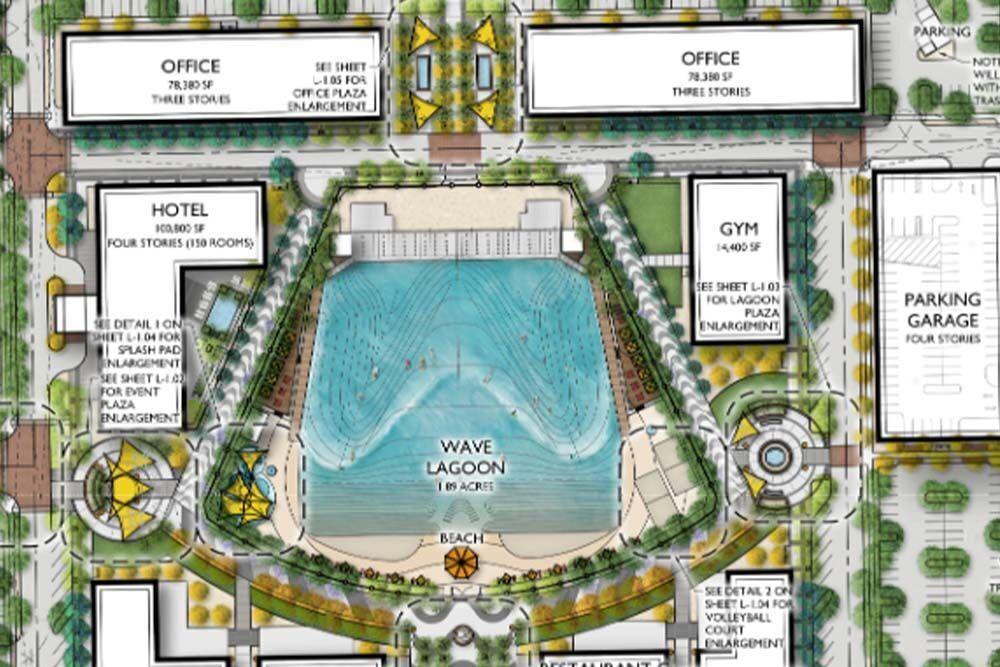
DELAYED BUT NOT DENIED: A Vision Mirage "Cannon Beach"...An 89-Acre Wave Lagoon Water Park that Could Evaporate Before Their Eyes

Intro: Hard-to-believe Boys and Girls, but this surf park development received unanimous approval from the Mesa City Council and the City's Planning & Zoning Board!
“It’s a pretty cool idea, to bring a surf lagoon to a desert,” said Kevin Thompson, who represents District 6 in southeast Mesa. “I think what Cole Cannon is trying to accomplish is really exciting.”
REALITY CHECK: DECADES-OLD MEGA-DROUGHT IN THE DESERT SOUTHWEST
 
TOP STORY            

Mesa surfing lagoon opening delayed for a while

0

Surf Lagoon

>> Hold on to that boogie board: The new surf lagoon at the Cannon Beach development in Mesa won’t open this month as promised, the victim of supply-chain disruptions.

“There have been delays to open Cannon Beach due to supply chain issues,” said Cannon Beach developer Joseph Cottle.  “We are currently testing waves. Once that testing is done, then we will be able to complete the whole lagoon.”

Cottle said that he hopes for the lagoon to open by the end of the summer. . ."


> Thompson said that this project will benefit both the city and its residents.“Not only will the resident be able to enjoy a world-class surf lagoon as well as the amenities that go with it, but the city will also be able to receive the revenue from it,” said Thompson.

> Cottle said that there will be an admission fee to enter the beach as well as an additional hourly fee to surf. There will also be memberships available. A price for admission has not been decided yet.

“It will generate sales tax for the city. There are also things that they’re looking to do in conjunction with. For example, they want to put in a hotel that will generate a bed tax. They also want to bring in restaurants,” said Thompson.

> The lagoon will also be able to host worldwide surf competitions.The size and intensity of the waves can change from beginners to experienced so that everyone is able to participate.There will also be surf lessons available. . ."


RENEWAL RESOURCES SOON OUT-VALUE FOSSIL FUELS

From The New Statesman

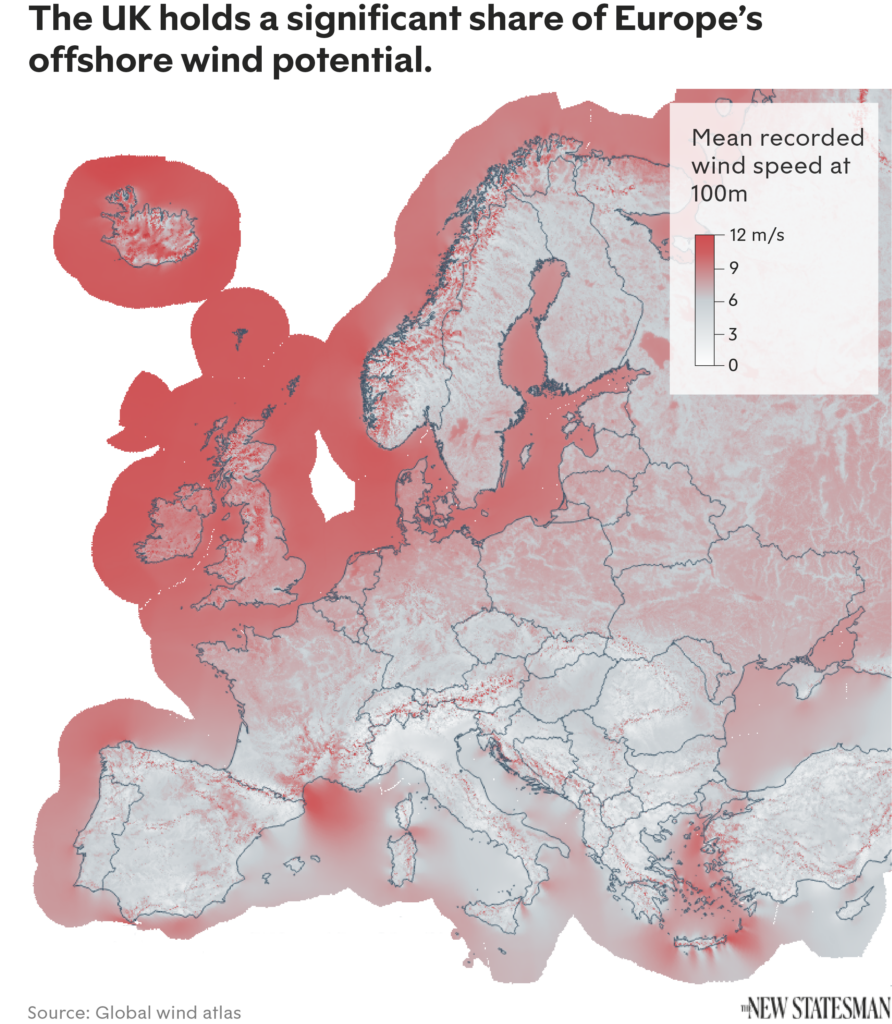
UK offshore wind will be “more valuable” than North Sea oil ever was

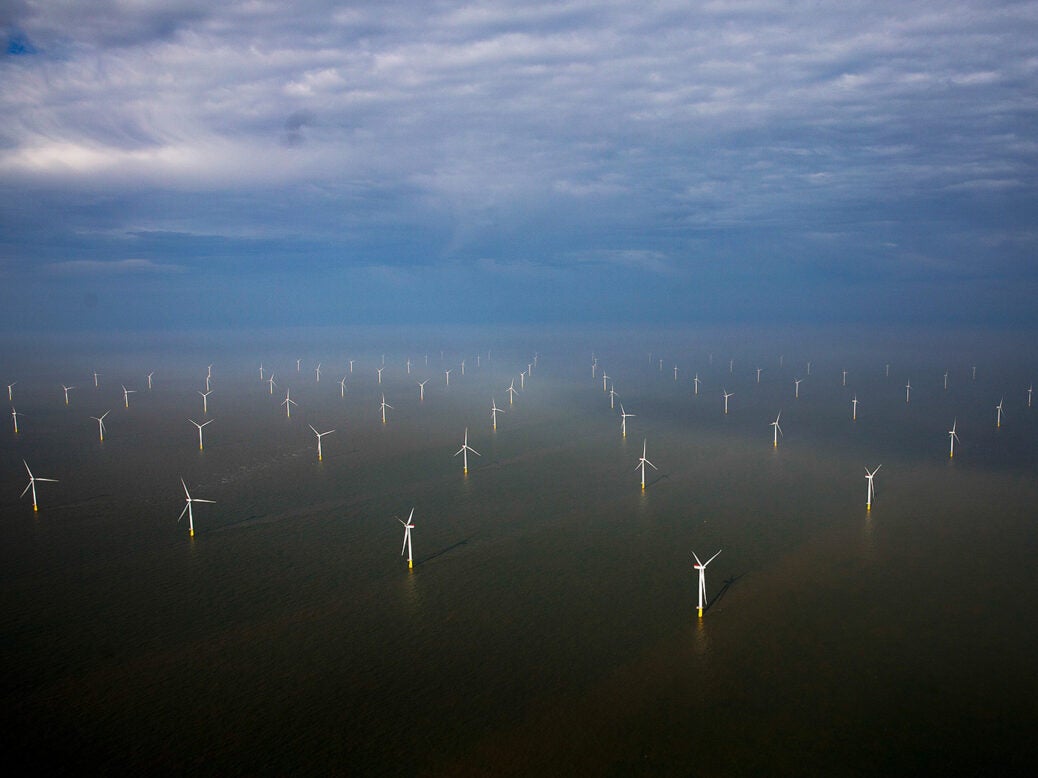
<div class=__reading__mode__extracted__imagecaption>Photo by Simon Dawson/Bloomberg via Getty Images

"When the UK first began extracting oil and gas from the North Sea seabed in the 1970s, it was hoped that the resulting revenues could turbocharge a stagnating industrial economy into the modern age.

However, that is not quite what happened: not only did sterling’s status as a “petro-pound” further damage industrial communities by inflating the currency and pushing up the prices of UK exports, but successive governments have failed to wisely invest oil tax receipts. 

While Norway has built up a $1.3trn sovereign wealth fund with its North Sea oil revenues, which will help pay for an ageing population for decades to come, the UK has only ever spent its profits on cutting national borrowing and keeping down taxes. This allowed Margaret Thatcher’s chancellor, Nigel Lawson, to cut top rate tax from 60p to the pound to 40p during the 1980s oil boom years. But such an approach has failed to give anything to future generations.

There is now, however, a second chance for a UK North Sea energy boom. Oil production is in rapid and terminal decline, irrespective of any new extraction plans being put forward by the UK government. Instead, future energy sovereignty and wealth will not come from fossil fuels, but from renewables, and the North Sea holds the majority of Europe’s offshore wind resources.

The UK is already the European leader for offshore wind and the sector is expected to grow considerably. Large offshore land leasing rounds by the Crown Estate and the Crown Estate Scotland have increased the UK offshore wind pipeline by 60 per cent in the past year, says industry group RenewableUK. The government recently announced its energy security strategy, which outlined an ambition for 50GW of wind power by 2030 – more than enough to power every home in the UK, and an indicator that yet more capacity is to be announced. 

Source: https://www.energymonitor.ai/sectors/power/weekly-data-the-number-of-countries-generating-offshore-wind-power-is-set-to-double

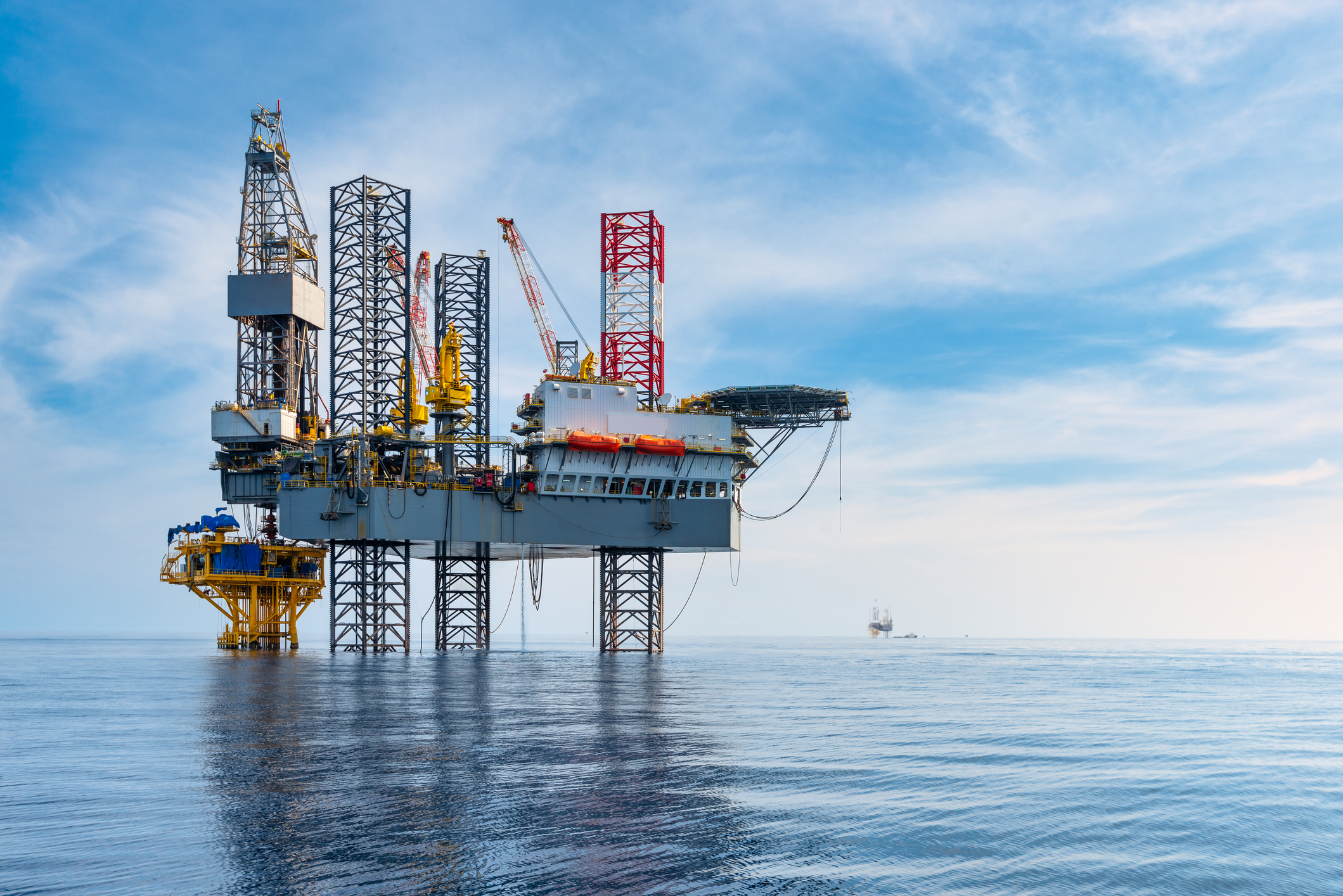
CAPITALISM --THE NEED TO ACT MORE QUICKLY ...We're investing in things that will have little value if we move off fossil fuels

SPOILER ALERT: " . .and their stranding has the potential to unleash economic chaos on the world."
 
Intro: All of the people author John Timmer talked to noted that these sorts of strandings are a normal part of capitalism. And they definitely apply to fossil fuels, as people have started to seek out cleaner alternatives and renewable technologies undercut them in price.
Technological changes can also make a product obsolete, stranding all the infrastructure used to make, sell, and service it.
But there's an added risk here: policy interventions by governments.
Already, various governments have put a price on carbon emissions, launched carbon trading systems, and taken other actions to either discourage the use of fossil fuels or encourage the use of cleaner alternatives.
(Of course, many of them have done that at the same time that they pursued other policies that promoted fossil fuel use.)

It's tempting to consider these stranding mechanisms in terms of trying to identify which of them will be decisive. But all of them can—and in fact are—acting in parallel. And if we want to reach our climate goals, they'll have to act much more quickly than they have been.

STRANDED    —

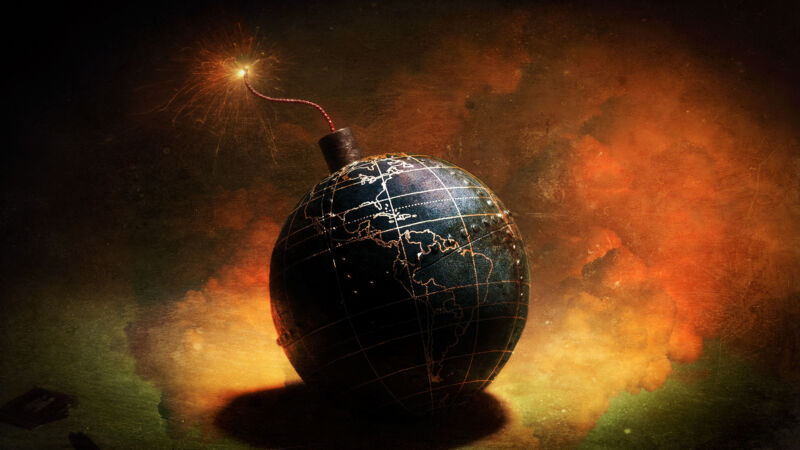
Why our continued use of fossil fuels is creating a financial time bomb

We're investing in things that will have little value if we move off fossil fuels.

Why our continued use of fossil fuels is creating a financial time bomb

"The numbers are startling. We know roughly how much more carbon dioxide we can put into the atmosphere before we exceed our climate goals—limiting warming to 1.5° to 2° C above preindustrial temperatures. From that, we can figure out how much more fossil fuel we can burn before we emit that much carbon dioxide. But when you compare those numbers with our known fossil fuel reserves, things get jaw-dropping.

To reach our climate goals, we'll need to leave a third of the oil, half of the natural gas, and nearly all the coal we're aware of sitting in the ground, unused.

Yet we have—and are still building—infrastructure that is predicated on burning far more than that: mines, oil and gas wells, refineries, and the distribution networks that get all those products to market; power plants, cars, trains, boats, and airplanes that use the fuels. If we're to reach our climate goals, some of those things will have to be intentionally shut down and left to sit idle before they can deliver a return on the money they cost to produce.

But it's not just physical capital that will cause problems if we decide to get serious about addressing climate change.

> We have workers who are trained to use all of the idled hardware, companies that treat the fuel reserves and hardware as an asset on their balance sheets, and various contracts that dictate that the reserves can be exploited.

Collectively, you can think of all of these things as assets—assets that, if we were to get serious about climate change, would see their value drop to zero. At that point, they'd be termed "stranded assets," and their stranding has the potential to unleash economic chaos on the world.

[.  ] Technological changes can also make a product obsolete, stranding all the infrastructure used to make, sell, and service it.

Stranding of infrastructure like this is metaphorical, not physics.
Enlarge / Stranding of infrastructure like this is metaphorical, not physics.

Technological changes can also make a product obsolete, stranding all the infrastructure used to make, sell, and service it.

Stranding of infrastructure like this is metaphorical, not physics.
Enlarge / Stranding of infrastructure like this is metaphorical, not physics.

All of the people we talked to noted that these sorts of strandings are a normal part of capitalism. And they definitely apply to fossil fuels, as people have started to seek out cleaner alternatives and renewable technologies undercut them in price.

But there's an added risk here: policy interventions by governments. Already, various governments have put a price on carbon emissions, launched carbon trading systems, and taken other actions to either discourage the use of fossil fuels or encourage the use of cleaner alternatives. (Of course, many of them have done that at the same time that they pursued other policies that promoted fossil fuel use.)

It's tempting to consider these stranding mechanisms in terms of trying to identify which of them will be decisive. But all of them can—and in fact are—acting in parallel. And if we want to reach our climate goals, they'll have to act much more quickly than they have been.

But there's an added risk here: policy interventions by governments. Already, various governments have put a price on carbon emissions, launched carbon trading systems, and taken other actions to either discourage the use of fossil fuels or encourage the use of cleaner alternatives. (Of course, many of them have done that at the same time that they pursued other policies that promoted fossil fuel use.)

It's tempting to consider these stranding mechanisms in terms of trying to identify which of them will be decisive. But all of them can—and in fact are—acting in parallel. And if we want to reach our climate goals, they'll have to act much more quickly than they have been. . ."

READ the entire article by  Go here >> https://arstechnica.com/science/2022/05/why-our-continued-use-of-fossil-fuels-is-creating-a-financial-time-bomb/