Saturday, February 18, 2023

NY Times Guest Essayist Mark Hannah + Scoop Pulitzer Prize-Winner Seymour Hersch

"...Behind a mind-set that invites the burden of policing a rules-based global order is a conventional assumption: War, though tragic, is a boon for economic vitality and patriotic vigor. This assumption is at best outmoded. The economy is no longer fueled by wartime industries in the same way. . . the notion that a war footing can remedy democratic backsliding and economic stagnation is backward: Our democracy is threatened and our wealth is wasted

www.nytimes.com

Opinion | Straight Talk on America’s War Addiction

Mark Hannah
7 - 8 minutes

Guest Essay

Credit...Eoin Ryan

Mark Hannah

Mr. Hannah is a senior fellow at the Eurasia Group Foundation, where he studies U.S. foreign policy.

Sign up for the Opinion Today newsletter  Get expert analysis of the news and a guide to the big ideas shaping the world every weekday morning.

"Without a fresh vision for America’s role in the world, many people in Washington link today’s geopolitical challenges with those of yesteryear.

✓China is cast as the new Soviet Union, and its high-tech military advances threaten a potential Sputnik moment. The ominously named Committee on the Present Danger, which stoked public support for military spending during the Cold War, was revived with its sights set on China. 

✓ In support of Ukraine, America’s stockpile of missiles and rockets dwindles, spurring calls for the United States to once again “become the arsenal of democracy” and “bolster the defenses of the free and open liberal order.” Vladimir Putin is viewed archetypally as a lethal combination of an old K.G.B. spy and a ruthless Soviet leader.

Evoking America’s titanic struggles against fascism and communism can be rhetorically useful. It conjures an era remembered for its economic dynamism, its unity of purpose, its spirit of patriotism.

Yet simplistic renderings of the past tend to romanticize the effects of war on American society. These gauzy memories are as dangerous as they are perverse. War becomes a solution to America’s economic and political problems rather than what it truly is: a key contributor.

The hawkish instincts of American leaders only exacerbate standoffs and risk worsening the country’s war addiction. 

Tensions with China over Taiwan and spy balloons continue to escalate. 

The war in Ukraine is stretching into its second year, with no end in sight. Yet given his awareness of the limitations of American military might, President Biden has only cautiously ratcheted up support for Ukraine and has been measured in his approach to China compared with his predecessor. He also cut America’s losses by ending the doomed nation-building campaign in Afghanistan.

✓ That hasn’t muted Washington’s Greek chorus of foreign policy functionaries who cry out for a new Cold War with China, further escalation of what’s become a proxy war with Russia and a return to maximum pressure on Iran.

Behind a mind-set that invites the burden of policing a rules-based global order is a conventional assumption: War, though tragic, is a boon for economic vitality and patriotic vigor. This assumption is at best outmoded. The economy is no longer fueled by wartime industries in the same way. When wars are fought by a smaller corps of volunteers and financed by borrowing from financial institutions and foreign governments more than taxes and war bonds, a public spirit of common cause hasn’t materialized. In fact, america’s most recent military misadventures contributed to the steady accumulation of more than $30 trillion in debt — now being weaponized by partisans in Congress for political gain.

After Russia invaded Ukraine, Elliott Abrams, who led Middle East policy in the Bush administration and Iran and Venezuela policy in the Trump administration, insisted that the United States should seize the “new Cold War” opportunity to foster bipartisan consensus.

Bipartisanship sounds appealing. But unanimous war talk isn’t what America needs or what will help it thrive — and indeed, dissent is most valuable when the stakes are reaching geopolitical crisis levels. Unity is not uniformity, and principled opposition is what separates our bottom-up democracy from their top-down autocracies.

The mythologized connection between war and civic unity falls apart under scrutiny. In his Pulitzer Prize-winning book, “The End of the Myth,” Greg Grandin chronicled how, after the Civil War, northern and southern soldiers were sent together to the western frontier to pacify Native American tribes.

> These military campaigns against Indigenous people were viewed in part as a way to reintegrate former Confederates into the U.S. Army and were cast as a “rehabilitation program” for the South. The Spanish-American War and World War I were also sold, to some extent, as a way to unite North and South. But none of these wars prevented the divisions that have endured from the Civil War and Jim Crow through to today’s debates about Confederate monuments and flags.

Did the Second World War allow America to realize its full economic potential and escape the Great Depression? Did the Cold War struggle against a common communist threat produce a period of unity and technological progress?

 While there is some truth to this nostalgia, it overlooks uncomfortable realities. America’s entry into World War II was motivated primarily by vengeance, not a widespread desire to save the free world. The war helped industrialize the country but also left many Americans in a state of deprivation. Popular myths about Cold War social harmony conveniently leave out the traumas of racial segregation and red scares. And the civic unity felt by Americans after 9/11 did not survive the calamitous wars in Iraq and Afghanistan.

The 1990s provide a vivid illustration of how prosperity and political compromise can flourish when we shed a false sense of national insecurity and the militant global posture which often accompanies it. American participation in major conflicts was limited, and the Clinton administration’s primary foreign policy goal was to promote trade.

✓ Defense contractors might argue military spending creates commercial activity and jobs (conveniently distributed across key congressional districts). After decades of overly militarized foreign policy, Americans should be wary of using the defense budget to contribute to economic growth. . .

At a moment when American democracy seems vulnerable and economic waters are rough, it’s understandable some might look for inspiration in the Pax Americana, however apocryphal. It’s also understandable that, without novel ways of understanding this new era of international politics, policymakers are liable to fall back on old ways. That is, they might slip back into the habit of minimizing the costs and exaggerating the benefits of armed conflict.

But the notion that a war footing can remedy democratic backsliding and economic stagnation is backward: Our democracy is threatened and our wealth is wasted because unwise wars have expended public trust and resources that might have been used productively at home rather than so destructively abroad."

Mark Hannah is a senior fellow at the Eurasia Group Foundation and the host of its podcast “None Of The Above.”

www.daily-sun.com

News of the day | Daily Sun | 

Betting on Ukraine victory was ‘suicidal’ – Seymour Hersh

Daily Sun
1 minute

/ World / News of the day

News of the day


19 February, 2023 12:00 AM

Iconic American investigative journalist Seymour Hersh has argued that the US and its allies should have attempted to reach an agreement with Moscow as their belief that Ukraine can win a conflict against Russia is “suicidal.”

✓ Speaking in a YouTube interview with the Consortium News outlet on Friday, Hersh accused the Biden administration of making “so many bad mistakes,” adding that US President Joe Biden basically “blew off NATO in Europe” by telling allies that he is backing Ukraine with its “totally corrupt government.” 


www.rt.com

‘Stop being a troublemaker,’ China tells NATO 


RT 

3 - 4 minutes

Beijing’s envoy to the UN is blaming the Ukraine crisis on the US-led bloc’s “constant eastward expansion”

The main reason for Europe’s current “security plight” is NATO’s insistence on pursuing absolute security and its political exclusion of specific countries, China’s ambassador to the United Nations Zhang Jun has claimed.

Speaking at the UN Security Council briefing on Friday, the envoy noted that the ongoing crisis in Ukraine is the result of NATO’s continued expansion towards the east and urged the US-led military bloc to abandon its Cold War mentality and to stop being “a troublemaker.”

✓ He also pointed out NATO’s “self-contradictory” behavior, where it promotes itself as a “defensive alliance” while at the same time constantly seeking to “breach its geographic confines and expand its agenda, stoke division and tensions, create fears and confrontations.”

“Pursuing absolute security and political exclusion and containment by force against a specific party is the very crux of the reason why Europe is in the security plight,” he said. Europe, and even the whole world, will be caught up in greater turmoil” unless NATO changes its mindset, the diplomat added. 

✓ Zhang reiterated China’s calls for a ceasefire between Russia and Ukraine, and urged them to start peace negotiations as soon as possible. He also suggested that the US, EU and NATO should sit down with Moscow for a “comprehensive and in-depth dialogue” based on the principle of security indivisibility.

“They should discuss how to build a balanced, effective, and sustainable security architecture and realize common security,” he said, adding that it is crucial to stop any attempts to “hype up” the conflict in order to avoid further escalation and expansion. . ." READ MORE

tass.com


US investigative journalist Hersh believes betting on Ukraine’s victory ‘suicidal’

TASS
2 minutes

NEW YORK, February 18. /TASS/. The US administration’s hopes for Ukraine’s victory in the conflict with Russia are ‘suicidal,’ US investigative journalist Seymour Hersh said in an interview with the Consortium News portal.

"It was suicidal to think you can win that war, that Ukraine can win that war. There’s just too much corruption. That was a very, very bad decision. We should have been pushing for peace, we should have made an agreement," said Hersh, who earlier published h NJis findings about explosions targeting Russia’s Nord Stream and Nord Stream 2 pipelines.


"It’s just silly not to right away assure the Russian government that we were not interested in making Ukraine a member of NATO. NATO didn’t want Ukraine anyway because of the corruption. There were just so many bad mistakes made. It’s impossible to believe how just dumb this leadership was. <…> And then they stick to the war,"
he said. . .

✓ On February 8, Hersh wrote in an article, citing sources, that US Navy divers had planted explosive devices under the Nord Stream 1 and 2 gas pipelines under the cover of the BALTOPS exercise in June 2022 and Norwegians activated the bombs three months later. According to the journalist, the decision to conduct the operation was made by US President Joe Biden personally, following nine months of discussions with White House security specialists. White House National Security Council Spokesperson Adrienne Watson said in a comment to TASS that Hersh’s account was utterly false and complete fiction.

VIDEO 


Blinken, Wang Yi discuss weather probe, conflict in Ukraine – State Department

The US Secretary of State and the head of the office of the Foreign Affairs Commission of the Central Committee of the Communist Party of China held talks on the sidelines of the Munich Security Conference

WASHINGTON, February 19. /TASS/. US Secretary of State Antony Blinken and Chinese State Councilor and Director of the CCP Central Foreign Affairs Office Wang Yi discussed the Chinese weather probe shot down over the US, the Ukrainian conflict, North Korea’s missile launch, Taiwan, as well as bilateral contacts, State Department Spokesperson Ned Price said in a written statement following their talks on the sidelines of the Munich Security Conference.

"The Secretary [of State Antony Blinken] directly spoke to the unacceptable violation of US sovereignty and international law by the PRC high-altitude surveillance balloon in US territorial airspace, underscoring that this irresponsible act must never again occur. The Secretary made clear the United States will not stand for any violation of our sovereignty, and that the PRC’s high altitude surveillance balloon program — which has intruded into the air space of over 40 countries across 5 continents - has been exposed to the world," the statement said.

✓ When discussing the situation in Ukraine, Blinken once again "warned about the implications and consequences if China provides material support to Russia or assistance with systemic sanctions evasion". "The Secretary condemned today’s ICBM test by the DPRK as the latest destabilizing act carried out by Pyongyang, and emphasized the need for responsible powers to respond to such significant international challenges," Price added. During the talks, the US top diplomat also "reaffirmed there had been no change to the longstanding U.S. one China policy, and he underscored the importance of maintaining peace and stability across the Taiwan Strait."

"The Secretary of State reiterated President [Joe] Biden's statements that the United States will compete and will unapologetically stand up for our values and interests, but that we do nonot want conflict with the PRC and are not looking for a new Cold War. The Secretary underscored the importance of maintaining diplomatic dialogue and open lines of communication at all times," the State Department spokesman concluded.

The talks between Blinken and Wang Yi were not announced in the Secretary of State's work schedule for Saturday, released on Friday by the State Department. This is the first meeting between US and Chinese officials since the US military shot down the Chinese weather probe.

Chinese weather probe

Earlier, US authorities had detected a Chinese balloon over the mainland at an altitude well above standard parameters for commercial air travel. It posed no threat to people on the ground. On February 4, the balloon was shot down by a missile in US airspace. According to the Washington administration, China was using this vehicle to gather important intelligence. In connection with the incident, Blinken postponed his visit to China.

✓ The Chinese Foreign Ministry protested over Washington’s attacks and slander. Beijing explained that the Chinese meteorological probe was in US airspace due to force majeure.

 RELATED

Seymour Hersh joined CN Live! on Friday to discuss his investigation into the U.S. sabotage of the Nord Stream pipelines.
2 days ago · Investigative reporter Seymour Hersh says a friend has told him that all he's done is to “deconstruct the obvious.
2 days ago · Seymour Hersh will join CN Live! on Friday at 1 pm EST, 6 pm GMT to discuss his investigation into the U.S. sabotage of the Nord Stream ...
If the U.S. wins its appeal, Julian Assange will face prosecution under a severe espionage law with roots in the British Official Secrets Act that is part of a ...
2 days ago · Chris Hedges talks to Matt Taibbi, who revealed that the source of many claims of Trump-era Russian disinformation was itself a disinformation ...
1 day ago · Chris Hedges talks to Matt Taibbi, who revealed that the source of many claims of Trump-era Russian disinformation was itself a ...
2 days ago · Seymour Hersh will join CN Live! on Friday at 1 pm EST, 6 pm GMT to discuss his investigation into the U.S. sabotage of the Nord Stream ...
3 days ago · Ray McGovern discusses Seymour Hersh's story, “How America Took Out The Nord Stream Pipeline” on Garland Nixon and Wilmer Leon's radio show, The ...
2 days ago · The U.S. military's push to “counter disinformation” actually has nothing to do with “taking apart Russian propaganda” and everything to do with ...

18 Feb, 2023 08:11

Betting on Ukraine victory was ‘suicidal’ – Seymour Hersh

The West didn’t even want Kiev in NATO because of corruption concerns, the Pulitzer Prize-winning journalist says
Betting on Ukraine victory was ‘suicidal’ – Seymour Hersh

The US and its allies should have attempted to reach an agreement with Moscow as their belief that Ukraine can win a conflict against Russia is “suicidal,” iconic American investigative journalist Seymour Hersh has argued.

Speaking in a YouTube interview with the Consortium News outlet on Friday, Hersh accused the Biden administration of making “so many bad mistakes,” adding that “it’s impossible to believe just how dumb this leadership was.” 

“It was suicidal to think you can win that war, that Ukraine can win the war [against Russia]. There’s just too much corruption. That was a very, very bad decision. We should have been pushing for peace, we should have made an agreement,” the former Pulitzer Prize winner insisted.

US President Joe Biden basically “blew off NATO in Europe” by telling allies that he is backing Ukraine with its “totally corrupt government,” Hersh added. The journalist also pointed out how Kiev glorifies Stepan Bandera, “the great pro-Nazi who killed Jews like crazy during World War II.” 

“It’s just silly not to right away assure the Russian government that we weren’t interested in making Ukraine a member of NATO,” Hersh stated, referring to long-standing concerns in Moscow. NATO didn’t want Ukraine anyway because of the corruption.” 

Hersh recently published a bombshell report which accused the US of sabotaging the Nord Stream pipelines last year. He cited an informed source as explaining that explosives were planted on the bottom of the Baltic Sea by US Navy divers under the guise of a NATO exercise back in June 2022. They were detonated in late September, rendering the pipelines, which were built to deliver Russian gas to Europe through Germany, inoperable.

US Secretary of State Antony Blinken, as well as Under Secretary for Political Affairs Victoria Nuland and National Security Advisor Jake Sullivan, are all “very hawkish,” according to the journalist. The trio “pushed Biden very hard” to go ahead with the sabotage because “they have long-standing incredible hatred for [Russian President Vladimir] Putin. It’s almost personal, I would guess,” Hersh claimed.  

US National Security Council spokeswoman Adrienne Watson branded Hersh’s bombshell report “utterly false and complete fiction.” The journalist has promised even more revelations on how the pipelines were blown up.


From Around the World
Podcasts


Friday, February 17, 2023

Zelensky Mis-Appropiates the Story of "David & Goliath" @ Munich Cyber Security Summit

 Talking head 


Munich Security Conference: Zelenskyy urges speedier support

Deutsche Welle
8 - 10 minutes

"The annual Munich Security Conference (MSC) began on Friday against the backdrop of Russia's invasion of Ukraine, which is top of the agenda at this year's high-level meeting.

Ukrainian President Volodymyr Zelenskyy opened the conference via video link and urged allies to provide speedier support.

Over the course of the next few days, representatives from 96 countries are set to discuss key issues of defense at the conference.

'No alternative to Ukrainian victory' — Zelenskyy

Ukraine's President Volodymyr Zelenskyy made the opening address by videolink and urged allies to speed up support for his country, warning that lives were hanging in the balance.

"We need to hurry up. We need speed — speed of our agreements, speed of our delivery... speed of decisions to limit Russian potential. There is no alternative to speed because it is the speed that the life depends on," Zelenskyy told those gathered, stressing there was "no alternative to a Ukrainian victory."

Zelenskyy likened the battle against Russia's invasion to the biblical fight between David and Goliath and said that while Ukraine had David's courage, it still needed the sling with which to defeat "the Russian Goliath." 

IMF: Ukraine has fulfilled conditions for next support package

The International Monetary Fund (IMF) has been in talks with Ukraine about providing further support.

"Right now, we are completing a four month program of engagement with Ukrainian authorities to help them reach an economy under extraordinary circumstances of war," IMF Managing Director Kristalina Georgieva told DW.

She said she is "very pleased to say that Ukraine has shown strong performance under this broad monitored program that paves the way for the fund to put in place a fully fledged program for Ukraine."

✓ Georgieva added that this was "important because the financial needs of Ukraine are significant. We estimate that somewhere between 40 and $48 billion (€37.4-44.9 billion) would be needed for this from outside for the country to function. And it is good for the fund to be there for Ukraine." . .


www.timesofisrael.com

Likening Russia to Goliath, Zelensky says Ukraine needs David’s Sling from Israel

By ToI Staff
6 - 8 minutes

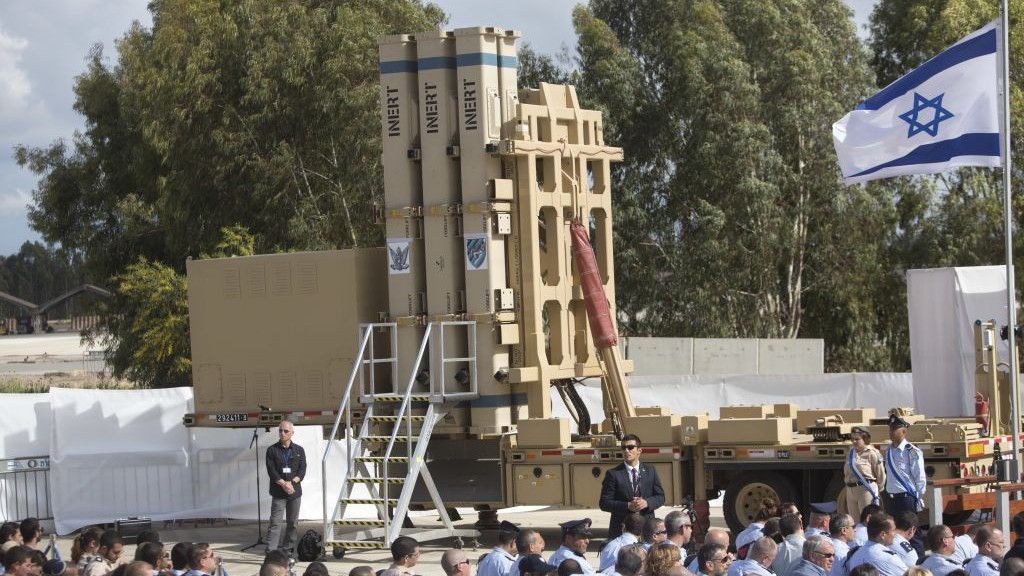
Ukrainian President Volodymyr Zelensky on Friday said his country needs the David’s Sling air defense system from Israel to defeat the Russian “Goliath.”

At the end of his video address to the annual Munich Security Conference, Zelensky issued a fresh request for military assistance from Jerusalem, which has thus far held off on doing so, citing a need to maintain its ties with Russia, which controls the skies over Syria that Israel uses to prevent Iran from establishing a military presence on its northern border.

In his latest plea to Israel, Zelensky resorted to metaphor, comparing Ukraine to David, the underdog from the Biblical tale who manages to defeat Goliath with a sling. The name was given to the Israeli-developed system capable of intercepting rockets and missiles at a range of 40-300 kilometers. . .

“We have no alternative but to defeat the Russian Goliath. Being David is fighting and we are fighting. Being David is having a sling to win,” he said in English remarks.

“We do not have yet the David’s Sling from Israel, but I believe it is just temporary.”

The David’s Sling missile defense system seen at the Hatzor Air Base, Israel. Sunday, April 2, 2017. (AP Photo/Sebastian Scheiner)

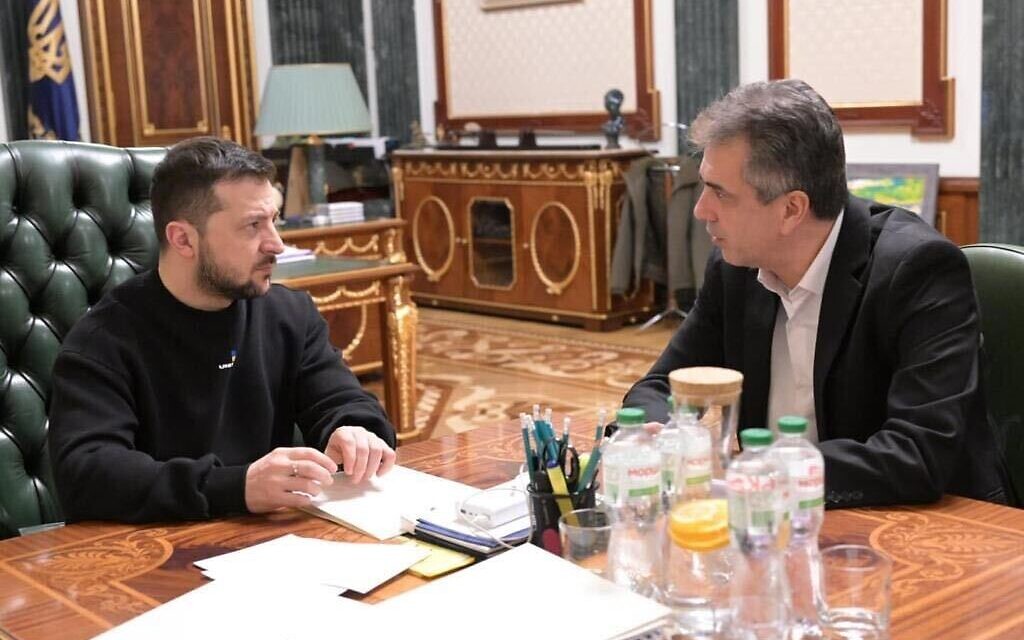
Zelensky met Thursday with visiting Foreign Minister Eli Cohen in Kyiv, with the latter stressing that Israel “supports Ukraine’s territorial integrity and sovereignty.”

The Ukrainian leader thanked Israel for the humanitarian aid over the past year, which has topped NIS 80 million ($22.5 million). He also asked Cohen to increase the number of wounded soldiers being treated in Israel, and to allow another 15,000 Ukrainians into Israel with work permits.

Requests for military weapons were not included in the public readouts.

Cohen announced new measures of support, including a $200 million loan guarantee for healthcare and civilian infrastructure along with a pledge to develop a “smart early warning system.”

The airstrike warning system would be similar to the technology Israel uses to warn civilians of rocket attacks. The system is expected to reach Ukraine within 3-6 months.

Cohen said that Israel would offer a list of tangible measures, including reconstruction and water projects, within 3-4 months.

Foreign Minister meets with Ukrainian President Volodymr Zelensky in Kyiv, Ukraine, February 16, 2023. (Shlomi Amsalem/GPO)

Cohen’s earlier meeting with Ukrainian Foreign Minister Dmytro Kuleba was reported to not have been received as positively with Kyiv, which was irked at the top Israeli diplomat’s refusal to condemn Russia by name while visiting Bucha where Russian forces massacred hundreds.

“As I promised, Israel will increase assistance to Ukraine and help it with reconstruction efforts. I am confident that my visit will strengthen ties between the countries,” Cohen tweeted Friday as Zelensky spoke.

Save for the Israel-focused remark at the end, Zelensky’s plea for additional military support was directed to all Western countries.

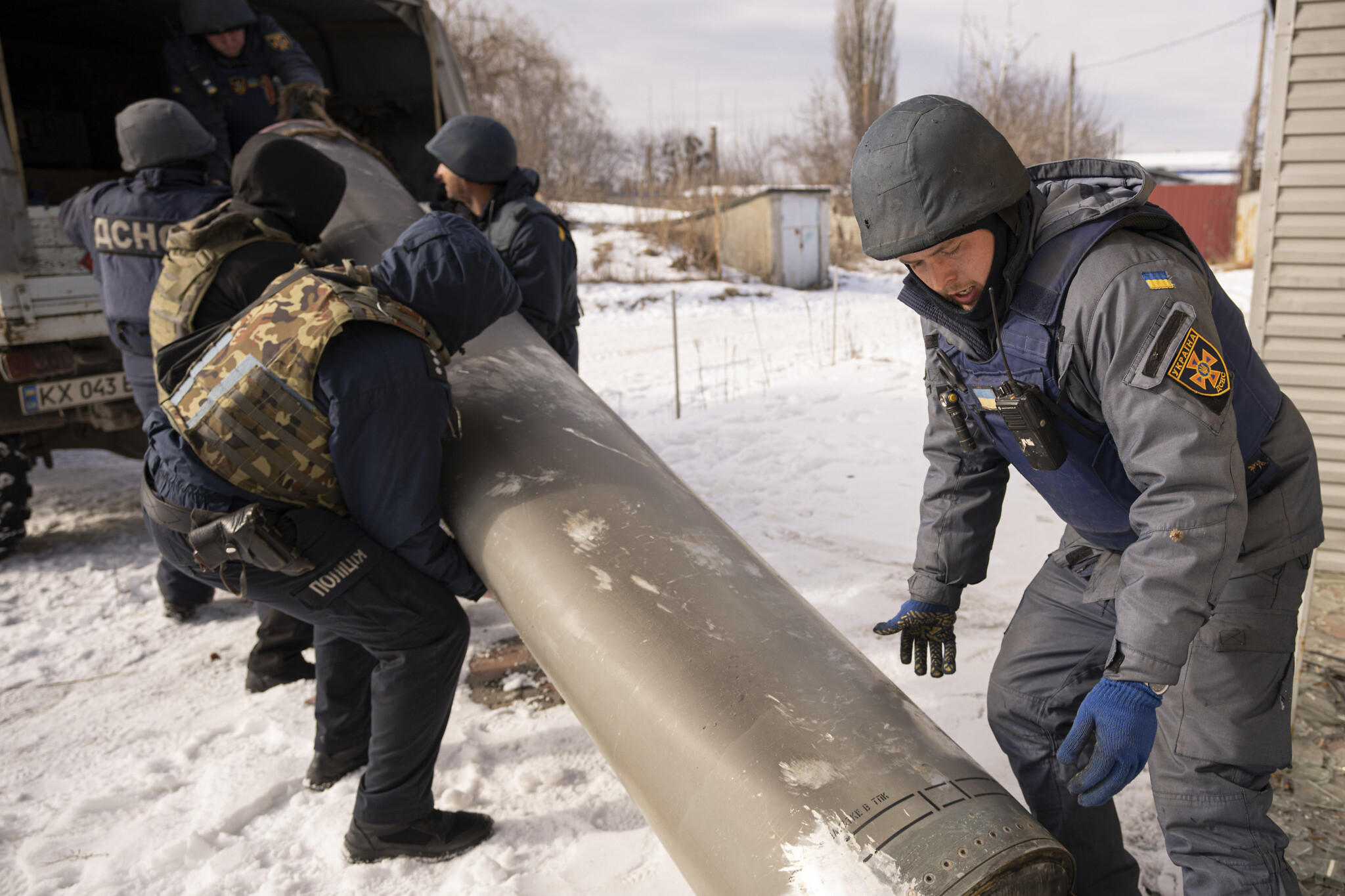
Ukrainian emergency services employees push the remains of an S-300 missile fired by Russian forces onto a truck in Kharkiv, Ukraine on February 17, 2023. (AP Photo/Vadim Ghirda)

Warning that delays would play into Russia’s hand as the invasion approaches its first anniversary, Zelensky said, “There is no alternative to speed because it’s speed that life depends on.”

Ukraine is depending on Western weapons to thwart Russian President Vladimir Putin’s ambition of securing control of large areas of the country, in what has become a test of foreign governments’ resolve amid increasing financial costs.

About 40 heads of state and government, as well as politicians and security experts from almost 100 countries, including the United States, Europe and China, were due to attend the three-day Munich Security Conference.

“The Kremlin can break the security and peace of all who are represented here in Munich,” Zelensky warned.

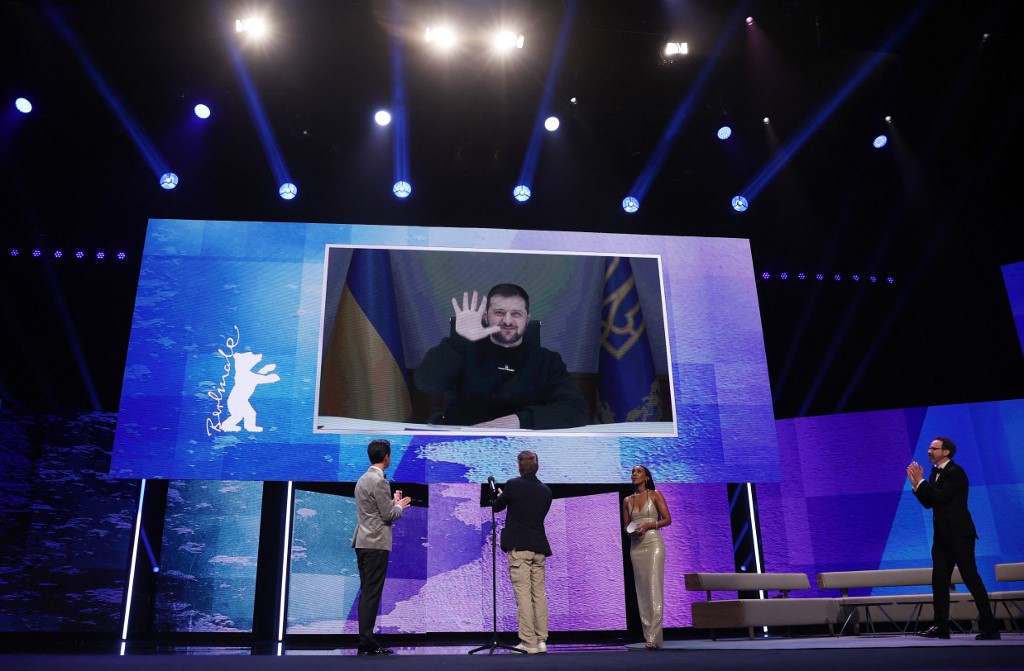
Ukrainian President Volodymyr Zelensky waves after addressing the audience via video as Berlinale Artistic Director Carlo Chatrian (R) applauds during the Opening Gala of the Berlinale, Europe’s first major film festival of the year, in Berlin on February 16, 2023. (Ronny Hartmann/AFP)

For the first time in two decades, conference organizers did not invite Russian officials to Munich. Western countries have sought to isolate Russia diplomatically over the invasion of Ukraine that began on February 24, 2022.

US Vice President Kamala Harris was set to join the leaders of France, Germany and the UK at the Munich conference.

At the same conference last year, held just days before Putin sent troops into Ukraine, Harris shared US warnings that Russia was about to attack its neighbor and said, “Not since the end of the Cold War has this forum convened under such dire circumstances.”

In a speech scheduled for Saturday, the US vice president will lay out what’s at stake in the war and why it matters, to bolster the case for maintaining US support for Ukraine for as long as it takes, the White House said.

Kyiv, after receiving Western pledges of tanks and more ammunition, is now hoping for fighter jets, but some countries have balked at sending them.

Frans Timmermans, the executive vice president of the European Union’s executive commission, said the 27-nation EU so far has maintained unity on the issue.

“I think everyone can see how important it is for Ukraine to win this war,” Timmermans said. “This is important for our Europe, too, because Putin isn’t just attacking Ukraine, he is also attacking us in the sense that he doesn’t support our values.”

He said it was important to make clear that Europe will support Ukraine however long the war lasts. “Putin is in difficulty,” Timmermans said, adding that the Russian leader would seek to put severe military pressure on Ukraine in the coming weeks and months.

Timmermans also expressed hope that China could exert pressure on. . " 


www.voanews.com


War in Ukraine Dominates Munich Security Conference

VOA News
3 minutes

Western leaders meeting Friday at the Munich Security Conference answered a call by Ukrainian President Volodymyr Zelenskyy for immediate additional aid to counter the Russian invasion of his country.

About 40 heads of state and government, as well as politicians and security experts from almost 100 countries, including the United States, European nations and China, are attending the three-day annual gathering of the international security community, designed to provide a platform to discuss the world’s conflicts.

For the first time in two decades, Russian leaders were not invited to the conference. Last year, Russian officials declined to attend the event, which ended four days before Russia invaded Ukraine.

Zelenskyy addressed the conference remotely, urging his Western allies to “hurry up” and deliver promised military aid. Drawing a comparison between his nation’s war with Russia and the biblical story of David and Goliath, Zelenskyy said, “Goliath must lose!”

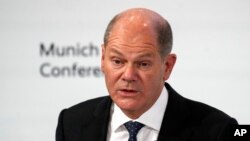
A short time later, German Chancellor Olaf Scholz seemed to respond to that call, urging any allies who can deliver its advanced Leopard 2 battle tanks to Ukraine to do so immediately, and promising to provide logistical support for those who do.

Germany's Chancellor Olaf Scholz speaks at the Munich Security Conference in Munich, Germany, Feb. 17, 2023.

Germany's Chancellor Olaf Scholz speaks at the Munich Security Conference in Munich, Germany, Feb. 17, 2023.

Scholz’s position represents a significant swing from last month, when his government mulled for several days whether to provide the advanced tanks to Ukraine out of fear of escalating the situation.

In remarks to the conference, French President Emmanuel Macron echoed those sentiments, urging allies to "intensify our support" for Ukraine. While he insisted that he did not want to see a drawn-out war, Macron said France was ready for a "prolonged conflict.”

U.S. Vice President Kamala Harris, U.S. Secretary of State Antony Blinken and a bipartisan delegation of U.S. senators are among those representing the United States at the conference. Harris is scheduled to address the conference Saturday.

Along with Ukraine, rising tensions between the U.S. and China also are expected to be on the agenda in Munich, after the U.S. military shot down an alleged Chinese surveillance balloon over U.S. territory last week. Chinese Foreign Minister Wang Yi is attending the conference.

Some information for this report came from The Associated Press, Reuters and Agence France-Presse.

Scholz calls on allies to send tanks to Ukraine

German Chancellor Olaf Scholz told the conference that Putin's "revisionism" would not prevail and called on allies who were in a position to do so, to send battle tanks to Ukraine. 

German chancellor: 'Putin's revisionism will not prevail'

Russian Federation President Sets Annual State of The Address on 21 February 2023


Kremlin mum on content of Putin address, says it’s in the works

The press secretary emphasized that the Kremlin never disclosed the contents of the address in advance

MOSCOW, February 13. /TASS/. The Russian government and Presidential Administration are now preparing for President Vladimir Putin’s annual address to the Federal Assembly, the national parliament, on 21 February, but the press has not been given access to the process, which is taking place behind closed doors, Kremlin Press Secretary Dmitry Peskov said Monday.

"Many departments of both the Presidential Administration and the government are involved, while the President maintains his own daily schedule of contacts," the spokesman said, responding to media inquiries about preparations for the speech. In Peskov’s words, "It’s a routine process."

"We have never made it public; it can extend for several days," the press secretary added, while also refraining from commenting on what part of the speech would cover the special military operation in Ukraine.

"Let’s wait until the 21st [of February] when the president will give his address," Peskov said. "We never disclose the contents in advance," he emphasized.


Previously, Peskov had informed the press that Putin would deliver his address to the Federal Assembly on February 21."


tass.com

Putin to deliver State of the Nation Address to Federal Assembly on Feb 21 — Kremlin 


TASS
2 minutes

The president delivered his previous address to the country’s parliament in April 2021

MOSCOW, February 10. /TASS/. Russian President Vladimir Putin will deliver his State of the Nation Address to the Federal Assembly on February 21, Kremlin Spokesman Dmitry Peskov told reporters on Friday.

"The Russian president will address the Federal Assembly on February 21. It will take place at the Gostiny Dvor venue," he said. 

The president delivered his previous address to the country’s parliament in April 2021. Putin explained that there had been no State of the Nation Address in 2022 because the situation was unfolding very quickly and it was difficult "to fix the results at a specific point, as well as specific plans for the near future." However, crucial messages were included in other presidential speeches.

In the past, State of the Nation Addresses were usually delivered every year but there were some exceptions. In particular, Putin did not deliver an address to parliament in 2017 (it was postponed to March 1, 2018). First Deputy Chief of Staff of the Presidential Administration Sergey Kiriyenko noted back then that delivering an address to the Federal Assembly was the president’s right that he could use "when he deems it appropriate."


www.rt.com

Putin’s Annual State of The Nation Speech

RT
2 minutes

The Russian Federation President will deliver his message to legislators later this month, commenting on key issues such as the Ukraine conflict, Kremlin said

Russian President Vladimir Putin will deliver his annual message to the Federal Assembly, the country’s main legislative body, on February 21, the Kremlin announced on Friday, noting that the address will be devoted to a wide range of current issues.

Kremlin spokesman Dmitry Peskov stated that the president intends to touch on a number of topics such as the ongoing military operation in Ukraine, as well as economic and social issues.

The Federal Assembly is Russia’s parliament, which consists of the lower house, the State Duma, as well as the Federation Council, the upper house. Under Russian law, the president is obliged to deliver an annual address to parliament, outlining the state and welfare of the federation and establishing guidelines for its domestic and foreign policies.

Peskov noted that it has yet to be determined if the Kremlin will accredit foreign journalists for the presidential address, adding that a decision would be announced at a later date.

Putin’s last address to the Federal Assembly took place in April 2021, while the 2022 event was skipped. As explained by the president himself, the 2022 address was dropped due to the unpredictable and dynamic nature of events during the period when Russia launched its offensive against Ukraine." 


Russia prepares UN Security Council resolution on inquiry into Nord Stream sabotage

Russia will try to put the document to the vote next week
Poland, Baltic states seek to dismember Russia — envoy to UN
Check against the manifest that Ms. Anna Fotyga, ECR MEP from Poland, published recently in Euractiv, Vasily Nebenzya said
Rescuers from 88 countries took part in post-quake rescue in Turkey — minister
Overall, more than 11,000 foreign rescuers arrived in Turkey
Defense Ministry officially announces commanders of four Russian Military Districts
Lieutenant General Andrey Mordvichev was appointed as the commander of the Central Military District
Main Story
Military operation in Ukraine


READ MORE - Harvard Business Review Today 17 Feb 2023

news.harvard.edu

How does Ukraine war end? 
Experts say 2023 could prove decisive, dangerous

Christina Pazzanese
6 - 7 minutes

"When up to 190,000 Russian soldiers invaded Ukraine last February, even its most ardent foreign supporters expected the nation’s far more limited defenses would collapse within days.

But one year later, Russia has lost a reported 200,000 men, including many high-ranking military officials, and President Vladimir Putin has been embarrassed by the Ukrainian Army’s successes and the resilience of Ukraine’s many citizen militias.

A group of historians, military and intelligence experts, and cultural and political analysts, looked back at how the war has played out thus far and considered where events may be headed during a colloquium Wednesday hosted by the Belfer Center’s Intelligence Project and Russia Matters at Harvard Kennedy School.

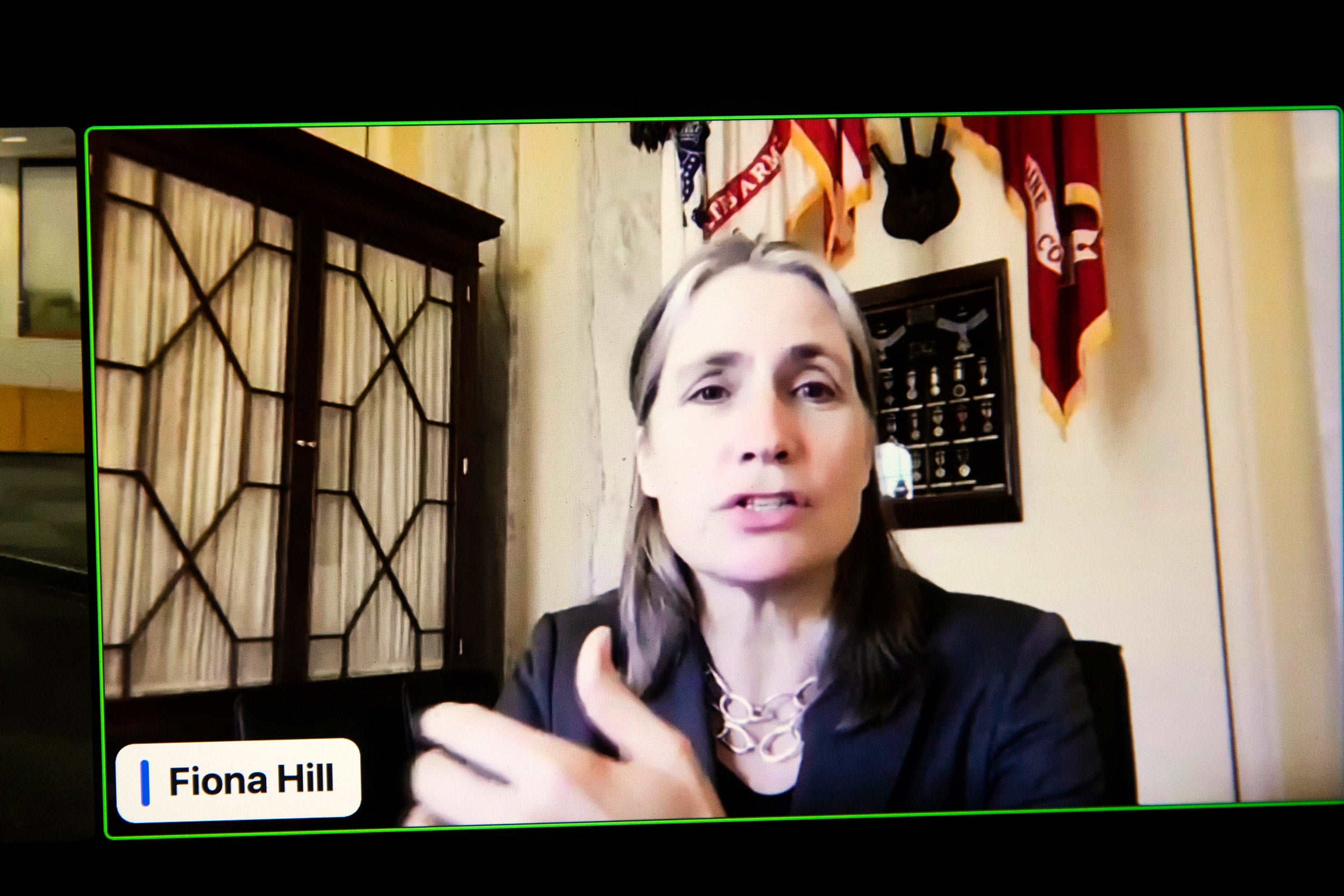
✓ Fiona Hill, A.M. ’91, Ph.D. ’98, who served as senior director for European and Russian Affairs at the National Security Council from 2017 to 2019, said the U.S. and the West are “still stuck” in a historical narrative about Ukraine created by Putin. The Russian leader has framed the conflict as an existential threat to his nation and has taken to calling it “The Third Great Patriotic War,” a reference to the Napoleonic invasions of Russia in the 1800s and the Nazi German invasions in the 1940s.

“He wants a recognition by the rest of Europe that Russia has its own sphere of influence, and actually has a right to claim additional sets of territory,” said Hill, now a senior fellow at the Brookings Institution. It’s a view many in Russia share, not just the president, she added.

American foreign policy starting in the 1990s has played a role in Russia’s misperceptions, Hill argued. The U.S. set the conflict in motion by the way it viewed the dissolution of the Soviet Union, formally recognizing some countries, like Russia, as successor states, but not others, like Ukraine, leaving them in a geopolitical gray zone.

Fiona Hill
The U.S. and the West are “still stuck” in a historical narrative about Ukraine created by Putin, says Fiona Hill. Stephanie Mitchell/Harvard Staff Photographer

Both countries have suffered major economic declines since the war. Forty percent of Ukraine’s physical infrastructure has been destroyed while gross domestic product (GDP) fell by 33 percent. Russia’s Finance Ministry reports annual revenue fell 35 percent in 2022 while spending rose 59 percent. 

But the many banking and trade sanctions imposed by the U.S. and Europe early on have done little to hurt Russia’s ability to wage war and thanks to cooperation from allies like China, India, and Iran, Russian consumers have not felt a significant pinch to their quality of life, said Alexandra Vacroux, executive director of the Davis Center for Russian and Eurasian Studies at Harvard.

That doesn’t mean Russia is doing well. Its economy was already battered before the conflict, so squeezing it further only makes life marginally more difficult for ordinary civilians, less so for the Kremlin. “The only way to keep Russia from fighting or winning this war is to give the Ukrainians military support,” she said.

Retired U.S. Army Lt. Gen. Mark Hertling said the biggest challenge for the Ukrainian army will be quickly integrating all the different weapon systems they’re getting from Western allies.

“The spring will be a race between Russian mobilization and the transformation of Ukraine’s army,” Hertling said. “Mr. Putin, I think, has made an active decision to mobilize forces to the front lines, getting as many bodies into this [in an] to attempt to retake ground” and gain additional leverage to lure Ukraine into any future negotiations.

In the coming weeks, Hertling expects that Russia will likely increase missile attacks and its air and naval forces will continue to strike against Ukraine’s infrastructure. Military exercises in Belarus are a ruse and not evidence that nation’s forces will take up arms against Ukraine, but Russian forces may use Belarus as an entry point, he said.

Putin’s agenda, to wipe out Ukraine as a state and Ukrainians as a people, is longstanding and deeply held in Russian society and by the nation’s power brokers. It will “most certainly outlast” the Putin regime and won’t be curtailed by current battlefield setbacks, said Nataliya Bugayova M.P.P. ’12, a Ukrainian national security analyst.

“All the conversation about cease-fires, premature peace deals, and negotiations — they’re not off-ramps for the Kremlin. They are delayed on-ramps to pursue the same objectives, just under better circumstances,” she said.

Whether the war will end in 2023 is not yet clear, but “it’s potentially a decisive year,” said Rolf Mowatt-Larssen, former nuclear counterterrorism officer for the CIA and now a senior fellow at the Belfer Center.

The conflict has been “a disaster” for both countries, especially Russia, he noted.

“The ways that Russia has been damaged by this strategically far outweigh what [it] may gain in Ukraine, even if [it] prevails to some extent on the battlefield,” he said.

The things Putin feared most were Ukraine drifting closer toward the EU and a stronger, more unified NATO, and both have to come to pass — and then some.

“Any threat [Putin] thought NATO could have presented to Russia he has far exceeded in damaging his own interests for a military threat that NATO never posed.”

Mowatt-Larssen’s “greatest concern” is that at some point in the next year, Putin will decide that his army is no longer capable of taking back what he views as Russian territories.

“That is a condition where I think Vladimir Putin will use tactical nuclear weapons,” he said, and why the U.S. must start thinking now about whether Russia can be deterred and how the U.S. will respond if Russia deploys them or causes some other mass casualty disaster.


READ MORE

2 days ago · Vladimir Putin will deliver his annual State of the Nation speech within days, amid warnings that Russia is amassing fighter jets on Ukraine's borders. 
5 days ago · The Russian government and Presidential Administration are now preparing for President Vladimir Putin's annual address to the Federal Assembly, the national ...

10 hours ago · Although Russia is taking a major economic hit it is still in better shape than many ... memorial cemeteryon January 18, 2023, in Saint Petersburg Russia.
4 hours ago · World leaders are gathered in Munich, Germany, for the annual Munich Security Conference, which is heavily focused on Russia's invasion of Ukraine as the ...
2 days ago · Wed, Feb 15 20236:18 PM EST ... Putin is scheduled to deliver his annual address to the Federal Assembly, which constitutes the Russian parliament's upper ...
4 days ago · Russian President Vladimir Putin at a meeting in Moscow, Russia, February 9, 2023. Photo by Mikhail Metzel/Sputnik via Reuters.
2 days ago · "Putin postponed his annual address to the Federal Assembly several times in 2022, likely in hopes of eventually using this speech to celebrate sweeping ...
17 hours ago · When Putin delivers his annual address to the nation next week, after skipping a year in 2022, his words and even body language will be scrutinized for ...
3 days ago · President Vladimir Putin will deliver his annual address to the federal assembly - a joint meeting of Russia's two houses of parliament - on Feb. 21.
2 days ago · 5:43 AM · Feb 16, 2023 · ... "Putin postponed his annual address to the Federal Assembly several times in 2022, likely in hopes of eventually using this ...

Trumpsclusive! Presenting: MAGAzine! The Official Lifestyle Publication and Policy Journal of Your Once and Future Favorite President


Ivanka, Youvanka

Princess Diary

A typical day with Ivanka Trump—wife, mom, fashion icon … perfectly happy Florida exile … defendant … Let her show you how to have it all!
Ab Fabulist

My House Is a Very, Very Nice House (Where I Really Live)
At home with MAGA’s most intriguing new star

By   George Santos
Non-Woke Wellness

The Best You Is Yet to Come!

You’ve heard of hot yoga—now try LOUD yoga!
By   Kimberly Guilfoyle

America’s Wackiest Pastime Just Got Even Wackier!

Dear editor of MAGAzine:

I was filled with __________________ (SNOWFLAKY EMOTION) after reading your viciously anti-__________________ (CRAZY THING LIBS CARE ABOUT) publication.

GQ-Anon

Show a Little Sleeve This Spring!

Style for the MAGA man
By   Jim Jordan
Seriously, We Dare You

Ask Melania

Pearls of wisdom from the world’s kindest, most empathetic, and not at all checked-out advice columnist