Opinion BY THE MIAMI HERALD EDITORIAL BOARD JUNE 08, 2023 5:25 PM
If China builds a spy base in Cuba, 90 miles from Florida, Biden must push back |

- This China-Cuba cooperation, if true, is an aggressive new step in a growing problem for the United States. While China is considered to be the most consequential threat to the United States as well as its primary economic rival, it is making strong inroads in Latin America. That has been a concern for years.
The war in Ukraine has added a new source of tension between the U.S. and China, with the worry that China might provide arms to Russia looming over everything.
CHINA, NOT RUSSIA That this secret deal to create an eavesdropping facility is with China, not Russia, runs counter to recent speculation that Russia was planning to reopen its spy base in Lourdes, a town near Havana.
- That was based in part on reports of Russian officials and diplomats traveling to the island. Cuban leaders also have been supportive of Russia’s invasion of Ukraine.
Amid all of that, the Biden administration has been working to improve its relationship with China, which hit a new low after the spy balloon incident.

- At the same time, though, there is rising concern among members of Congress and the State Department about China’s growing foothold in Latin America and the Caribbean.
- Free-trade deals between Latin American countries and China are becoming more common. The trend — toward more China deals on Florida’s doorstep — is clear.
- The choice of Cuba as a partner for China, though, isn’t all that surprising.
- China already may have a listening post in Bejucal, a town south of Havana. And the island is desperate for cash.
- Russia is straining under the costs of the Ukraine war, but China has cash to spend. It will reportedly pay billions of dollars to Cuba for the ability to set up this spy base.
U.S. MUST RESPOND So what can be done to blunt this threat, so close to our coastline?
- Assistant Secretary for Western Hemisphere affairs Brian Nichols, the State Department’s top diplomat for the region, called this moment the “most challenging” he has seen in 30 years in the hemisphere.
- That’s an alarm bell that the has to be heeded.
- The Biden administration must act with urgency to help governments in the region succeed so they don’t need to turn to China for help.
In the end, helping other countries to help themselves is the only real safeguard likely to work. That kind of help can backfire, as we have seen so often in the foreign-policy arena. But simply allowing China’s bold step to proceed without answering it, strongly, is no option at all."
Read more at: https://www.miamiherald.com/opinion/editorials/article276228651.html


US confirms China has had a spy base in Cuba since at least 2019
- A Biden administration official said the US has been aware of China’s spying from Cuba and an effort to set up global intelligence-gathering operations for some time
- The Wall Street Journal reported on Thursday that China and Cuba had reached an agreement in principle to build an electronic eavesdropping station on the island

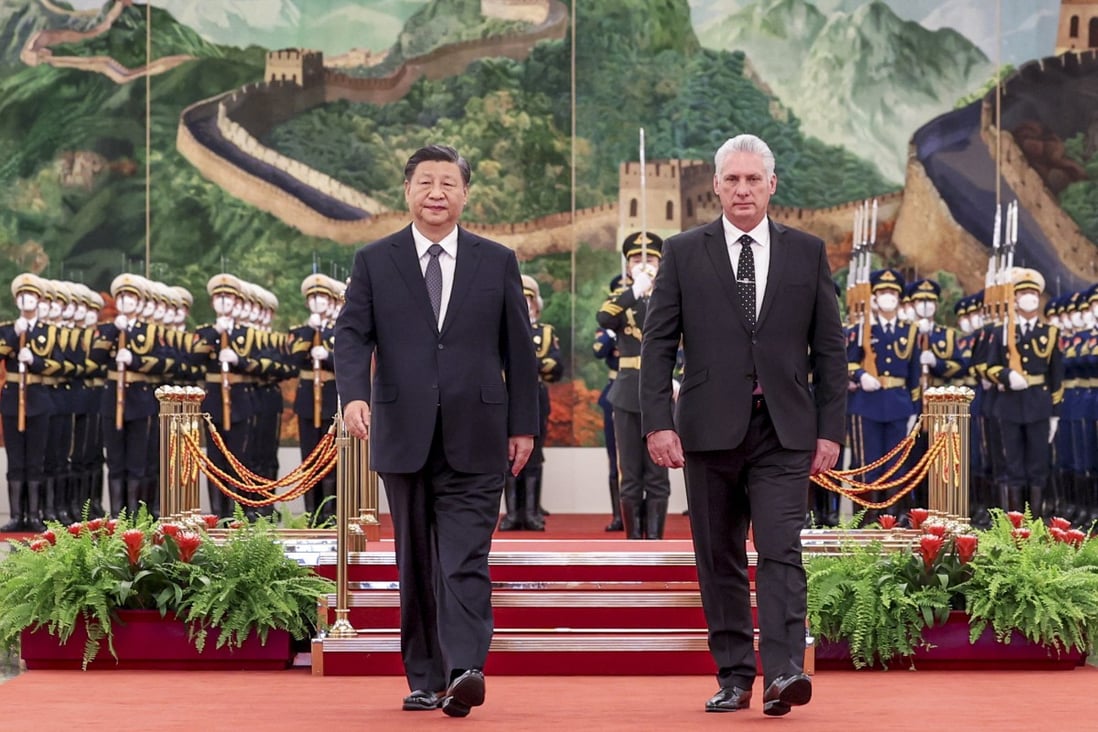
"China has been operating a spy base in Cuba since at least 2019, part of a global effort by Beijing to upgrade its intelligence-gathering capabilities, according to a Biden administration official.
The official, who was not authorized to comment publicly and spoke on condition of anonymity, said the US intelligence community has been aware of China’s spying from Cuba and a larger effort to set up intelligence-gathering operations around the globe for some time.
The Biden administration has stepped up efforts to thwart the Chinese push to expand its spying operations and believes it has made some progress through diplomacy and other unspecified
action, according to the official, who was familiar with US intelligence on the matter.
The existence of the Chinese spy base was confirmed after The Wall Street Journal reported on Thursday that China and Cuba had reached an agreement in principle to build an electronic eavesdropping station on the island. The Journal reported that China planned to pay a cash-strapped Cuba billions of dollars as part of the negotiations.
The White House and Cuban officials, however, called the report inaccurate.
“I’ve seen that press report, it’s not accurate,” White House National Security Council spokesman John Kirby said in an MSNBC interview on Thursday. “What I can tell you is that we have been concerned since day one of this administration about China’s influence activities around the world; certainly in this hemisphere and in this region, we’re watching this very, very closely.”
- The US intelligence community had determined that Chinese spying from Cuba has been an “ongoing” matter and is “not a new development,” the administration official said.
US President Joe Biden’s national security team was briefed by the intelligence community soon after he took office in January 2021 about a number of sensitive Chinese efforts around the globe where Beijing was weighing expanding logistics, basing and collection infrastructure as part of the People’s Liberation Army’s attempt to further its influence, the official said.
Chinese officials looked at sites that spanned the Atlantic Ocean, Latin America, the Middle East, Central Asia, Africa and the Indo-Pacific. The effort included looking at existing collection facilities in Cuba, and China conducted an upgrade of its spying operation on the island in 2019, the official said.
Tensions between the US and China have been fraught throughout Biden’s term..."
Story continues >
The existence of the Chinese spy base was confirmed after The Wall Street Journal reported on Thursday that China and Cuba had reached an agreement in principle to build an electronic eavesdropping station on the island. The Journal reported that China planned to pay a cash-strapped Cuba billions of dollars as part of the negotiations.
The White House and Cuban officials, however, called the report inaccurate.
“I’ve seen that press report, it’s not accurate,” White House National Security Council spokesman John Kirby said in an MSNBC interview on Thursday. “What I can tell you is that we have been concerned since day one of this administration about China’s influence activities around the world; certainly in this hemisphere and in this region, we’re watching this very, very closely.”
The US intelligence community had determined that Chinese spying from Cuba has been an “ongoing” matter and is “not a new development,” the administration official said.
US President Joe Biden’s national security team was briefed by the intelligence community soon after he took office in January 2021 about a number of sensitive Chinese efforts around the globe where Beijing was weighing expanding logistics, basing and collection infrastructure as part of the People’s Liberation Army’s attempt to further its influence, the official said.
Chinese officials looked at sites that spanned the Atlantic Ocean, Latin America, the Middle East, Central Asia, Africa and the Indo-Pacific. The effort included looking at existing collection facilities in Cuba, and China conducted an upgrade of its spying operation on the island in 2019, the official said.
Tensions between the US and China have been fraught throughout Biden’s term.

- US Secretary of State Antony Blinken is planning to travel to China next week, a trip that was cancelled as the balloon was flying over the US. Blinken expects to be in Beijing on June 18 for meetings with senior Chinese officials, according to US officials, who spoke on Friday on condition of anonymity because neither the State Department nor the Chinese foreign ministry has yet confirmed the trip.
- CIA Director William Burns held a meeting with his counterpart in Beijing last month. White House national security adviser Jake Sullivan met his Chinese counterpart in Vienna over two days in May and made clear that the administration wanted to improve high-level communications with the Chinese side.
- US defence secretary Lloyd Austin recently spoke briefly with Li Shangfu, China’s minister of national defence, at the opening dinner of a security forum in Singapore. China had earlier rejected Austin’s request for a meeting on the sidelines of the forum.

China reportedly reaches secret deal with Cuba to host spy base on island
Facility would allow Beijing to gather electronic communications from US but Cuba dismisses report as ‘unfounded’
China has reached a secret deal with Cuba to establish an electronic eavesdropping facility on the island roughly 100 miles (160km) from Florida, the Wall Street Journal has reported, but the US and Cuban governments cast strong doubt on the report.
Such a spy installation would allow Beijing to gather electronic communications from the south-eastern United States, which houses many US military bases, as well as to monitor ship traffic, the newspaper reported.
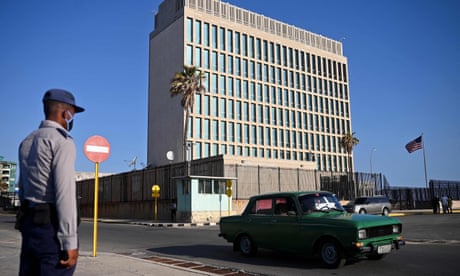
- The US Central Command headquarters is based in Tampa. Fort Liberty, formerly Fort Bragg, the largest US military base, is based in North Carolina.
The countries have reached an agreement in principle, the officials said, with China to pay Cuba “several billion dollars” to allow the eavesdropping station, according to the Journal.
- “We have seen the report. It’s not accurate,” John Kirby, spokesperson for the White House NSC (national security council), told Reuters. But he did not specify what he thought was incorrect.


He said the United States has had “real concerns” about China’s relationship with Cuba and was closely monitoring it.
- Brig Gen Patrick Ryder, a US defense department spokesperson, said: “We are not aware of China and Cuba developing a new type of spy station.”
- In Havana, the Cuban vice-foreign minister, Carlos Fernández de Cossio, dismissed the report as “totally mendacious and unfounded”, calling it a US. fabrication meant to justify Washington’s decades-old economic embargo against the island. He said Cuba rejects all foreign military presence in Latin America and the Caribbean.
- A spokesperson for the Chinese embassy in Washington said: “We are not aware of the case and as a result we can’t give a comment right now.” The Cuban embassy did not respond to a request for comment.
> The reported deal comes as Washington and Beijing are taking tentative steps to soothe tensions that spiked after a suspected Chinese high-altitude spy balloon crossed the United States before the US military shot it down off the east coast in February.
> It could also raise questions about a trip to China that US officials say the secretary of state, Antony Blinken, is planning in coming weeks. Washington’s top diplomat had earlier scrapped a visit over the spy balloon incident.

The Biden administration has pushed to boost engagement with China even as ties have deteriorated over disputes ranging from military activity in the South China Sea and near Taiwan, Beijing’s human rights record and technology competition.
- Senator Bob Menendez, Democratic chairman of the Senate foreign relations committee and a Cuba hawk, said that if the report were true, it would be “a direct assault upon the United States”.
“So I hope the administration will think about how they’ll react, if it’s true,” he told reporters on Capitol Hill.
- A former US intelligence official with knowledge of signals intelligence collection told Reuters that a Chinese listening post in Cuba would be a “big deal”.
However, the US has a long history of spying on China in its neighborhood. It is widely reported to have used Taiwan as a listening post for the mainland and regularly flies spy planes in the South China Sea.
- The head of Taiwan’s national security bureau told the island’s parliament in April that Taiwan was conducting real-time encrypted intelligence sharing with Five Eyes partners, which includes the US.
> An infusion of cash would probably be welcomed in Cuba, where the economy is sputtering with inflation, fuel shortages, plunging farm production and a cash crunch that drag on output and continue to fan discontent in the communist-run island nation.
> Relations between Washington and Havana remain tense. The Biden administration last year partially rolled back some Trump-era restrictions on remittances and travel to the island, but Cuban officials called the steps insufficient.
The intelligence on the plans for a Cuba station was gathered in recent weeks and was convincing, the Journal reported. The officials said it would allow China to conduct signals intelligence, including emails, phone calls and satellite transmission.
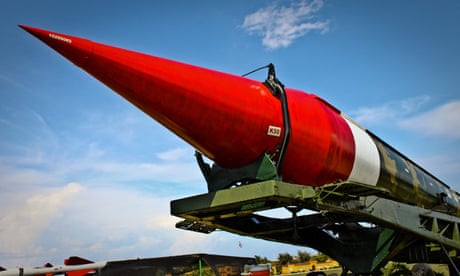
Cuba, an old cold war foe of the United States, has long been a hotbed of espionage and spy games.
- The Cuban missile crisis in 1962 began after Moscow began placing Soviet nuclear weapons on the island. It backed down and removed the missiles, but it is widely regarded as the moment when the United States and the Soviet Union came closest to a nuclear confrontation.
- The Soviets installed a spy base on the island at Lourdes, just south of Havana, in the mid-1960s, with parabolic antennas aimed at Cuba’s northern neighbor. The Russian president, Vladimir Putin, closed the facility in the early 2000s."
Around the world, readers can access the Guardian’s paywall-free journalism because of our unique reader-supported model. That’s because of people like you. Our readers keep us independent, beholden to no outside influence and accessible to everyone – whether they can afford to pay for news, or not.
I hope you appreciated this article. Before you move on, I was hoping you would consider taking the step of supporting the Guardian’s journalism.
From Elon Musk to Rupert Murdoch, a small number of billionaire owners have a powerful hold on so much of the information that reaches the public about what’s happening in the world. The Guardian is different. We have no billionaire owner or shareholders to consider. Our journalism is produced to serve the public interest – not profit motives.
And we avoid the trap that befalls much US media – the tendency, born of a desire to please all sides, to engage in false equivalence in the name of neutrality. While fairness guides everything we do, we know there is a right and a wrong position in the fight against racism and for reproductive justice. When we report on issues like the climate crisis, we’re not afraid to name who is responsible. And as a global news organization, we’re able to provide a fresh, outsider perspective on US politics – one so often missing from the insular American media bubble.
RELATED

>


No comments:
Post a Comment