"There is now a rising probability that Trump’s war backfires on him much as Eden’s did—economically, politically, and geopolitically.
Niall Ferguson: How Great Powers Lose Wars They’re Winning
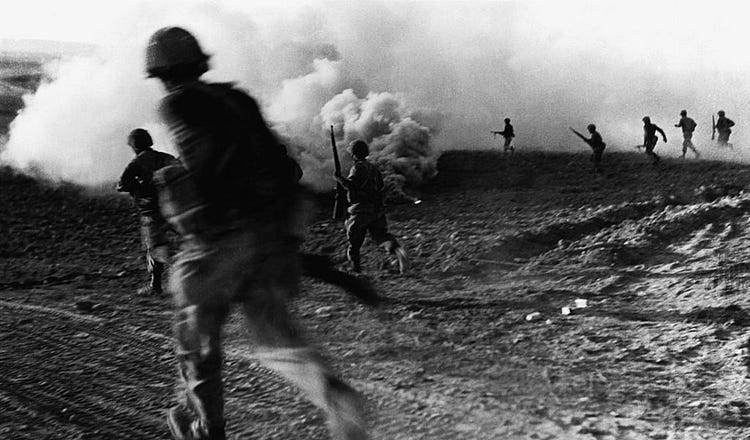
“Time
is not on the side of an overstretched hegemon, because the economic
costs of war pile up faster than the strategic benefits can be reaped,”
writes Niall Ferguson. (Hulton-Deutsch Collection via Getty Images)
Nearly
70 years after the Suez Crisis, the United States may have marched into
a strikingly similar trap in the Strait of Hormuz.
"For
the United States, ceding control of the Strait of Hormuz to Iran in
2026 would not be quite as swift a humiliation as the Anglo-French
failure to wrest control of the Suez Canal from Egypt in 1956. However,
the consequences for the credibility of the Pax Americana would be
similar to Suez’s consequences for the Pax Britannica. It would
permanently damage both the legitimacy and the credibility of American
primacy—and pave the way for a new international order, in which a
rising power would have the option to play the leading role." 4/5
"But
the economic consequences of the conflict—not just the closure of a
crucial oil choke point, but also the financial ramifications of the
crisis—result in political damage and strategic efeat. The result is
humiliating withdrawal." 3/5

American Suez. A doleful essay for Good Friday.
"There is now a rising probability that Trump’s war backfires on him much as Eden’s did—economically, politically, and geopolitically. Which raises the question: Is this the American Suez?" 1/5
FLASHBACK TO JANUARY 15, 2026


No comments:
Post a Comment