Monday, July 17, 2017

Hey! REAL GOOD NEWS Here in The New Urban DTMesa

A most welcome announcement from Casey Blake, Director of Public Relations @ Mesa Arts Center:
Prototypes selected for Main St. Prototyping Festival
Free event scheduled for Nov. 17-18
Innovative Project Employs Arts-Based Community Design 
 
Please note: some images from the selected prototypes are available on this link >> https://www.mesaartscenter.com/mesaprototyping with more added later when sent from Casey Blake 
July 12, 2017 (Mesa, AZ) – Mesa Arts Center today announced the selection of 20 proposals for the City of Mesa’s first prototyping festival – Main Street Prototyping Festival, slated for Nov. 17 and 18, 2017.
Artists, architects, designers, students, makers, urban planners and others have been selected to create temporary projects that activate public space and engage the community toward enhancing connectivity and vibrancy in downtown Mesa. Planned prototypes include concepts for gathering places, virtual reality experiences, structures that offer space for interaction, performances, places to play and share in art making, and ways for passersby to offer feedback about their community. Each project will be allocated $1,000-$3,000 for design, fabrication and project management.
 The free community festival is funded by a prestigious Our Town grant for $75,000 from the National Endowment for the Arts. Through Our Town, the National Endowment for the Arts provides grants for arts-based community development projects that contribute toward the livability of communities and help transform them into lively, beautiful, and sustainable places with the arts at their core. Prototyping festivals are a relatively recent tool being employed by forward-thinking cities, and have been held in only a handful of municipalities in the last couple of years, including San Francisco and Denver.
 In addition to the prototypes, artists Erin V. Sotak (Scottsdale) and Sophia McGovern (Tempe) were selected to lead residencies with the Grant Woods Boys and Girls Club of Mesa and CARE Partnership near downtown to create community-generated projects that address neighborhood aspirations, needs and opportunities.
The residencies are the first steps in a larger initiative that will seek to strengthen the connections between downtown and its surrounding neighborhoods, and to help these residents develop relationships with organizations and resources available to them in downtown. 
 
At the culminating festival, where the prototypes will be installed in the heart of downtown Mesa between Country Club Drive and Sirrine Street, residents will be invited to provide feedback and vote for their favorite prototypes, and those they feel will provide the most benefits to downtown and its visitors.
 
The City of Mesa, Mesa Arts Center (MAC), Neighborhood Economic Development Corp. (NEDCO), Local Initiatives Support Corporation Phoenix (LISC) and Downtown Mesa Association (DMA) are collaborating to engage creative minds and the community in testing ideas that respond to dreams, needs and desires of citizens and visitors.
“The beauty of this project is that it enables experimentation with a variety of potential enhancements that can impact both community and economic development,” said Cindy Ornstein, Director of Mesa’s Department of Arts and Culture and Executive Director of Mesa Arts Center. “This way, residents and visitors get to explore and respond to ideas in the flesh, and future investments or longer-term testing can be based on knowledge of what worked and the needed adjustments that may make it work better.”
 Jeff McVay, Downtown Transformation Manager, said of the project, “The prototype festival is part of our Downtown Lab (D-Lab) that tests and develops solutions uniquely suited to our very special urban center. Many creative initiatives and events, and several other prototype projects have been a part of this process and we look forward to seeing how the community would like to activate downtown Mesa.”
 
Selected prototypes and project descriptions:
 
AZ Dragoneers
Prototypers: Nathaniel Jack Greene, Susan Bendix, PhD, Alex Kohli, Erin Magorian, RuthAnne Greer, Renee Aguilar, Deven Williams
 AZDragoneers will install a white, blank dragon puppet surface in the Mesa Art Center courtyard and provide the tools, materials and education for the public to contribute to their own unique example of a transformational representation. Performance of the puppet will occur at regularly scheduled intervals, and the public will be invited to participate as performers as well. The final performance will be considered the completed representation of the prototyping, design and construction developments made throughout the event by the local community and are intended to represent the desires and ideals of the shared community with respect to transformation.
 
Binary Adder
Prototypers: Milton Williams, Morgan Williams
 The Binary Adder is a large mechanical adder powered by billiard balls with two inputs. Participants will use a hand crank to change the input number, then pull an extremely long execute addition lever (like a slot machine) that would load the billiard balls into the binary registers – expressing the sum in base 2. The balls will mechanically recognize registers that are already full and be launched into a difference direction, hitting a noisemaker and visually displaying the concept of “carrying” to the next column. 
 
Car Tune Playground
Prototypers: Suzanne Woodford, Dobson Montessori School
 This interactive drumming center will feature repurposed tires converted to drums by wrapping them with layers of heavy duty shipping tape, combined with a variety of car parts, such as fenders and steering wheels, that will become rhythm instruments to contrast with the bass percussion of the tire drums. Community members will be invited to play, and familiar “car tunes” such as “Little Deuce Coupe,” “Mustang Sally” and “Low Rider” will be played while docents instruct the participants in easy to learn beats that can be played to the music.
 
From a Different Lens
Prototypers: Michael Baker International, Nicholas Chen, Stephanie Cheng, Susan Harden, Matt Klyszeiko, Madison Roberts, Jenna Tourje, Scott Waltenburg
 From a Different Lens is the use of virtual reality to display different design scenarios for the north/south alley between Main Street and the service alley directly south of Main Street. The idea has two main components; to show potential improvements that can be made to the alley to activate this space, and to use it to create connections to – and unexpected experiences within – downtown Mesa.
Idea Portals
Prototypers: Conscious Creative & Co.
Brightly-colored beacons will be painted by 300+ kids at the Boys & Girls Club and will draw crowds with bold, thought-provoking questions like “What’s your favorite prototype at this event?” and “What kinds of programs would you like to see at Mesa Arts Center?” Like giant survey questions, ideaPortals will feature arcade-style multiple-choice buttons and other interactions based on the types of feedback gathered. During the festival, 6-12 portals will be placed in strategic areas that will challenge event-goers to “find all 12 portals” and continue the conversation online.
 
Interactive Canvas Project
Prototypers: André van Belkom
 From a digital kiosk by Mesa Arts Center on Main Street, a visitor will be able to take a portrait with friends and family or paint a digital picture, which is then transmitted to a projector casting the image onto the large canvas canopy hanging overhead. During the day, the canvas structure will provide shelter from the sun, and at night comes to life with color and imagery.  The project will give a playful character to the site; encouraging students, resident artists, visitors and the public to share their expressions through interaction, activating downtown Mesa. The additional lighting from the illuminated canvas creates an inviting environment and allows the people to exhibit their own creation, mural, poem, or even a selfie.
 
Living Topography: Creating Vertical Shade in Downtown Mesa
Prototypers: Colwell Shelor/180 Degrees Landscape Architecture
 Shade is an essential element in creating walkable and more livable communities, in making cities comfortable places to walk, bike, live, work and play. This prototype is an artistic, interactive vertical shade panel installation that will not only provides protection from the harsh horizontal rays during the morning and late afternoons, but also serves to showcase the people of Mesa as vital collaborators in “shaping” the identity of the City. The vertical shade panels are reminiscent of the pin impression toys we all loved as children – a constantly changing, life-sized sculpture where people can imprint their entire body in action – an expression of the vibrancy, art and diversity of its people.
 
Los Abuelos
Prototypers: Cultural Coalition, Inc., i.d.e.a. Museum
 Cultural Coalition will partner with the i.d.e.a. Museum, El Rancho del Arte and Guerrero Elementary School to engage the youth of Mesa and produce a Parade or Paseo featuring larger-than-life puppets, musicians, masked performers and participants.
“Los Abuelos” is meant to bring Mesa’s diverse community together to create wearable masks that represent our unique ancestries. The project includes storytelling, mask-making, and a performance platform to include Desert Sounds Mariachi, Ballet Folklóricos Quetzalli, Ballet Alegria, and Ollin Yoliztli Dance Academy. Everyone will be welcomed to participate. 
 
Mesa Contractor’s Monument Bridge
Prototypers: Tim Boyle, Jim Harman, Steven Jarman
 The Mesa Contractor’s Monument Bridge is a landmarking public sculpture that celebrates the most common building materials: 2x4s and TJI roof beams. Construction is the largest enterprise of Mesa. Contractors come from all countries and all walks of life, making construction sites the most diverse and multilingual. This bridge will celebrate the contribution of contractors from all countries to Mesa.
 
Mesa Heart Hopes and Dreams
Prototypers: Dr. YoungJu Lee, Eric Hultquist, Jaime Glasser 
 A welded, heart-shaped, skeletal steel frame, will be covered with steel mesh (safety-coated with plastic). Individuals will be encouraged to envision their personal hopes and dreams as well as the future of the community, and to write these visions with a variety of colored sharpies on strips of repurposed fabric remnants. As the heart is filled in with the addition of each fabric element it becomes a tangible reminder of our collective hopes and dreams for ourselves as the heart is solidified and brought to life.
 
Mesa Speaks Stage
Prototypers: Lenika Rivas, Rachel Collay, Angelica Williams, Alyson Hulet, Anna Mohr Almeida, Katie Clontz, Alan Rivas, Bailey Smith
 The Mesa Speaks Stage is a raised platform stage framed in reused, welded metal with recycled mosaic around the edges. Mosaics, made from reclaimed glass and tiles, will spell out what makes Mesa such a vibrant community, with words like “imagine,” “innovate,” and “listen.” These words invite citizens to take the stage and express themselves. The raised platform stage will have a chalkboard backdrop with space for ideas, art and community contributions. The open platform stage invites anyone to express themselves as they walk through downtown. The intention of the open space is to build a sense of community in Downtown Mesa, and enhance the character of the surrounding communities by demonstrating innovative ways people can interact.
 
Neighborhood Free Library
Prototypers: Jose A. Benavides, Mark Lymer
 Free libraries often act as casual meeting places as people walk their dogs and stop to see what the latest books are in the box. The Library installation will be sculpturesque in form and tell its own story. The artist team will not 'censor' the theme but rather help it become visual.
 
Noodle
Prototypers: Madison Strakele, Carlos Terminel, Clayton Maxey, Nick Althouse, Ryan Fickenscher
 Noodle is intended to liven up one of the underserved alleyways of downtown Mesa. The concept is comprised of a 50-foot undulating tunnel created with a series of colorful varying archways. Festival-goers can walk through the tunnel to gain passage from Main Street to Pepper Place, encouraging them to explore the entirety of the downtown area.
 
Tapas: Breath and the Beat
Prototypers: Chris Dastan
 "Tapa,” is the primary percussive surface of a cajon. A cajon is a box-shaped percussion instrument with 6 sides. One side has a sound hole cut into the back and the front is the “tapa.” Utilizing this percussive instrument as a physical “voice,” the installation visitors will be invited to play this instrument by first tapping the rhythms of their breath, then their heartbeat, followed by any other emergent performance. A series of digital/physical interactions will connect two remote cajones and human participants to create a hybrid rhythmic portal. 
 
The Mega Mesa
Prototypers: Jaime Glasser, Nikki Davis
 The MEGA M.E.S.A. (Mesa Enormous Spiral Art) installation consists of two different sized functioning spiral art devices that create linear graphics on the sidewalk and on paper. Based on Spirograph, different sizes of gears can be interchanged to create different types and sizes of design. Drawing a design is interactive, as multiple people standing at various points around the framework are required to hand off control of the gear to complete the drawing. The design of the MEGA M.E.S.A. encourages teamwork and promotes interaction between those from different backgrounds and generations.
 
Think Stem Machine
Prototypers: Thomas Saxon, Rebecca DeLong, Scott Blevins, Westwood Robotics
 Encouraging the community to be innovative and explore new ideas, this transparent, plexiglass box features information panels for participants to learn more about the Think STEM Machine and its various processes. Local students will design the inner workings of the machine with a goal of audience engagement. Participants will be challenged to complete mechanical sequences such as a series of pulleys and tubing to place a ball on a spiraling track or the process of placing cubes on one side of a lever to counteract a weight on the other side. Each completed sequence will animate the machine motivating the user to learn and get creative to continue the task.
 
Tinker Scape
Prototypers: Milagros Zingoni, Master in Interior Architecture students
 This project will explore the relationship between design and build, academia and community, theory and practice, and learning by making and playing. The graduate studio in Interior Architecture will collaborate with youth from the City of Mesa through a series of workshops to explore culture through the eyes of children as the first phase of the design process. Design with rather than designing for, not only has a greater impact in the sense of belonging of the installation, but it also exposes the youth to a college and community outreach experience. Tinker Scape offers the opportunity for social practice and collective action between children from the City of Mesa and MIA students in the ideation process of the installation.
 
Wayward Beasties Art Car
Prototypers: Sam Ogden, Macy McKennyl
 Wayward Beasties is an experiential vehicle made up of a giant turtle with a mouse riding on its head. Simon the Turtle is a MOOP-hungry monster (Matter-Out-Of-Place aka trash, litter, refuse, garbage, etc.). He will gobble up bottles, cans, feathers, cigarette butts, and any other stray bits participants feed him. Not only will he transport wayward wanderers, Simon provides a friendly way to Leave-No-Trace! Wayward Beasties and the rest of the Turtle Team will spend the duration of the event cleaning up trash and encouraging participants to do the same. The project hopes to encourage environmentalism and the principle of leave-no-trace in Mesa, the greater Phoenix area, and beyond.
 
Weaving Community
Prototypers: Marianne Levin, Abby Queal, Erin Magorian, Eric Hultquist, Randy Leon
Artists and community members will create cylindrical weaving pieces. A short, finished piece may suggest different animals or objects and can be embellished as such. Other ideas may emerge as the community participates. A significant component of the prototype is the action of “giving and receiving.” Each weaver receives the strand from the person to the right, and after looping the strand, passes it to the weaver at left. The weaving produces a circular web or “spool knitting" with the placement of weavers subtly underscoring the connection and wholeness of the community.
 
Woven Light Bridge
Prototypers: David Avatara, Brain Korsedal
 The Woven Light Bridge is a new style of fabric consisting of diamond patches of spandex stretch fabric. The fabric is translucent and will light up from the LEDs creating a pleasing, slowly fading, interwoven rainbow of light. The LEDs are not covered with fabric and face straight out from the structure lighting up the whole area and providing a pleasant place to congregate at night.
 
Mesa Arts Center is located at One East Main Street in downtown.
 
[END]
 
About Mesa Arts Center
The Mesa Arts Center mission is to inspire people through engaging arts experiences that are diverse, accessible, and relevant.
Owned and operated by the City of Mesa, Arizona’s largest arts center is recognized as an international award-winning venue. The unique and architecturally stunning facility is home to four theaters, five art galleries, and 14 art studios and an artist cooperative gallery. For more information, visit mesaartscenter.com.
 
Mockups, renderings and images of most proposed prototypes are available immediately upon request. Contact Casey Blake at casey.blake@mesaartscenter.com.
 
Main Street Prototyping Festival contact:
Jennifer Gastelum, Project Coordinator at jennifer.gastelum@mesaartscenter.com or 480.644.6621.
 
Main Street Prototyping Festival website:
 
Casey Blake
Director of Public Relations
Mesa Arts Center
Office 480.644.6620Cell 480.390.1258
Casey.Blake@mesaartscenter.comMesaArtsCenter.com
 

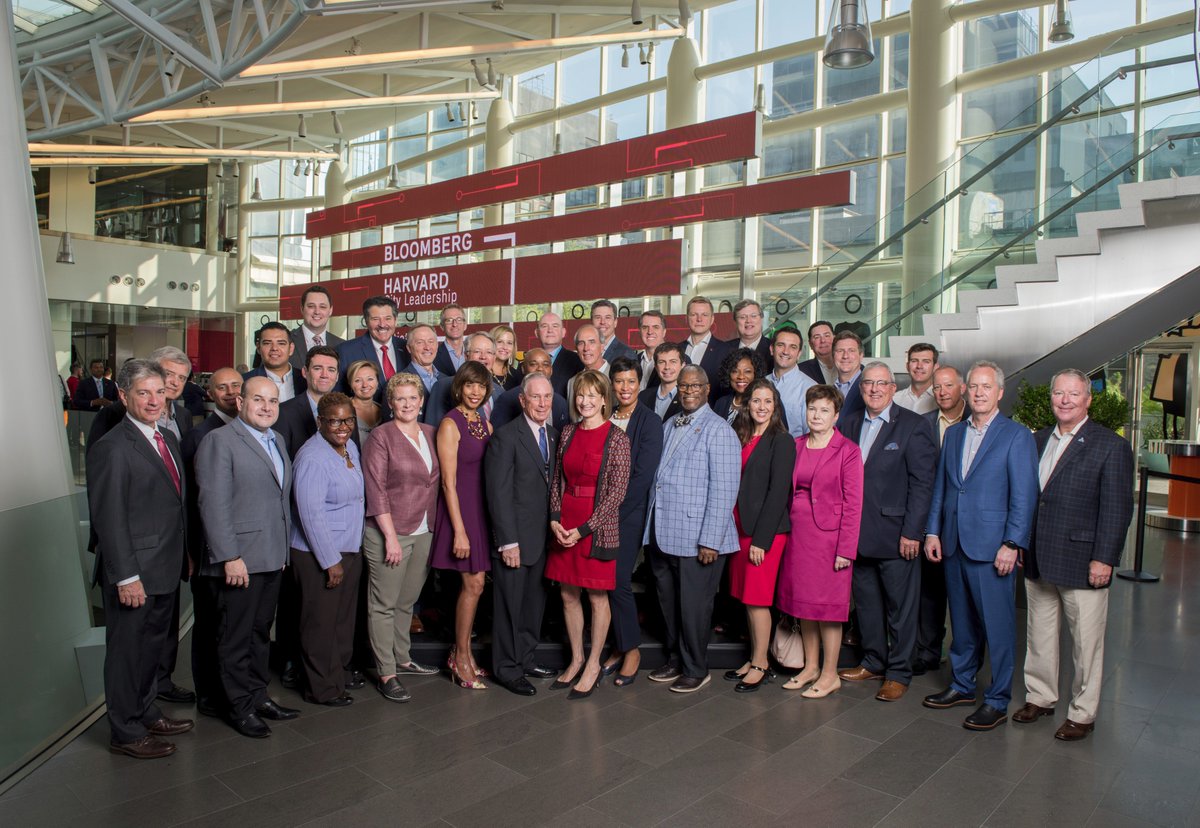
Mayor John Giles "Getting Educated" @ Harvard


Needed: First-class training for mayors  
NEW YORK DAILY NEWS
Sunday, July 16, 2017, 5:00 AM
" ...City leaders must contend with a series of tectonic changes that require steady hands and bold action. Automation and technological advances. Demographic shifts. Climate change. Unprecedented budget constraints. Geopolitical instability... Yet mayors encounter deep resistance to change and an aversion to risk even when everyone agrees that it’s time to fix something that’s broken.

With a demanding public, entrenched stakeholders and the news media quick to jump on mistakes, being mayor today requires greater access to the latest management, problem-solving and communications tools.
...Being a mayor is, without question, one of the toughest executive positions around. Yet in a country where we spend nearly $14 billion a year on an endless array of courses broadly described as “leadership training,” there is no formal training for the job of mayor. We expect the people who lead our city halls to rely only on what they bring to — and learn on — the job...
Today’s mayors have to know how to build top-notch teams — hiring for talent and giving those talented teams the room to take risks and, at times, fail. They’ve got to appreciate that formal powers only get them so far, and that getting big things done often means using soft power and the bully pulpit to capture hearts and minds and build coalitions beyond city hall.
And, increasingly, they have to understand the power of data and know how to drive change, lest their city — and the people they serve — get left behind.
The Bloomberg Harvard City Leadership Initiative, a collaboration between Bloomberg Philanthropies, the Harvard Kennedy School and the Harvard Business School, will make sure our “elected CEOs” have access to the best leadership development opportunities that, until now, were reserved only for their private-sector counterparts.
The inaugural class of 40 mayors — 30 from the U.S. and 10 from abroad, including Andy Burnham — convenes for three days in New York City starting Sunday. These mayors, along with key staff members, whom we will convene later this summer, will be part of a first-of-its-kind executive leadership program that covers the latest thinking and best practices in management and innovation; peer-to-peer mentorship to share what’s working and what’s not; and the opportunity to interact with and learn from the most dynamic network of urban experts in the world.
Great mayors will always learn on the job. But with all the challenges facing cities, and all the weight we’re placing on cities to keep the planet green, keep people healthy, and grow the economy, now is the time to get serious about equipping them to succeed.
Source: NY Daily News Sunday, July 16, 2017, 5:00 AM
Anderson oversees Bloomberg Philanthropies’ Government Innovation programs. He previously served as communications director to New York City Mayor Michael Bloomberg.
Glad to welcome the Bloomberg Harvard City Leadership Initiative's inaugural class, 40 mayors ready to maximize their impact.  
The Bloomberg Harvard City Leadership Initiative welcomes its inaugural class . . . As you can see, they're excited to get to work.
Retweeted Mike Bloomberg
Thirty US mayors are in this inaugural class. But 1,500 US cities are eligible for the . Are you in?
Welcome to the 2017 Mayors Challenge!
To enter the competition, an authorized executive or designate of the executive must submit the information details below. As a next step, you will receive information about the application process.
Link > http://mayorschallenge.bloomberg.org

The American Cities Initiative focuses on three core areas:
  • Promoting bold leadership and effective problem-solving in city halls;
  • Advancing critical policies and legislation in areas ranging from education to climate change to opioid abuse; and
  • Empowering citizens – including artists, volunteers, and entrepreneurs – to solve problems and strengthen social cohesion.
Bloomberg already plays a significant role in shaping some of the nation's fiercest policy debates, having invested millions of dollars in one advocacy group that pushes for stronger gun control and another that promotes liberal immigration policies. He has also made $80 million in donations to the Sierra Club in recent years to help combat climate change.
He last funded a similar contest for U.S. mayors in 2013, but moved the initiative to Latin America and Europe in recent years.
All American cities with at least 30,000 residents are eligible to apply. Applications are due in October with the winners to be announced in October 2018. 

IMAGINE + Re/THINK > Urban Planning In Urban Cities

To start off with, your MesaZona blogger tries to be mellow most of the time; he's not a credentialized AICP and does not possess a Master's degree in urban planning.
With that being said forthright, he's a fortunate guy, having lived for years in urban cities' experiences [note the plural] before being transplanted here in Mesa: moving as a kid from The Midwest to rural ocean-side Rhode Island and country-side Connecticut to four years of undergraduate studies at Georgetown University in Washington DC, two years in post-graduate studies at Temple University in Philadelphia, then onto harbor-side Boston for six years in the North End and The Warehouse District along Fort Channel in South Boston, to twenty-two years in Manhattan/New York City both uptown and downtown - all around a wonderful town! - on the lower eastside/Westside "villages" and the Upper East Side and Upper West Side [1 block from Riverside Park and the East River and 3 blocks to Central Park[ in one of the most dynamic and diverse urban cities in the world and now here in the most conservative city in America. Go figure, right? It's been an eye-opener to say the least.
Call me a visionary on a mission in this city of Mesa - the third largest in the State of Arizona, the 5th biggest city in the United States and now the fastest growing with a spread-out sprawling population approaching 500,000 people. 
Fastest growth, however might not be the smartest as we have seen over years of so-called "urban planning" that's made a few wrong moves in the way off-the-mark directions, only to get looked at in hindsight when the consequences are evident looking back after the fact of misguided urban planning fiascos.  
Transplanted here into fertile ground for the imagination first in 2014, to your MesaZona blogger it seemed like an episode from The Twilight Zone with soon-to-be Mesa Mayor John Giles saying Mesa reminds him of the homey fictional much-mythologized TV series Mayberry RFD who apparently enjoys both figments of the imagination and idealized episodes in 1950's America - when in real-time Mesa was booming in the post-World War II era expanding horizontally in suburban sprawl, building "master-planned" communities.
Yours truly is a member of that so-called "Baby-Boom Generation" that's also called the brightest generation and on-the-way over years getting tagged as a "Yuppie" [for young urban professional] and here and now most personally being called to his face by the mayor "a rabble-rouser" and by some un-named others as "a trouble-maker". . . a very warm welcome indeed...Perhaps it was the resounding overnight loud lightning-in-the-skies that made some things in-mind go off like booms-in-the-night:
For example the most recent public relations blast from John Giles for ImagineMesa, asking for ideas to fill-in the blanks and holes in his short-sighted vision in the election campaign for Next Mesa. [see image to left of Imagine Mesa kick-off with a very young audience of what looks like school kids representing a small segment of Mesa's population]
Why bother to try to IMAGINEMESA some might ask when an earlier public relations stunt by ex-mayor Scott Smith called iMesa came up short with ideas and didn't deliver any desirable outcomes?
Likewise we got Pie-In-The-Sky plans just last year for a another downtown transformation [after the failed City Center plans] proposed by Mayor John Giles and unanimously approved by the entire Mesa City Council that was overwhelmingly rejected by taxpayers in spite of a $500,000+ private-financed Public relations fiasco that turned into an admitted 'screw-up' to rob-the-pockets Mesa taxpayers to pay for a plan that would handed profits to undisclosed private investors with "special interests"    ....not a good track record for transformative ideas from the bright minds inside City Hall or their "special interests".   
With a newly-appointed board of 15 members and an October deadline, whatever the 13 members and 2 Co-Chairs of IMAGINE MESA come up with is up for 'possible implementation'. Huh???
Ya gotta wonder how this can work when three Mesa City Council members, supporting John Giles's newest waste-of-time gimmick, pose for a goofy group-selfie at the public kick-off event for IMAGINEMesa like the one inserted at the left.
Any reasonable person might also ask if the qualifications for some of those appointed to serve on the board are inclusive of the local brains-and-ideas talent that can move this city forward:
A shutters and window fashion company owner?
The general manager of a golf resort?
A realtor?
A well-connected attorney?
An 'accounting/consulting firm' in Gilbert?
And, yes, Mesa Mayor John Giles does sometimes call his home-town weird in an attempt at humor - in the spirit of perhaps getting called another name by our charming mayor John Giles, it might be time to look ahead and take the next exit to the future.
Next Mesa - the name-of-the-game for your first term in-office is flat-lined growth followed by a downward slope where you can 'grease the skids' all you want.
Getting in the slow jam of the Giles Groove, even the Visitors Bureau for the City of Mesa had a good-go at WEIRD in this 3-minute video upload in 2014 [Complete copy of upload description inserted below after this post]

As you can see the 'weirdness' of the City of Mesa is limited to just a few points-of-view that do not engage the perspectives of everyone in the diverse population here.
We had a "Downtown Vision Committee" appointed by the mayor before 2014 - with no one who actually lived downtown on the committee!  
Now we have an ImagineMesa 15-member board tasked with what's outlined on these presentation boards shown to the right . . . a respected Co-Chair who will probably have to concede pre-determined results from a cohort of contacts nominated by the mayor, approved last week by the Mesa City Council. No questions asked.
We do have a wealth of human resources here to tap into to expand our shared imagination for this city in different forums, whether older ideas from the hometown base or newer ideas from those now living here from different backgrounds and different places in the world.
Perhaps we need to 'get out of-the-box' that's been back-pedaling on the future of Mesa, wondering what's next all the time . . . it's an inter-generational thing for sure, crossing the boundaries of an expansive imagination into real-life where experience counts.
Mesa is a Mecca for those who are 'retired'??? Retired from what? - from a job? from active life? from getting involved in everyday politics?  and things that go boom-in-the-night?

With all the talk for years here about "Transformation" here in The New Urban Downtown Mesa - we even have a person with the title of Director of Downtown Transformation - one of whose recent projects is a façade removal program from what was back in 1967 called "Beautification & Renewal" . . . but why deal with 'facades' when there just false fronts put up over mercantile storefronts with little or no outstanding architectural interest for a by-gone era when cars ruled Main Street?  
What is perhaps missing is a vision for A GREEN FUTURE that includes a more expansive vision to deal with what urban spaces can be including: loveable, live-able and walk-able open spaces, a mixed-residential/commercial integration of housing with more density, neighborhoods that are unique, renewable energy sources, transportation alternatives and reducing air pollution that's man-made using combustion and consumption of fossil-fuels.  
JUL 5: In an attempt to tackle air pollution, China is planning on building what it says is the first forest city. China Guangxi LiuzhouForestCity Pollution Forest Trees Video Environment City UrbanCity Climate BBCShorts BBCNews @BBCNews
Go here >> https://me.me/i/chinas-forest-city-jul-5-in-an-attempt-to-tackle-16217446


Reporter Trevor Nace on 30 June 2017contributed this article link on Forbes, writing: 
China's New 'Forest City' Will Make You Re/THINK
Urban Cities
"When China decides to do something, the country can be incredibly agile and quick in implementation.
One example is the construction of a "Forest City" that pushes the boundaries of sustainable urban planning and development, a concept the EPA [and the City of Mesa] should certainly take a look at.
The Chinese government has broken ground on this Forest City with the ambitious plan to have it fully completed by 2020, an urban development that will be covered in plants and solar panels. . . This concept may not work exactly as built here for every city but there are certainly ideas and best practices that can be implemented around the world. This is especially true in highly populated polluted areas that are badly in need of more green space.
Trevor Nace is a geologist, Forbes contributor, and adventurer. 
Follow him on Twitter @trevornace

_________________________________________________________________________

Here's the copy that goes with the video upload:
Published on May 30, 2014
Welcome to Mesa, Arizona. A gateway to one of the most dynamic regions in the
country. A gateway to discovery and adventure — A to Z.
Throughout our history and now a city on the move, Mesa is about limitless possibilities and opportunities for all visitors. A city that knows no bounds: from urban to rural, mountain peak to desert floor, arts and culture to sports and immeasurable outdoor recreation.
Mesa sits at the heart of a geographic wonderland. Close to the Tonto National Forest and the iconic Superstition Mountains, but far enough to experience the wide-open and true Arizona vacation. Each and every guest is given unparalleled access to one of the richest arrays of visitor offerings in the country. From Farm to Fork dining options, Western shopping, and local Native Artist shows to headlining live performances, Mesa may be off-Broadway but we're firmly on the country's arts and culture map.
Baseball fans may know Mesa as the home of the Chicago Cubs. Each February and March we welcome our beloved Cubbies to play another Spring Training in Mesa. They are such a great asset to our destination that in 2014, Mesa opened a brand new spring training facility; Cubs Park! Now more fans can come enjoy the sunshine and baseball.
From here, all things are possible. Timeless. Boundless. Fearless. Mesa is sure to show you why we are City Limitless.
The Chicago Cubs have called Mesa their winter home for over 50 years. This year was extra special because the team moved into a brand new Spring Training facility; Cubs Park. With seating for 15,000 fans, 60% of seats in the shade, an over-sized berm, fantastic food, tailgating - fans love Cubs Park! The stadium provides visitors a feel for Wrigley Field, but a unique experience only found at the Cubs Park in Mesa, Arizona.
Produced and directed by Los Angeles-based Face Head Media and edited by brand manager Mindset Inc., the three minute video connects Mesa's authentic travel experiences with the consumer seeking respite this winter in the Sonoran Desert. Visit Mesa called upon Weird is the New Cool, a popular band with a rapidly growing fan base, and commissioned lead singer and Mesa native Kyle Collins to pen an original anthem about 'a city so limitless.' The video and song lyrics reflect Collins' memories and favorite experiences such as water-skiing at Saguaro Lake, hiking the Superstition Mountains, and soaking up Mesa's regional restaurants and nightlife.


Sunday, July 16, 2017

Climate Change Impacts Glass Panels @ MAC Extreme UV Radiation

For more than ten years on in the New Urban Downtown Mesa, the International Design Award-winning Mesa Arts Center has received outstanding recognition and attention for many of its outdoor features and architectural elements: one of which are the sequence of vertical glass panels running from behind the outdoor stage at the north campus on Main Street to an installation on the eastside of the south campus opening to First Avenue. In the past few months, your MesaZona blogger has noticed changes in the appearance of these glass panels that are exposed to sunlight for many hours, but why after ten years is this happening now? It could be the recent onslaught of days of excessive heat and increased exposure to higher-than-normal levels of ultraviolet radiation from corona mass ejections.
That might sound slightly crazy and far-fetched to some people, but there have been more than a few reports out there and posted on this blog site regarding holes created in the magnetosphere around our Planet Earth that usually acts as a shield to waves of radiation and photon flexes from cosmic disturbances impacting both the ionosphere interfering with satellite and radiation transmissions, creating unusual weather patterns and seismic earthquakes. The good news is there's been a crew of inspectors and engineers taking a look at the damage to remedy the problem.

The glass panels @ Encore On First at 25 W First Avenue don't appear to be affected, perhaps due to the abundant shade around the water pool and fountains at the front.


Solar CME Shockwave Hits Magnetosphere | S0 News July.16.2017


For your information there's a short video upload from YouTube about geomagnetic impacts
Published on Jul 16, 2017
July 16, 2017: CME STRIKE SPARKS GEOMAGNETIC STORMS: Geomagnetic storms are underway on July 16th following a CME strike at 0545 UT. Auroras have been sighted in New Zealand as well as US states such as Washington and Wyoming. The storms are intensifying as Earth moves into the CME's magnetized wake. They are currently category G2 (moderately strong). Arrived on schedule.
 

Today's Pie: All-Out Spunky for The Suggestion Box


Published on Jul 16, 2017
Views: 20,106
After May asks all parties for policy ideas Pie has a few suggestions of his own.

Saturday, July 15, 2017

EDUCATING ARIZONA: All-Inclusive Culture

CULTURAL COALITION PRESS RELEASE
FOR IMMEDIATE RELEASE
MEXICAN AMERICAN STUDIES
MÁS: The Banning of Mexican American Studies in Tucson. 
Contact: Carmen Guerrero
7/13/2017
480.221-9639 mobile
480.834-5731 office 


MÁS: The Banning of Mexican American Studies in Tucson.
A courageous struggle to share a hidden history.
The Banning of Mexican American studies in the Tucson School District was just one more of the many recent attacks on education in Arizona.  Highly regarded by the community that embraced the program, it was successful in keeping both students and families engaged in the relearning of ancient native knowledge and philosophy that otherwise is unknown by most Americans.  Data shows that the program was also successful in improving graduation rates, test scores and preparing students for higher education.
Following in the path of SB1070 this hostile act was one more way many see as a racist attack on the large demographic of our nation especially indigenous people.
Milta Ortiz’ theater production of MÁS, shares the emotional journey of the historical events surrounding the banning of the Mexican American Studies program in the Tucson Unified School District and the people in the movement to save it.
The director is Borderlands Theater producing director Marc David Pinate. 
THE PLAY
Based on a true story. A community struggles to hold onto their history, identity, and humanity as they fight to save Mexican American Studies in the Tucson Unified School District.
Based on over 400 pages of interview transcripts, Más is a streamlined word for word recount of the movement to save the Mexican American Studies program at TUSD.  The play takes an intimate look at the people at the center of the movement, and how mounting pressure from the State affected their relationships. 
ABOUT THE CONFLICT 
Más explores the complexities of the ethnic studies controversy through a wide range of perspectives:
  • the State’s efforts to ban the MAS program they saw as seditious;
  • Mexican American Studies advocates faith in the program’s success;
  • and as with many social movements, the issues of gender and ideological divides.
Although statistics demonstrated the program’s success, the Mexican American Studies program at TUSD was banned. The play depicts how a sound byte taken out of context led to fear and resentment towards a community, and the ensuing power of the state over one school district.
Más speaks to the need to stand up for what is right and the emotional toll of fighting a protracted battle against the state.
MEXICAN AMERICAN STUDIES STILL MAKING HEADLINE NEWS
The struggle continues. 
Currently in the courts in Tucson, a judge will decide whether Republicans discriminated against Hispanic students by banning classes that focused on Latino culture.  
As the battle continues over the Tucson classes, other districts around the country have adopted similar successful programs.
 
Additional background report:
“How one law banning Ethnic Studies led to its rise”
by J. Weston Phippen The Atlantic on July 19, 2015https://www.theatlantic.com/education/archive/2015/07/how-one-law-banning-ethnic-studies-led-to-rise/398885/
 
 
PLAY’S FRAMEWORK ROOTED IN TUCSON
The MAS program was steeped in Indigenous epistemology. Several of the teachers and students in the MAS program regularly attended sweat lodge ceremonies as a cleansing ritual. In Más, the actors and audience are part of a Redemptive Remembrance, a collective reflection. The play is set as if inside a sweat lodge and the events unfold in a space of reflection. The play invokes ritual, with audience members having the option to be smudged with sage as they enter the theater.
Pinate’s direction employs dancers in masks (exquisitely sculpted by master mask maker, Zarco Guerrero) that coincide with the four Tezcatlipocas, deities that according to Mayan cosmology represent the four elemental energies that keep earthly existence in balance. 
COLLABORATORS
Cultural Coalition, Inc. is partnering with ASU’s Performance in the Borderlands to present this daring piece of theater on  Saturday Sept 23rd at 2 and 7:30 pm at the Phoenix Center for the Arts.  
Other community partners include the Center for Neighborhood Leadership, Xico, Inc., CALA Alliance, Palabra Bookstore and the Frontera Fund.  
 
MORE ON THE PLAYWRIGHT:
Milta Ortiz is a Bay Area transplant to Tucson by way of Chicago. She relocated to Tucson for a National New Play Network (NNPN) playwright residency at Borderlands Theater to write Más. The ongoing headline news surrounding the MAS program prompted her to take up the docudrama format. A departure only in form, as this play speaks to her fascination with relationships and the effects of gender/class/race on these relationships. At the time, she had just finished working on the Chicago Chronicle docudrama playwriting team under the guidance of PJ Paparelli, author of Columbinus. “The last push came when my husband and I saw the documentary, Precious Knowledge. We knew we had to move to write this play. Little did I know about the conflict surrounding the impulse to move here.”
Milta Ortiz is a playwright with an MFA from Northwestern University’s Writing for the Screen and Stage program. As an NNPN playwright in residence at Borderlands Theater for the 2013/14 season, she wrote and developed Más, featured at the Latino Theater Commons Carnaval play festival 2015, and the 18th Annual Tucson Pastorela. Plays include Disengaged (TYA) commissioned by Rising Youth Theater, premiered at the Phoenix Center for the Arts ‘2014; You, Me and Tuno, a finalist in NYC’s Downtown Urban Theater Festival 2013; Fleeing Blue won the 2012 Wichita State playwriting contest and a university production in 2012; Last of the Lilac Roses was a runner up finalists at NYC's Repertorio Español’s, Nuestra’s Voces play contest 2011.
MORE ON THE DIRECTOR:
Marc David Pinate is a theatre artist/performer and educator. Companies he is proud to have worked with include Teatro Visión, Shadowlight Productions, Campo Santo, The Magic, and El Teatro Campesino in the Bay Area; Steppenwolf, Victory Gardens, and American Theatre Company in Chicago; Denver's Su Teatro, and Arizona Theatre Company and Borderlands Theater locally. Marc was the recipient of a three-year directing residency funded by the Doris Duke Foundation at La Peña Cultural Center in Berkeley, California. During his residency he founded the Hybrid Performance Experiment (The HyPE) known for their site specific theatre performances on Bay Area Rapid Transit trains and mall food courts. He has an MFA in Directing from The Theatre School at DePaul University in Chicago. His artist interests lie in merging elements of ritual and ceremony with professional theatre aesthetics. 
PERFORMANCE SCHEDULE AND TICKET INFORMATION
Theater:
Phoenix Center for the Arts, 
1204 N. Third Street, Phoenix, AZ 85004. 
Tickets:
$15 with ASU students discounts. 
Director’s Talk:   Thursday, September 21 6:30 pm at Xico, Inc.
Workshop:          Saturday, September 23 10am  at Palabras Bookstor, Phoenix.
Saturday Sept 23rd, 2017
2:00 pm    "Más" Matinée
3:30 pm    Youth Panel
7:00 pm    Pre Show:  Movement Speaks Performance
7:30 pm       "Más" Evening Performance
9:00 pm    Producers Talk & Reception