Your MesaZona blogger had a seat at the back-of-the-bus right next to LFA's videographer on 15 November 2017, about three weeks ago. How all the more than two hours of tour time got compressed into about a minute is remarkable. More details in other posts on MesaZona blog - please take a look at both a streaming video and a post written by Connor Descheemaker after the short video of the bus tour. Please note the opening image is from Ray Hernández, with Carmen Guerrero founder of The Cultural Coalition gesturing to the group,from the original source, Local First Arizona. The author of the post, Connor Descheemaker, can be seen at center left. Here's an insert from a streaming video uploaded to YouTube, three weeks after the Mesa On-The-Line Bus Tour. Published on Nov 28, 2017
Views: 42
"Following the success of our Camelback Light Rail Corridor bus tour, For(u)m shifts its attention eastward. Complementing Local First's work in small-business technical assistance for those affected by the Mesa light rail extension, this bus tour focuses on the current and prospective developments taking place as the light rail runs through downtown Mesa. Along and around Main Street, after decades of mostly-dormancy, Mesa has begun to be awakened. Starting with the singular multicultural experience of Mekong Plaza and the new market-rate townhome development of Main Street Station, the light rail line has welcomed and enhanced affordable housing and mixed-use projects, dynamic new retail, restaurants, and breweries, and unique pop-up and adaptive reuse projects. In partnership with the City of Mesa, Arizona Government and RAILmesa: Retail, Arts, Innovation & Livability, this tour shines a light on the temporary use, new retail and restaurants, affordable housing, creative space, and mixed-use developments that will shape the next wave of investment for this vital, historic corridor."
___________________________________________________________________________________ For(u)m partnered with the City of Mesa and RAILMesa for a tour of Mesa's light rail corridor, covering commercial reuse, hospitality, affordable housing, and arts Equitable Development on the Mesa Light Rail
For(u)m Showcases Equitable, Cross-Sector Development "On the Line" In Mesa (Please note that images inserted into the text were captured by your MesaZona blogger)
Christian Hulme, an on-site coordinator for Community Development
Partners, providing an overview of this new downtown project
Last month, For(u)m continued its exploration of development corridors across the Valley, this time moving to the more recent Mesa light rail extension. In partnership with the City of Mesa and RAILMesa, this focused bus tour brought together current Mesa business owners and property owners, prospective developers, real estate brokers, local advocates, and nonprofit organizations to explore the diversity of projects completed and in progress in the area, and how their presence paves the way for what is certain to come.
The tour opened with an exploration of Habitat Metro's newest proposal in partnership with Bob Worsley and Kent Lyons, adaptively reusing a midcentury one-story bank building while adding 15-stories of multifamily residential and hotel units in Mesa's historic district, atop a parking lotto the building's south. Blogger Note: Image to the right is part of the bus tour group listening to W. Tim Sprague inform them about a 15-story 75-room hotel and 75 'above-market rate' apartments to the Drew Street Parking. Another proposal-The GRID Project by a group called M.U.R.AL.- for units above parking lots for 300 W Main Street was also proposed.
Main Street view of both phases of equitable affordable
inclusive and attainable workforce housing, ahead of the
Valley Metro Light Rail extension west to Gilbert Road
From there, guests shuttled past the under-construction artist-affordable housing at Mesa Artspace Lofts, before landing at El Rancho Del Sol. Phase two of Rancho Del Arte is another family affordable and attainable housing development incorporating groundfloor mixed-use space housing several supportive nonprofits, including an eventual shared commercial kitchen managed by Fuerza Local.
“It’s a matter of having the right architect, the right designers, the right community partners to make these kinds of projects work.”
— Connor Descheemaker, Community Planning Coordinator, Local First Arizona _____________________________________________________________________
Next, the tour flipped westward, for a stop at the light rail's original "end of the line" near Dobson Rd., where we heard from Steven Diep of Mekong Plaza, who has built an unparalleled center of Asian commerce in a former Target, alongside
Neil Calfee of Calfee Group, currently redeveloping a former park and ride into a multi-phase, mixed-use development.
Routing returned attendees downtown, for a stop at Starmar Investments' Sliver Lot, where the developers have activated a vacant lot for monthly movies, fundraisers, and other programming.
Adjacent to the site, the group owns three retail suites on Main Street, two of which are currently undergoing the City of Mesa's facade improvement program, returning these historic storefronts to their original form--all are currently seeking long-term, local tenants. Finally, a brief walk brought the tour to a close at the veteran-owned Cider Corps, the state's first cider brewery, housed in another adaptively-reused building, where guests heard from the brewery's founder, Josh Duren, about his role in Mesa's new walkable brewery district, just blocks from Oro and Desert Eagle Brewing. For a full recap, check below for a video of the entire tour, including comments from attendees and organizers:
Last month, the For(u)m continued its exploration of development corridors across the Valley, this time moving to the more recent Mesa light rail extension.
At the beginning of October, For(u)m was proud to partner with the architecture firm Jones Studio to showcase perhaps its most ambitious design project, the adaptive reuse of the historic Monroe Abbey.
EQ Properties' newest project located in the Garfield residential neighborhood utilizes historic buildings filled entirely with hand-chosen local tenants.
In seven short years, The Ranch Mine has moved to define itself as one of the most iconic and acclaimed architecture firms in the Valley. Its latest infill home, Canal House, is already garnering international attention.
In the last few months, LFA For(u)m has added a slew of exciting new members, each filling a unique niche in the local supply chain--from developers to real estate brokers to design-build firms to concrete specialists. Here's a taste of what each brings to the table.
Art, adaptive reuse, and placemaking combined forces for a lively poolside mixer at one of Habitat Metro's latest development projects, the marquee Found:RE Hotel in downtown Phoenix.
Local First Arizona is proud to sponsor the annual Arizona State Historic Preservation Conference, featuring For(u)m program members Venue Projects and Joel Contreras Design.
Local First Arizona's For(u)m program partnered with LISC Phoenix and the City of Phoenix to present a tour of the Camelback Light Rail Corridor in uptown Phoenix, between Central and 19th avenues along Camelback Road--highlighting its successes in revitalization and identity-building, and opportunities for future growth and development.
In her podcast, Kimber discusses her challenges in being a local business owner, what led her to founding Local First Arizona, how placemaking is critical to healthy communities, and her passion for Arizona.
LFA For(u)m returns for 2017 with revamped memberships, programming, and an ever-expanding commitment to a responsible built environment in the Valley.
Vintage Partners has repositioned itself in the development world through thoughtful, neighborhood-based adaptive reuse projects, centered around the marquee Uptown Plaza, first constructed in 1955. With the locally-owned AJ’s grocery store as a lasting anchor, Vintage transformed its context to welcome such independent highlights as Muse Apparel, Local Nomad, R&R Surplus, Zookz, Manor Shoes, and Flower Child, re-rooting the Plaza to place.
Local First Arizona For(u)m zeroes in on the specific issues that come to light in building an equitable, walkable, sustainable Valley. For its Fall slate of programming, For(u)m engages with the production of workforce housing, the entitlement process, and historic preservation, and their attendant barriers and openings in meeting the scale of this housing crisis.
Video Shows Daniel Shaver Pleading for His Life Before Being Shot by Officer
By VIVIAN WANG 09 Dec
Footage of a Police Killing Emerges. The Mesa AZ jury deliberated for six hours before the not-guilty verdict
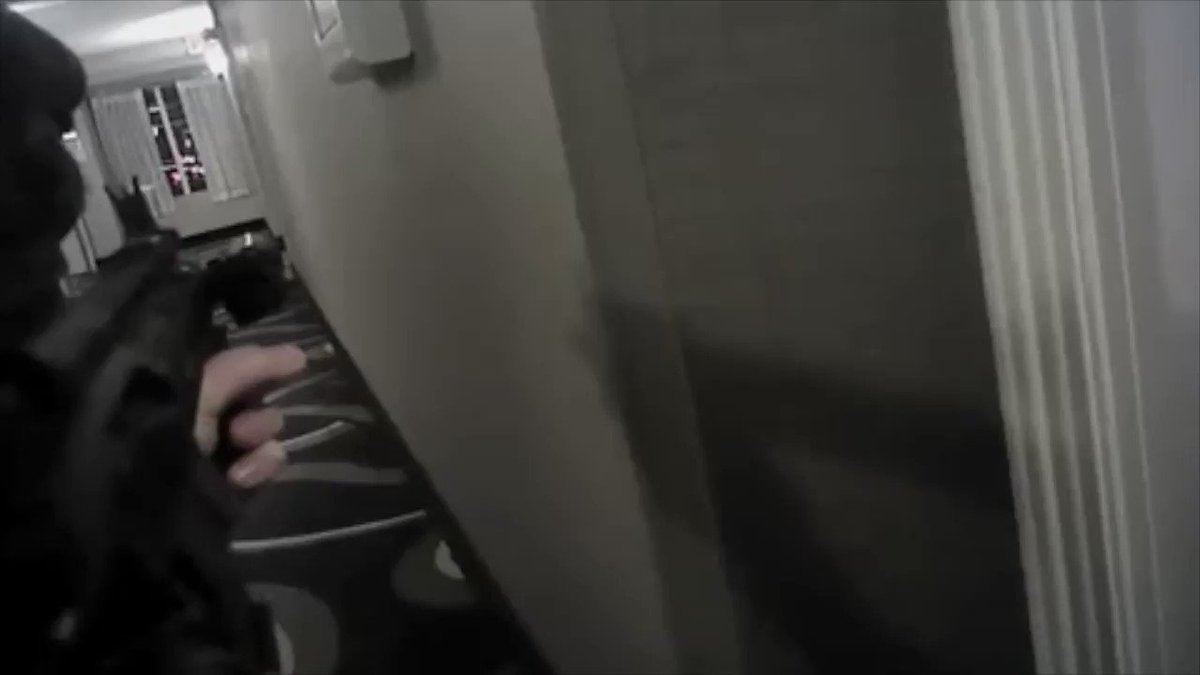
Newly released body camera footage shows a Mesa, Ariz., police officer, Philip Brailsford, shooting Daniel Shaver, an unarmed man, in a hotel in 2016. Mr. Shaver sobbed and pleaded with the officer not to shoot him.
By MARICOPA COUNTY SUPERIOR COURT on Publish Date December 9, 2017. Photo by Mesa Police Department.
The graphic video, which was released after a jury on Thursday acquitted the officer of murder and manslaughter charges, stoked outrage on social media and renewed calls for reforms in law enforcement.
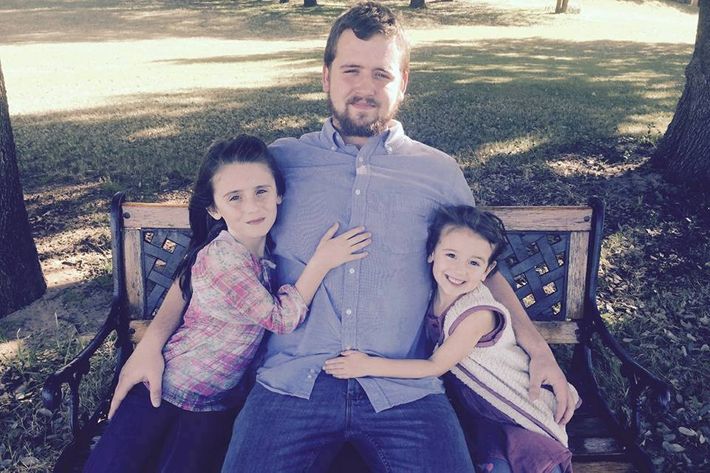
“This, to me, is the most horrific shooting I’ve ever seen,” Mark Geragos, a lawyer for the widow and the 5- and 8-year-old daughters of the man, Daniel Shaver, 26, said in an interview on Saturday. Mr. Geragos, who said he had seen thousands of body camera videos, said the footage was evidence of “the criminal justice system at its worst.”
Horrific Video Shows Police Killing of Unarmed Man in Arizona By Benjamin Hart 08 Dec 2017 Daniel Shaver.Photo: JusticeForDaniel/Facebook
A horrific video released on Thursday shows an Arizona cop killing an unarmed man who begged for his life in a hotel hallway in 2016. (Warning: the clip below is extremely disturbing.)
". . . After watching the video, it’s difficult to see how Brailsford escaped sentence. Even in an era when many Americans have become accustomed to viewing disturbing killings at the hand of police officers, this one stands out. . .
If there’s any lesson to be gleaned from the tragedy, it’s one that was already known: Convicting police officers of crimes against civilians remains perilously difficult.
From Jason Stockley to Ray Tensing to Brailsford, juries and judges are extremely hesitant to punish officers for what they tend to see as justifiable behavior in the line of duty. Michael Slager, the South Carolina cop who shot and killed Walter Scott in the back as he was running away, was sentenced to 20 years in prison Thursday. But he’s the exception that proves the rule.
Meanwhile, police continue to shoot and kill American civilians by the thousands each year. As The Atlantic’s Conor Friedersdorf notes, “[T]he total number of police killings in England since 1990 is about the same as the number of people killed by Arizona police last year alone.”
America Has a Sociopathic Police Problem [Opinion] The following article is entirely the opinion of Rob Cotton and does not reflect the views of the Inquisitr.
The recent acquittal of Mesa, Arizona, police officer Philip Brailsford in the 2016 shooting death of Daniel Shaver has once again sparked debate over the culture of policing in the United States. While the “blue lives matter” cult and other bootlickers have been predictably quick to trot out their usual litany of tired excuses for what is clearly an incident of a trigger-happy cop abusing his power in the taking of the life of one of our fellow citizens, people not inclined to tongue-kiss the boots of a violent police state have been expressing justifiable outrage over the clear miscarriage of justice that has let yet another sociopathic cop get away with murder. . . That the jury acquitted Brailsford should come as no surprise to anyone aware of how cops are given preferential treatment under our justice system that allows them to engage in repeated abuse of citizens, murder with impunity, and to perpetuate a culture of harassment, corruption and violence. Read more > https://www.inquisitr.com
Comment today on ADOT's Tentative Long-Range Transportation Plan
The public and agencies across the state have until Dec. 21 to comment on the Arizona Department of Transportation’s Tentative Long-Range Transportation Plan.
Blogger Note:The plan includes many sectors, outlined with links below
and inserted into the text of ADOT's deadline announcement
The Arizona Department of Transportation and Federal Highway Administration are working collaboratively with the state of Sonora, Mexico, the secretaria de relaciones exteriores, the secretaria de comunicaciones y transportes and several other local, state and federal agencies to develop an Arizona-Sonora Border Master Plan (BMP).
The Arizona Department of Transportation (ADOT)’s Aeronautics Group is currently conducting the Arizona State Aviation System Plan (SASP) Update to evaluate the current and future performance of Arizona’s airports. The SASP Update is a key element of ADOT’s long-term planning efforts to provide an integrated framework for the planning, operation, and development of Arizona’s aviation assets.
The Arizona State Freight Plan will establish immediate and long range plans for freight related transportation investments. More specifically, it will identify freight transportation facilities that are critical to the State’s economic growth and give appropriate priority to investments in such facilities.
ADOT's Bicycle and Pedestrian Program provides a wide variety of resources and information about biking and walking in Arizona, including places to bike and walk, how to integrate biking and walking into your commute, important laws and policies, safety issues, maps, and organizations.
The Complete Transportation Guidebook is a reference for integrating sustainable transportation practices into transportation planning, scoping, and design throughout ADOT’s project development process. The Guidebook provides strategies and techniques for identifying transportation choices that connect communities and enhance economic opportunity while maximizing the efficiency of limited resources.
The goal of the Airport Master Plan is to provide the framework needed to guide future airport development that will cost-effectively satisfy aviation demand, while considering potential environmental and socioeconomic issues.
Arizona is in a global competition for quality jobs, economic growth, and prosperity. A strong export-based economy, supported by excellent surface transportation connections to major markets, positions us to compete successfully.
Planning to Programming Link development started with ADOT's multimodal visioning called "Building a Quality Arizona" (bqAZ), the 2010 Statewide Transportation Planning Framework Study that created a fiscally unconstrained vision for the state's transportation system in 2050. bqAZ led to "What Moves You Arizona?," the state's Long-Range Transportation Plan 2010-2035, which applied financial constraint to the vision, identifying anticipated revenues and providing a recommended investment choice (RIC) that indicates how revenues will be allocated to four different investment types: preservation, expansion, modernization and nonhighway. The third step, and subject of this report, is "Linking the Long-Range Plan and Capital Improvement Program," or P2P Link, which focuses on how ADOT and its primary business partners, the Federal Highway Administration (FHWA), Metropolitan Planning Organizations (MPOs) and Councils of Governments (COGs), fund, build, maintain and operate the transportation system.
The Planning Assistance for Rural Areas (PARA) program provides federal funds to assist tribal governments and counties, cities and towns outside Transportation Management Area (TMA) planning boundaries with multimodal transportation planning needs.
That’s why the Arizona Department of Transportation is looking 25 years down the road to determine the best mix of investment to preserve, modernize and expand the state transportation system with the resources available. It’s a project called the Long Range Transportation Plan, and it’s updated every five years. “Think Ahead about Transportation” workshops will be the foundation to begin the process of updating ADOT’s Long Range Transportation Plan, also known as What Moves You Arizona.
The Arizona State Rail Plan (SRP) is the comprehensive assessment of the state’s rail needs and was initiated in response to the increasing involvement by ADOT in freight and passenger rail issues.
The Transportation and Trade Corridor Alliance (TTCA) is focused on creating better jobs and higher household incomes by growing value-added industries that bring new money to Arizona. To achieve this mission, Arizona requires modern and efficient infrastructure to ensure effective connectivity to both domestic and global markets. This Roadmap provides strategic direction for the state of Arizona to maximize opportunities for trade development.
The CiviComment online tool, which is also available on the project website, allows users to comment on the full report or comment on individual pages pulled from the document. The direct link to CiviComment is whatmovesyouarizona.civicomment.org.
ADOT spent the past two years drafting this update to the Long-Range Transportation Plan, which looks through 2040. The project team conducted stakeholder outreach, gathered extensive public comment across the state and worked through months of technical analysis.
During the 25-year period of this draft plan, about $923 million in annual highway capital funding will be available from state and federal sources. On average, the Phoenix and Tucson regions are expected to receive $512 million annually. Of that, $223 million comes from voter-approved regional programs in those two metropolitan areas dedicated largely to highway expansion. ADOT’s Recommended Investment Choice calls for all of the remaining annual average of $411 million to go toward preserving and modernizing highways in Greater Arizona.
The recommendation outlined in the Tentative Long-Range Transportation Plan is in line with public and stakeholder outreach, in which most participants listed preservation, safety and modernization projects as their highest priorities for Greater Arizona.
The Long-Range Transportation Plan is expected to be finalized in early 2018.
Just trying to be fair-and-balanced in this local incident that happened almost two years ago in January 2016. The un-edited Mesa Police body cam videos were withheld from public view until after the trial ended. Daniel Shaver's widow has stated and filed her intention to sue the City of Mesa for excessive use-of-force among other potential charges. (Image to the left from the published body cam video)
1. Jury wisely acquits Arizona cop in killing of unarmed man
"I support the decision by an Arizona jury to acquit former police officer, Philip Brailsford, on charges of second-degree murder and manslaughter . . ."
Last Closing Paragraph:
Ultimately this is an immense tragedy for all involved. And while it is notable that other members of the SWAT team did not fire on Shaver — thus suggesting that Brailsford should have waited to engage -- based on the facts as applied to law, it would have been unjust to convict Brailsford of criminal responsibility here. His acts were reasonable in the context of the circumstances and I believe a conviction would have been overturned by an appeals court. You can watch the video here(WARNING: obviously the video is graphic)
"If you have the stomach for it, I want you to watch one of the most outrageous and infuriating videos I’ve ever seen. It shows the police shooting of Daniel Shaver in Mesa, Arizona. He was crawling on his hands and knees, crying, and begging police not to shoot him. An officer shot him anyway: . . ."
Last Closing Paragraph:
"Arizona law defines second-degree murder as killing a person without premeditation “under circumstances manifesting extreme indifference to human life, the person recklessly engages in conduct that creates a grave risk of death and thereby causes the death of another person.” In this instance, the charge fit the crime. The jury’s verdict was a gross miscarriage of justice. My heart breaks for Daniel Shaver’s family. May God have mercy on his soul." Read more at: http://www.nationalreview.com/corner/454504/police-murder-daniel-shaver


 The tour opened with an exploration of Habitat Metro's newest proposal in partnership with Bob Worsley and Kent Lyons, adaptively reusing a midcentury one-story bank building while adding 15-stories of multifamily residential and hotel units in Mesa's historic district, atop a parking lotto the building's south.